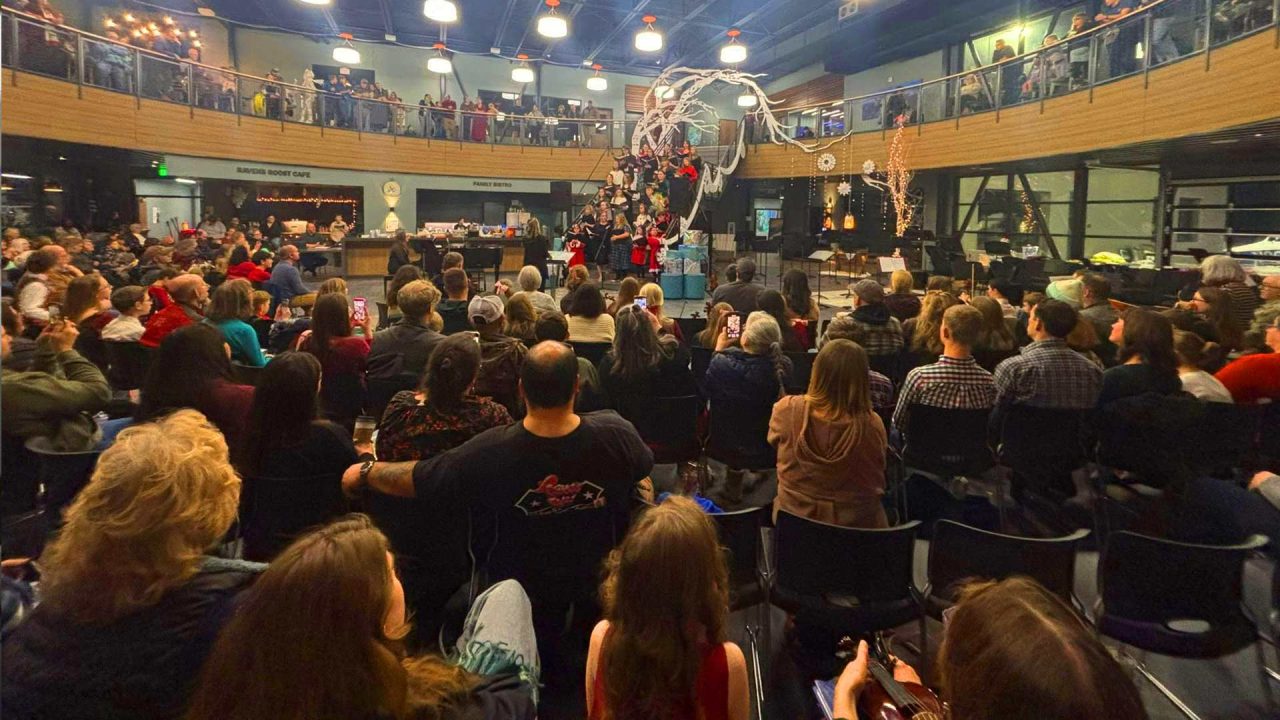


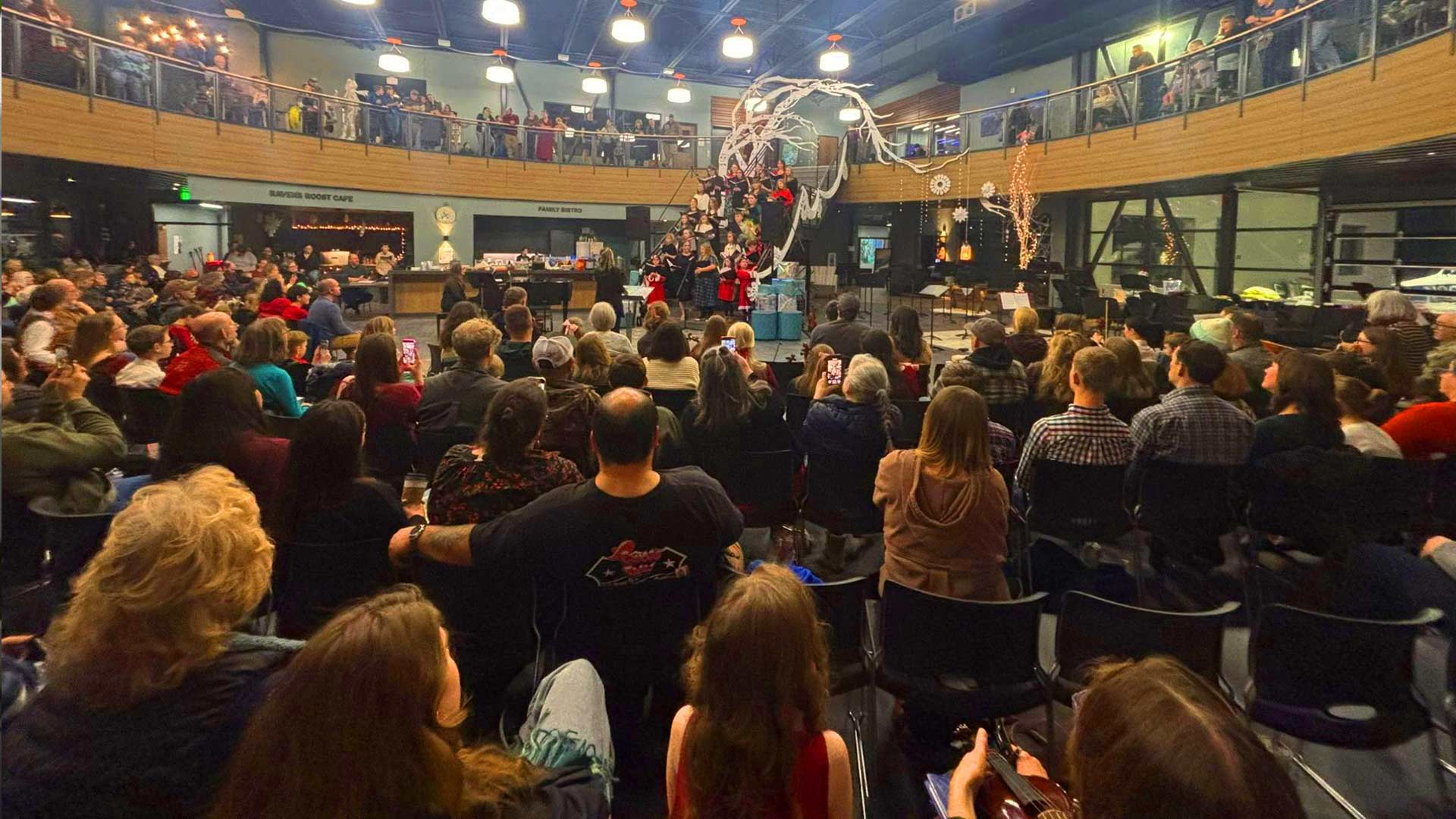
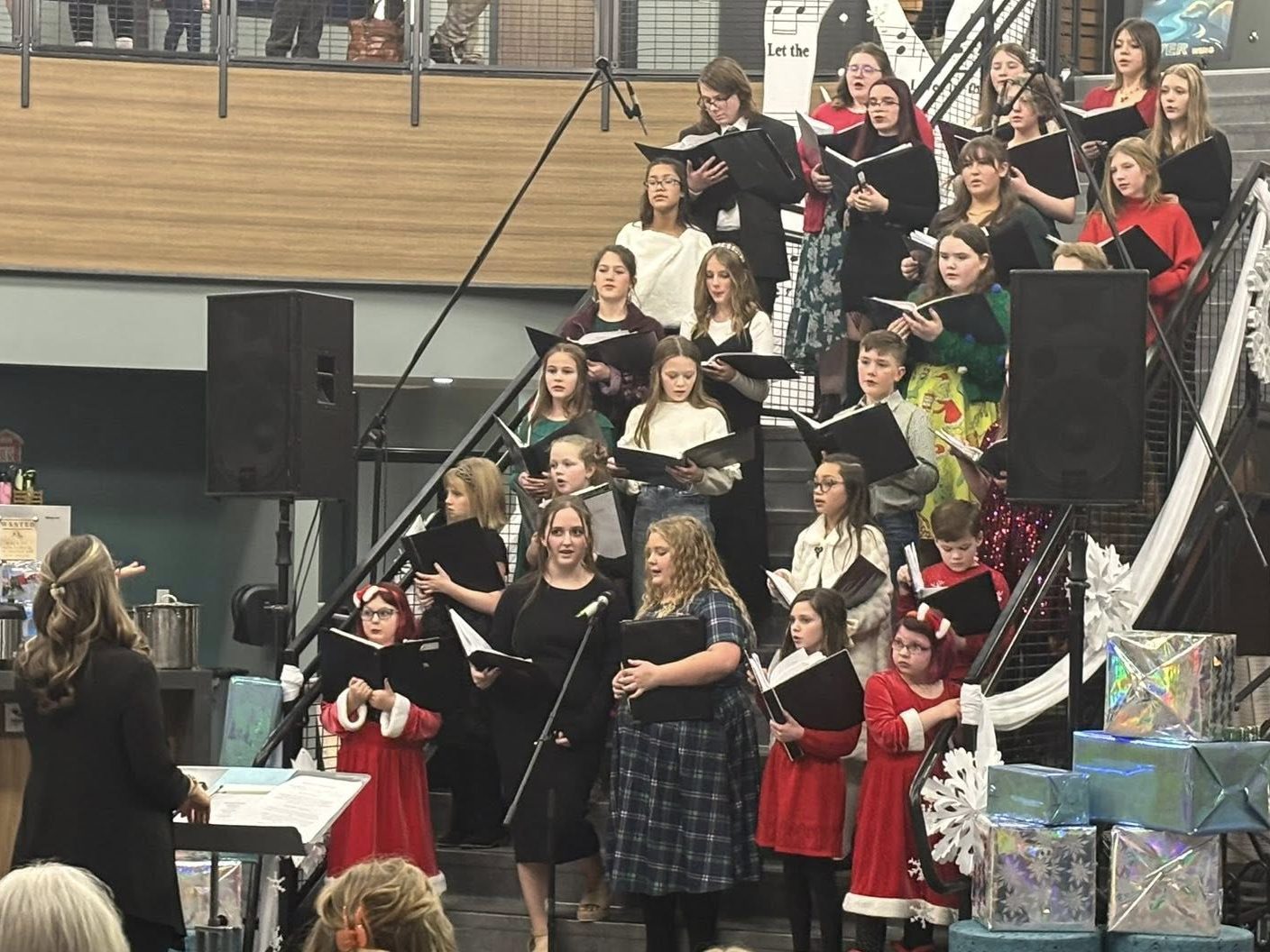
While most government-funded schools have stripped traditional and religious references from of their “winter concerts,” homeschool students at Mat-Su Central School put on a rousing holiday performance that included classic renditions of “O Holy Night,” “Mary Did You Know,” and “Silent Night.”
An estimated 300-plus people packed into the public correspondence school’s standing-room-only great room for the Dec. 4 concert, which included instrumental pieces, choral music and solo vocal performances.
In addition to fun holiday songs about snowfall, elves and the Grinch, students performed pieces that acknowledged the roots of Christmas – namely the birth of Jesus Christ.
The song that drew one of the largest ovations was a student’s vocal performance of “Silent Night,” accompanied by piano and cello.
Many Americans can still recall the time when public school students regularly dressed as Magi, shepherds, angels, sheep, donkeys, Mary and Joseph to perform traditional Christmas pageants in school gymnasiums.
Those classic performances have largely given way to so-called “Winter Festivals” that focus on snow-people, icicles, lights and inclusive coziness, while downplay or entirely ignore the historical roots of Christmas.
This Christmas purge began in the 1980s when public schools began prioritizing diversity and inclusion, even if it meant excluding nearly all references to the historic foundations of the holiday.
Public schools, however, are legally permitted to include traditional religious Christmas songs and references in holiday concerts, so long as they are not specifically endorsing a particular faith or holding a worship session, and the programming serves a secular educational purpose, like teaching music or art history and celebrating cultural heritage.
Federal courts have upheld these types of concerts for decades.
Alliance Defending Freedom, a conservative legal advocacy organization, strongly supports the inclusion of religious-themed Christmas songs, carols, and pageants in public school performances. They argue that such expressions are protected under the First Amendment as free speech and religious exercise, provided they serve a secular educational purpose rather than proselytizing or endorsing religion.
Alliance Defending Freedom’s website notes that banning religious Christmas themes amount to unconstitutional censorship, often driven by “extremist myths” or pressure from groups like the ACLU and Freedom From Religion Foundation. They emphasize that public schools are not “religion-free zones” and that students, teachers, and parents retain their rights to religious expression during the holiday season.




1 Comment
awsome