

The single biggest impediment to meaningful reform of Alaska’s public education system is a clause found in the State Constitution that prevents public funding from directly benefiting private and religious schools. This, however, isn’t the blockade that many believe, and understanding why it was added to the constitution back in 1956 can help us understand what reforms are needed, and how they can be implemented.
You might think this is a relatively new battle, but it’s an old one that began when Alaska was still part of Russia. The issue isn’t really constitutional. It all revolves around freedom of choice, and who gets to have it.
To grasp the argument, it helps to understand the history of Alaska and why a religious education clause was ever added to the State Constitution in the first place.
There were two periods from Alaska’s early history that shaped how our constitution was written.
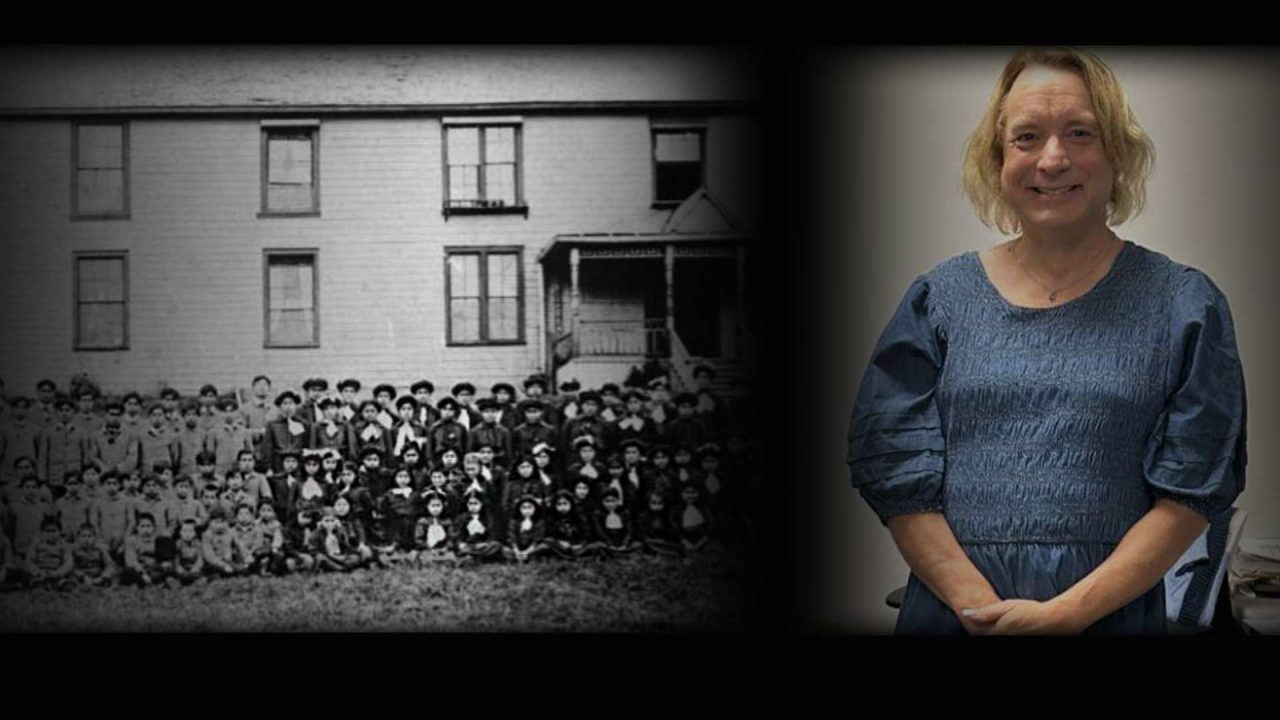
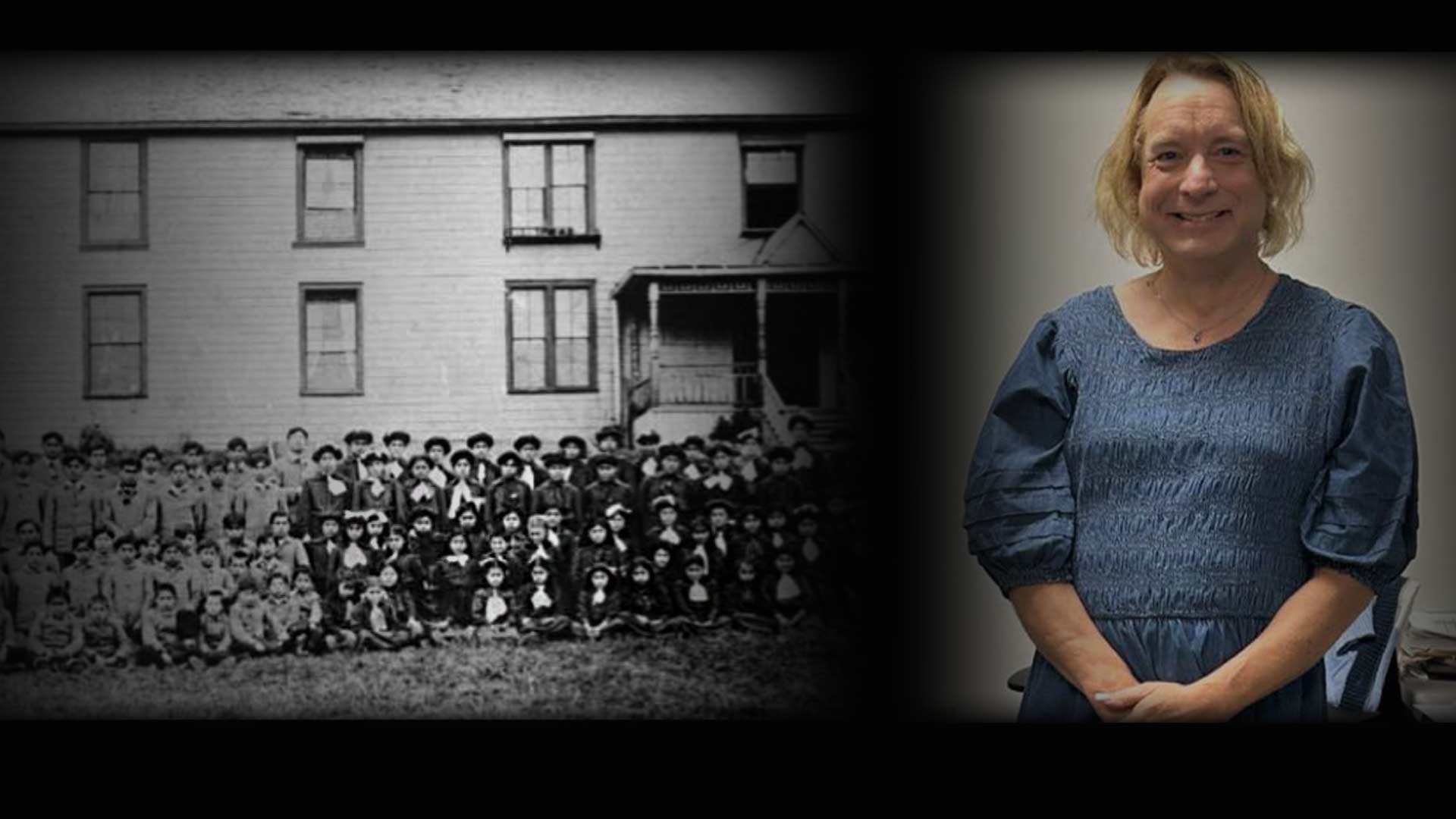
The first was how Alaska delivered and funded education in the very early days of the territory. When the Russians administered Alaska, they used Russian Orthodox schools to educate local kids. After the United States bought Alaska from Russia in 1867, the Presbyterian Church continued in that tradition by founding a series of mission schools around the state to serve the Alaska Native population. Teachers in these schools were church missionaries. For many years, the federal government funded these religious schools, with the chief administrator being a Presbyterian minister by the name of Sheldon Jackson.
In a few towns there were two schools, one run by the territorial government for white kids, and one operated by the federal Bureau of Indian Affairs (BIA) for Alaska Native kids.
To be sure, the schools were controversial. While the stated purpose was to educate children, another goal appears to have been assimilation of Alaska Native kids into Western culture and teaching them Christianity. Significant resentment persists, today, from some in the Alaska Native community regarding this forced assimilation and the loss of their culture and language.
The first big issue shaping Alaska’s Constitution was the forced assimilation using federal money to fund church schools. However, that was not the only problem with schools in the early days. Inequality was also at play.
By 1905, federal funding of church schools had been phased out, and a dual system of education was established where the Territorial government assumed control of schools for incorporated towns, while the federal government retained control of educating mostly Alaska Native kids living in bush communities. In a few towns there were two schools, one run by the territorial government for white kids, and one operated by the federal Bureau of Indian Affairs (BIA) for Alaska Native kids.
This created an unequal two-tiered system, and in 1928 a lawsuit challenged the “separate but equal” nature of these schools. The lawsuit was called Jones vs. Ellis. In it an Alaska Native child in Ketchikan was attending a better-funded territorial school but was told she had to leave to attend the local BIA school. She sued and won the right to attend the same school as the white kids.
It was in this context of forced religious assimilation and unequal treatment of students based on race that our founders gathered in Fairbanks to write Alaska’s Constitution in 1956.
Today, our state’s founding document still contains Article VII, Section 1. It reads as follows:
“The legislature shall by general law establish and maintain a system of public schools open to all children of the State, and may provide for other public educational institutions. Schools and institutions so established shall be free from sectarian control. No money shall be paid from public funds for the direct benefit of any religious or other private educational institution.”
In rural areas, students are hostages to state-run schools because there are virtually no other options.
When you read this and understand the history, it makes a lot more sense. Our founders included this clause to protect Alaska students. They wanted to ensure that they weren’t being brainwashed by a dogma that destroyed their culture or went against the wishes of their parents. The founders also wanted all kids in Alaska to be treated equally without a two-tiered education system.
Unfortunately, they failed – in both respects. What we have today is exactly what our founders were fighting against – a secular education establishment that has swapped a religious dogma for a woke one. Today, the values and culture of parents are superseded by a left-leaning secular school system that imposes a woke curriculum upon children. In rural areas, students are hostages to state-run schools because there are virtually no other options.
A perfect example is the case of Madeliene Tietz, a transgender teacher in Bethel who is an LGBTQ activist. Mr/Ms Tietz was hired by the state and sent to rural Alaska to teach mostly Alaska Native kids at schools in Kwigillingok and Bethel. I’ve been to both communities and can tell you that the beliefs of this teacher are very inconsistent with the culture of the people who live there. Parents in those rural communities complained that Tietz’s behavior runs contrary to their culture, but the state kept this individual on as a teacher. This is exactly the type of forced government-sponsored student indoctrination that our founders were trying to prevent in the state constitution. Many other examples abound.
ALASKA WATCHMAN DIRECT TO YOUR INBOX
There is, however, a way out of this dilemma. Since school alternatives are nonexistent across much of Alaska, and the state is prevented from funding private or religious schools, state lawmakers should pass legislation that creates educational savings accounts that can be used by individual students. Michael Tavoliero presented an excellent and detailed summary of how this could be done within constitutional guidelines.
Educational savings accounts that follow students will help all Alaska kids, but particularly those in rural communities. Reform might spur the establishment of new charter schools in rural Alaska, focused on preserving traditional values and customs. With the advent of the internet – never foreseen by our founders – supporters of Alaska Native culture might even want to establish a statewide online school that focuses on preserving and sharing their culture with today’s children. While schools like these might be very popular in Alaska Native communities, they are prohibited by the current system.
It all comes down to choice and who gets to make it. Will our children be captive to a modern indoctrination system or will they be given the opportunity to learn in a manner consistent with the values of their parents? School vouchers are constitutional and liberating and should be implemented by our legislators in the next legislative session.
— Click here to read part one of this two-part series.
The views expressed here are those of Greg Sarber. Read more Sarber posts at his Seward’s Folly substack.



6 Comments
Understand that I am not standing up for all the lefty rhetoric that is influencing the native culture today. What the left and globalists are doing to the natives today is atrocious and causing a division that is going to be so hard to overcome when all this evil has been tamped down. The Alaska Native families suffered great heart ache being put through the “assimilation” into white man’s culture. There were some good missionaries, but there were, also, some evil missionaries. I remember listening to an elder’s story where they were being taught to speak English. Every time they spoke in their native language, they would get punished. Some of the children did like being sent out of their communities to go to school in other Alaskan areas or in the lower 48; but, it was so hard on the families. Some elders (parents at the time) understood that the times were changing and worked hard to get others to see the benefit of learning “white man” ways and education. The times are changing – for all of us. I hope that the effort to keep the native culture and languages alive is kept in the curriculum. So much native language and culture has been lost already with the passing of each Alaska Native elder. Just as we (non-native and native) struggle today to preserve our history and language as we know it, I hope that the Alaska Natives will be given that option. Thank you to Greg and Michael for writing about these topics.
Great clear overview of what transpired. I was vaguely aware and had read bits and pieces but it is great to have the whole picture. Sadly there was also abuse within the divided system and so many families suffered. Yes vouchers and educational choice need to happen!
Russia didn’t own anything above the 51st parallel, and what it sold was a business, not very much land: less than 250 acres. The northern boundary was not set until several years after the Treaty of Session and it was not set by Russia.
The Russians sold their “interests” in North America. The United States bought their political influence off of the continent. Considering the history of the past 100 years, especially world events of the past decade, I’d say Washington made a pretty significant investment that benefitted the entire world, especially the North American continent.
For clarification’s sake it was LKSD that hired that transvestite. To my knowledge there are no more state operated schools in Alaska, therefore Juneau does not hire and send out teachers. Bethel did this because it’s their policy… regardless of what the parents wanted.
Blaine type Amendments are rooted in Anti-Catholic Bigotry. As for what happened in the villages is a tragic and willful mistake that was repeated from Lower 48 and Canadian schools. That being said you are correct that in the villages there is limited options, but today offers more solutions than ever, so instead of funding Public schools in the villages, use vouchers out there to pay for starlink and let the children enroll in one of the many remote learning programs. As for the road system again ditch the Blaine Amendment and let vouchers follow the student. Lets build more private schools