

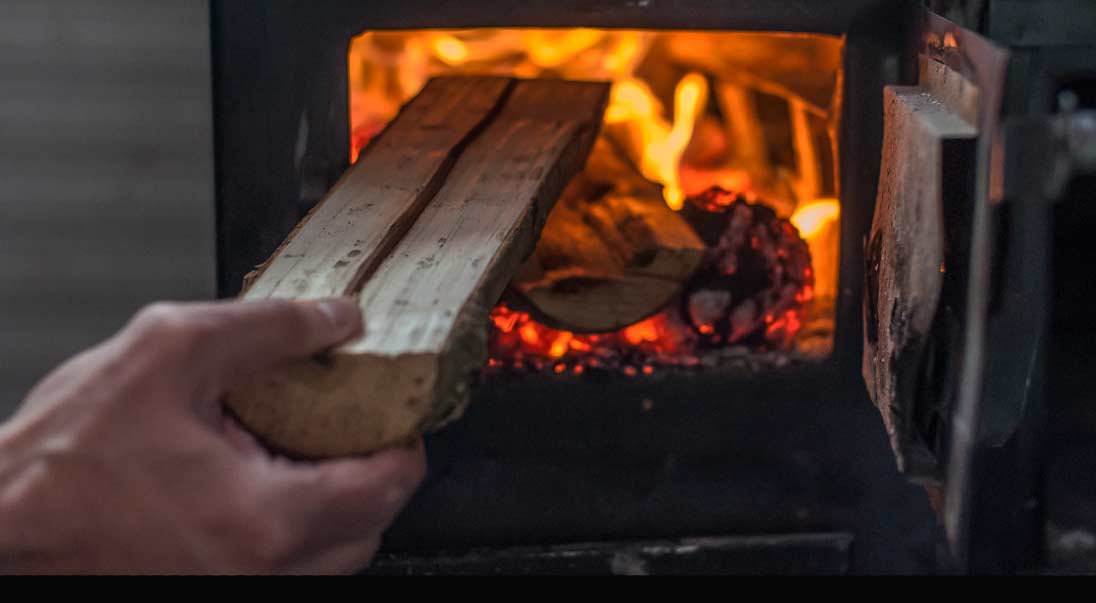
With an extreme cold warning in Juneau, which includes negative temperatures and high winds, the City and Borough of Juneau (CBJ) quickly reversed course on its woodstove and fireplace ban that went into effect on Dec. 20.
At the time, the CBJ claimed poor air quality conditions in the Mendenhall Valley had prompted officials to issue an “air emergency,” which meant residents were barred from using woodstoves or fireplaces to heat their homes, with the exception of pellet stoves.
One day later, the CBJ canceled the order.
“Due to increasing air movement and improving air quality in the Mendenhall Valley, the City and Borough of Juneau has canceled its Air Emergency, effective immediately,” the CBJ stated on Dec. 21. “The City would like to thank Valley residents affected by the Air Emergency for their cooperation, especially during the cold weather conditions.”
“We recognize that calling an Air Emergency during this cold snap can seem more than a little counterintuitive,” the CBJ Facebook page stated on Dec. 21.
The initial decision to ban wood heat came during an extreme cold snap that prompted the National Weather Service to warn residents of extremely cold windchill temperatures as low as 20 below.
“Frostbite and hypothermia are likely if exposed to these temperatures,” the National Weather Service stated on Dec. 22. “An extended period of freezing temperatures could cause ruptured water pipes … Occasional gusts of 40 to 50 mph will still be possible for downtown Juneau, Douglas and Thane.”
Juneau officials took to Facebook to try and explain why they issued the controversial ban in the first place.
“We recognize that calling an Air Emergency during this cold snap can seem more than a little counterintuitive,” the CBJ Facebook page stated on Dec. 21.
The CBJ noted that the Clean Air Act of 1970 “requires communities like Juneau to monitor air quality and to immediately follow an approved action plan if air quality reaches unhealthy limits.”
ALASKA WATCHMAN DIRECT TO YOUR INBOX
“Normally, this is not an issue for Juneau except in the Mendenhall Valley and only during certain weather patterns and air inversions,” the CBJ statement added. “Unfortunately, these air inversions most often occur during the winter months when normal atmospheric conditions of cool air above warm air below become inverted. The warm air acts like a lid preventing the cool air below from circulating and creates a buildup of unhealthy particulates.
Juneau hasn’t seen air quality levels that trigger an Air Emergency since 2019.
“We understand the impact to residents of calling an Air Emergency and don’t take the responsibility lightly,” the CBJ statement concluded. “We truly appreciate the community’s awareness and conversation on this topic.”
Juneau’s authority to ban wood heat comes from an ordinance passed in 2008, establishing the Woodsmoke Control Program, which allows the CBJ to declare an “air emergency” when particulate matter in the air exceeds established standards.
In recent years, there has been a decline in wood stove heating across Alaska due to stricter environmental regulations, high costs for newer efficient heating models, and problems with certification and supply. These realities acutely impact rural areas where residents rely on wood heating to stay warm in Alaska’s frigid winter temperatures.




8 Comments
When will the drama in Juneau ever subside? Juneau, get a life!
….also should add that they should allow year round fireplace and heat burning, they could save fuel bills that range up to $1000. per month and get a measure of control of cleaning out the dead fuel of the Tongass forest. Lots of spruce bark beetle kill that has stacked up tons of dead fuel.
Diana, You’re so right
How is Juneau doing with they’re EV buses in this cold?
What a joke Juneau is, not allowing wood stoves is like banning fishing… oops, probably shouldn’t have mentioned that.
Nobody should tell a person how they can heat their home. It’s unAmerican. Further, these do-gooders are probably big believers in global warming but now they’re dealing with extreme cold. Absolute idiocy.
All we need to do is move the capital out of Juneo. It would solve many problems…
Government sucks