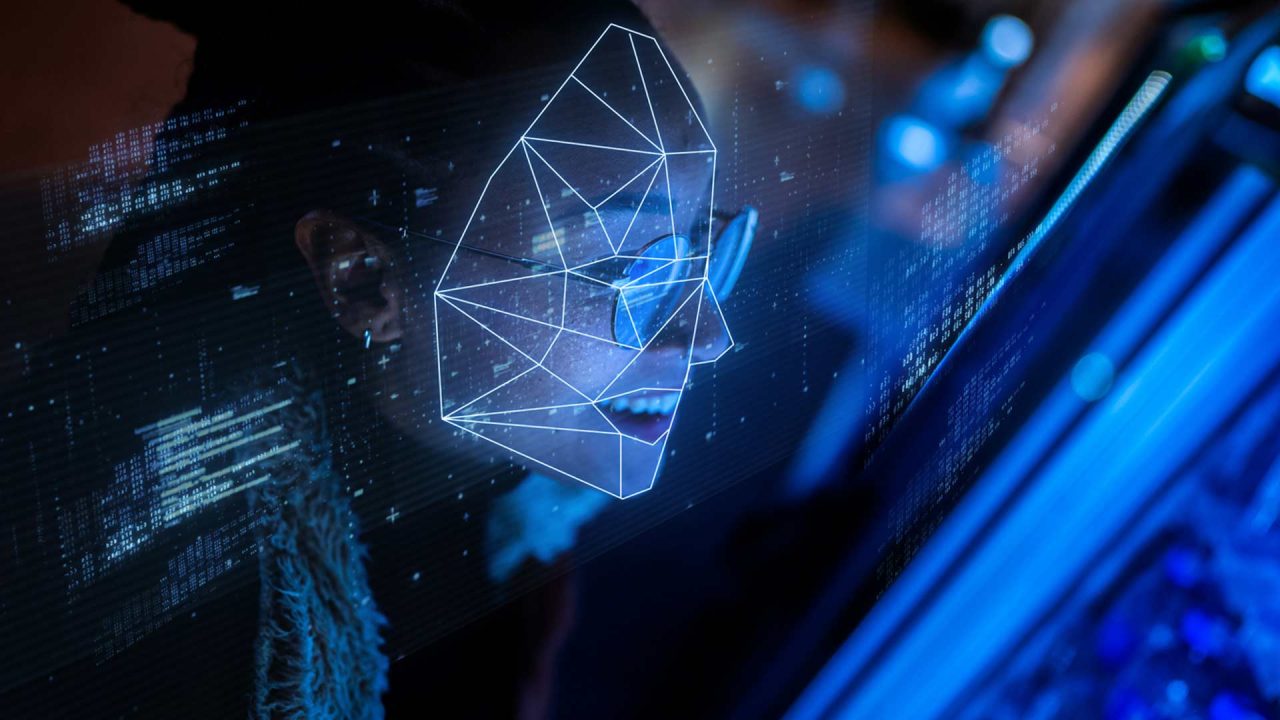


The Transportation Security Administration (TSA) is holding a media event on Jan. 29 at the Ted Stevens International Airport in Anchorage to announce the rollout of advanced facial scanning technology to be used on Alaska travelers.
The TSA PreCheck Touchless ID – which is voluntary – requires passengers to stare into a camera where their face is scanned and matched against a digital image of their passport or other government ID. Anchorage is one of 65 airports around the nation that have been identified as a high priority for the new program.
Billed as a tool that “enhances security while providing a more efficient and convenient screening experience for enrolled travelers,” widespread facial recognition technology has raised concerns about privacy, data security and possible use in larger surveillance operations in the future.
TSA, however, maintains that the live facial scans are only used to verify a passenger’s identity – not for law enforcement purposes – and the images are deleted within 24 hours of a flight’s departure.
Since Anchorage first implemented the TSA facial scanning in 2024, passengers have been instructed to stand in front of the machines. While posted signage notes that the scans are voluntary, most travelers are not verbally told they can opt out, and few do so.
ALASKA WATCHMAN DIRECT TO YOUR INBOX
The new Touchless ID utilizes the current facial scanners but expands their use. Prior to the Touchless ID program, facial scans were utilized to verify a passengers physical ID. The new program does not require a physical ID, but simply compares the facial scans against stored digital passport photos.
However, if the identity of passengers enrolled in the Touchless ID program cannot be verified by the biometric technology at the security checkpoint, they will still be required to produce an acceptable physical identity document for identity verification. For this reason, passengers are encouraged to continue carrying physical IDs, whether they are enrolled in the voluntary Touchless ID program or not.
In addition to the new Touchless ID program, the TSA is instituting a $45 fee for all domestic flight travelers who fail to show a REAL ID. This will go into effect on Feb. 1.
Last spring, TSA began enforcing the REAL ID requirement, but many travelers were still able to fly without one. To continue doing so, passengers will now be required to use the new “ConfirmedID” process, which requires them to pay the extra fee. Once verified, they can travel over a 10-day period. The fee applies to travelers 18 years and older who don’t have REAL IDs or valid passports. Travelers who refused pay may be denied entry to security checkpoints.
The REAL ID Act was first passed by Congress in 2005 following the 9/11 attacks, but its implementation was delayed for nearly two decades.





17 Comments
Real ID OR valid passport.???
Either one will suffice for air travel.
Welcome AI! Flame on!
Expansion coming, bet on it! It will become just another way to keep track on us and our movements.
GOD BLESS YOU
Key word to this- voluntary. You are not obligated to have your face scanned. Tell the TSA employee that you are opting out. 99% of people do the scan without questioning it. Those are the same people who will get on the truck, at gun point, headed to a concentration camp. 99% of TSA employees will frown and grudgingly agree. I have had only one that smiled and thanked me. Stand up for your rights and opt out. The government already has enough photos of you. Why do they need another..?
Voluntary until they decide it isn’t voluntary. I’ll bet it won’t be used to identify those that are in this country illegally. Our lazy legislatures that we send to Washington either requested this, or didn’t know that it was coming. Just like the KILL switch mandated for automobiles the deep state is coming on full speed and our legislatures are either voting for these mandates, or too busy having a grand social time in Washington than intervene on our behalf.
> TSA, however, maintains that the live facial scans are only used to verify a passenger’s identity – not for law enforcement purposes – and the images are deleted within 24 hours of a flight’s departure.
That’s a lot of lies for one sentence.
None of this is good. Herman they are already tracking our every move. I don’t like it. Very evil. Every intersection has cameras now. Creepy
“The REAL ID Act was first passed by Congress in 2005 following the 9/11 attacks, but its implementation was delayed for nearly two decades.“
Because it’s unconstitutional and they know it. It’s unenforceable on its face, but coercion is working quite well.
The big question is exactly who wants this information??? There are individuals responsible….
Smile for the camera and look happy and real good. Hope it looks better than the drivers license photo.
Just say “No”. I went through this process last year while returning home from out of the country. The CBP agent ordered me to smile for the camera. I refused to smile but complied with the photo. The fight was on but his flippant and authoritarian bs failed Assert your autonomy and basic human rights. This is no different than being told to stand six feet apart on the carpet appliqué. You can study history or you can trust government, but you can’t do both.
The Patriot Act, in response to the 9/11 terrorist attack on the Twin Towers in NYC, imposed many unconstitutional privacy bypasses in the name of anti-terrorism that includes airport security = TSA.
What TSA continues to accomplish (source Sunset Provisions: Congressional Research Service https://crsreports.congress.gov Feb. 2006):
the “easing or removing safeguards designed to protect individual privacy and to prevent government abuse. And so, they increase the risk that government authority will be abused and that the privacy of Congressional Research Service 1 USA PATRIOT Act Sunset: Provisions That Were to Expire on December 31, 2005, those who are neither terrorists nor criminals will be invaded. The debate over sunset is a debate of where the balance should be struck. To further complicate the debate, in some instances the expiring sections curtail rather than expand governmental authority; bolster rather than erode the safeguards against governmental overreaching or abuse of authority.”
Governmental overreach? Abuse of authority?
✅Require having your face scanned at airports – for the good of all.
✅Mandate the jab – for the good of all.
BUT
Oppose showing gov. ID and US citizenship to VOTE for politicians who bring us laws and dole out our tax dollars!! That is intrusion!!
Come on man!
If you have a passport card you are fine. Your passport will get you anywhere in the world. If you got the real ID and regret it trade it in. It is literally an overreach by the federal government. It is a state issued drivers license it shouldn’t be tied to data collection at the federal level.
I find it funny that government has rolled out “real ID”. What was our ID before? Fake?
I don’t fly much. But when I was asked to let them read my face, I’m like No Thanks
They were not happy, I know my rights.