

Investing can be simple or complex. The right approach is not determined by what is popular, what your neighbor is doing, or what performed best last year, but by your goals, your timeline, and your risk tolerance.
In other words, investing is personal. One size does not fit all.
A useful example for Alaskans is our own Alaska Permanent Fund Corporation. Many people compare how the Alaska Permanent Fund has performed to the S&P 500 because it is one of the most widely followed stock market indexes in the world. It represents 500 of the largest publicly traded companies in the United States and has historically delivered strong long-term returns. This comparison is not a good measure for the reasons I will explain here.
Over the last 20 years, the S&P 500 has returned roughly 11 percent per year, including dividends, and over the last 10 years it has returned around 14 percent annually. In 2025, the index gained about 17 percent.
Over the last 10 years, the fund has returned about 8 percent annually, and since its inception, it has produced about 8.7 percent annualized returns.
Those numbers are impressive. But the S&P 500 also reminds us that higher returns usually come with higher volatility.
During the 2008 financial crisis, the S&P 500 lost about 37 percent in a single year. During the tech bust, it lost about 22 percent. More recently, the index declined by about 18 percent in 2022.
Those kinds of swings can be difficult for investors who need stability or for those who are close to retirement. Swings of that size may unsettle many Alaskans.
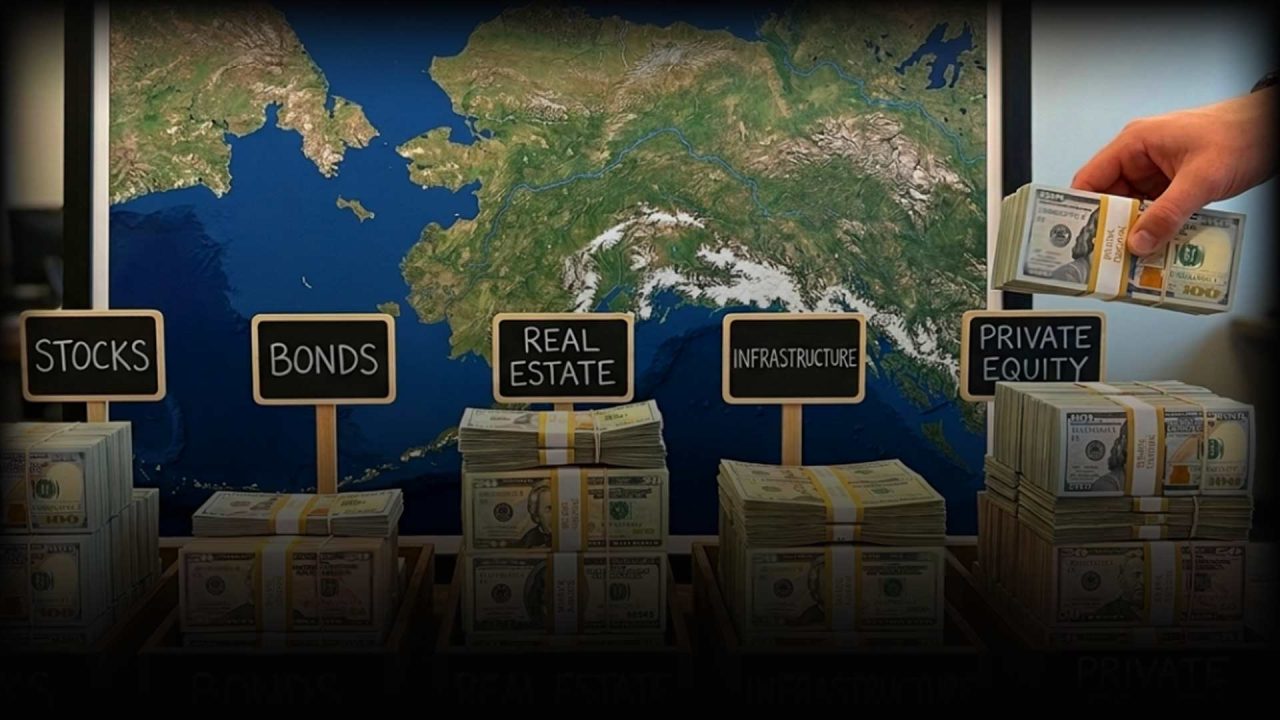
The Alaska Permanent Fund takes a different approach. Instead of concentrating entirely in large U.S. companies, the fund spreads money across global stocks, bonds, real estate, infrastructure, private equity, and other investments. The goal is diversification and long-term stability. Because of that diversification, the Permanent Fund tends to experience smaller swings.
Over the last 10 years, the fund has returned about 8 percent annually, and since its inception, it has produced about 8.7 percent annualized returns.
A generational fund like the Alaska Permanent Fund that must protect capital while providing stable income.
Even the Permanent Fund has difficult years. During the global financial crisis, the fund lost roughly 18 percent in fiscal year 2009. But that loss was about half the decline experienced by the S&P 500 during the same crisis.
That difference highlights the tradeoff between return and volatility.
The S&P 500 has produced higher returns during strong stock market periods, but it can also experience deeper declines. The Permanent Fund sacrifices some upside in exchange for diversification and stability across economic cycles.
This leads to another important discussion in investing.
Active versus passive management.
Passive investing tracks a market index like the S&P 500 at very low cost. Because fees are minimal, passive strategies often outperform many actively managed funds over long periods once expenses are considered.
Active investing takes a different approach. Professional managers attempt to outperform the market through security selection, diversification, and allocation decisions. If a manager can consistently outperform, higher fees can be justified.
An investment strategy should reflect the purpose of the money.
The challenge is that consistently beating the market over decades is extremely difficult. Net of fees, many active strategies ultimately underperform simple index investing.
That does not mean passive investing is always the right answer.
A concentrated index like the S&P 500 can be appropriate for a young investor with a long time horizon and the ability to tolerate volatility. But it may not be appropriate for someone nearing retirement, or for a generational fund like the Alaska Permanent Fund that must protect capital while providing stable income.
An investment strategy should reflect the purpose of the money.
For example, when I recently set up Alaska 529 college savings plans for my three children, I chose the all-equity portfolio. They are many years away from needing that money, so the priority today is long-term growth.
As they get closer to college age, that allocation will gradually shift toward more conservative investments designed to protect the money rather than maximize growth.
If the Alaska Permanent Fund were able to improve long-term performance by just 1 percent, the additional return could approach one billion dollars per year.
The same principle applies to retirement accounts, endowments, and even a state fund like Alaska’s Permanent Fund.
The best investment strategy is not the one that performed best last year.
The best strategy is the one that aligns with your goals, your timeline, and your tolerance for risk.
There are also opportunities to continually review and improve how large pools of capital, like the Alaska Permanent Fund, are managed.
Today, roughly 32 percent of the fund is invested in publicly traded equities. The board could consider reviewing whether some or all of that allocation should be moved into lower-cost passive index strategies if those approaches produce comparable or better long term results.
The board should also regularly conduct performance and fee reviews of actively managed funds, particularly in private markets and specialized strategies. Active management can add value, but only if the performance justifies the cost.
ALASKA WATCHMAN DIRECT TO YOUR INBOX
According to the corporation’s most recent reports, the fund pays approximately $889 million per year in investment management fees, roughly around 1 percent of assets managed externally. Even small improvements can matter at that scale.
If the fund were able to improve long-term performance by just 1 percent, the additional return could approach one billion dollars per year.
When managing a fund of this scale, slight changes in fees, efficiency, or performance can translate into exceptionally large outcomes for the people of Alaska.
That is why regular review, transparency, and disciplined investment strategy matter so much when managing generational wealth.
The views expressed here are those of the author.






3 Comments
Keep writing, Josh. One of the things that impressed me most about the Bronson/Church team is your working knowledge of the powers and limits of the executive branch, coupled with the plans you’ve developed for tackling top-priority issues like education and the PFD. I appreciate an honest approach, rather than simply telling people what they want to hear.
Good start in good thinking. Its a mess and clean up job to do for the next governor.
Hey Joshua, your running mate refuses to answer this question, maybe you will. How is Bronson any different than Dunleavy?