

Alaskan candidates running for governor in 2026 are presented below in alphabetical order. Click on a candidate’s name to see their answer to the highlighted question below. A handful of candidates chose not to participate and engage Alaskans who regularly read the Alaska Watchman.
Alaska faces structural deficits due to volatile oil prices and heavy federal reliance. If elected as Alaska’s chief executive, what concrete steps are you willing and able to take to unlock our resources and diversify the state’s revenue stream?
ALASKA WATCHMAN DIRECT TO YOUR INBOX
Candidate answers begin below…

TOM BEGICH [D]
The candidate chose not to answer.
CLICK BISHOP [R]
The candidate chose not to answer.
DAVE BRONSON [R]
It has long puzzled me why Alaska does not use a five or ten-year average oil price to determine sustainable state revenue. Spending should be tied to a rolling average, with a limit that prevents government from growing more than about ten percent above that long term trend. In strong oil years we would build savings rather than expanding government. In weaker years, those savings would help prevent deficits. At the same time, we must unlock Alaska’s economy. That means responsible development of our oil, gas, minerals, timber, and fisheries while reducing permitting delays and unnecessary regulatory barriers that stop investment. Alaska was built on responsible resource development. Growing those industries will create jobs, expand private investment, and generate stable revenue so our state is less dependent on federal spending.
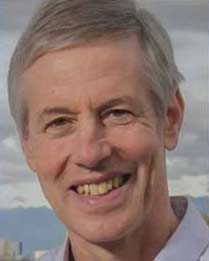
MATT CLAMAN [D]
The candidate chose not to answer.
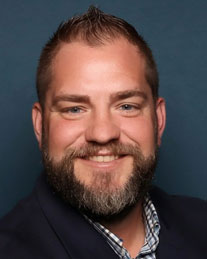
ADAM CRUM [R]
Alaska is broke on purpose, not by accident. For years, politicians built government on boom‐and‐bust oil and federal handouts instead of trusting Alaskans to work, build, and develop what God put under our feet. As governor, I’ll end the managed decline and get us back to doing what Alaska does best: producing. That means fast‐tracking permits, enforcing deadlines for government to respond to the private sector, and standing up to federal bullies who think D.C. should run our state. We will open up oil, gas, minerals, and timber with Alaskans first in line for the jobs and opportunities. I’ll make Alaska a northern powerhouse for energy and data by using our cold climate, stranded energy, and location to attract data centers, mineral processing, and manufacturing. My goal is simple: fund essential services from a strong private economy, not from begging Washington or gambling on the next oil spike.
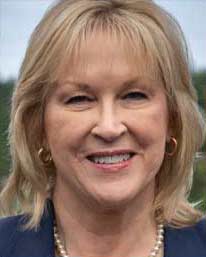
NANCY DAHLSTROM [R]
The candidate chose not to answer.
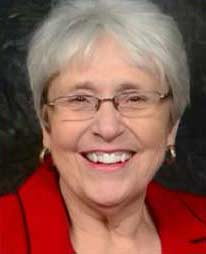
EDNA DEVRIES [R]
As governor, I can’t control oil prices or federal politics – but I can control how efficiently Alaska develops its resources, how predictable its tax and regulatory environment is, and how aggressively it diversifies into new industries. We must, as a state, stabilize the Fiscal Foundation by Unlocking Alaska’s Own Resources – We have put this into practice in the Mat Su Borough at Port MacKenzie. Modernization and streamline permitting. We in the valley are already doing this. We must get serious about: Pro‑Alaska sovereignty, fiscal stability and forward‑looking without abandoning the industries that built the state. Support Oil & Gas as the Backbone of the Economy—While Preparing for the Future. Supporting rare earth minerals development such as Nova in the Mat Su, which is already doing this successfully; Develop Timber & Mariculture – Tourism & Outdoor Recreation – new Gateway Visitor Center at the entrance to our borough.
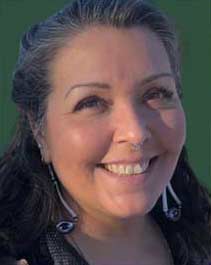
MEDA DEWITT [NON/IND]
Alaska’s deficit is a leadership failure, not a resource failure. We sit on $85 billion in Permanent Fund assets, world-class fisheries, critical minerals, timber, and renewable energy potential, and we still can’t balance a budget. I would take three concrete steps. First, cap the Permanent Fund draw at 4% all-inclusive so it grows rather than being spent down, producing more revenue over time, not less. Second, ensure responsible resource development with real Alaskan benefit, which means IRMA-standard mining with FPIC, value-added processing in-state (not just shipping raw materials south), and requiring major projects to demonstrate local hire and community benefit. Third, invest in the infrastructure that unlocks economic activity across the state: broadband, energy, the Marine Highway, etc. Diversification does not mean abandoning resources. It means keeping more of the value here and building an economy that does not collapse when oil prices drop.
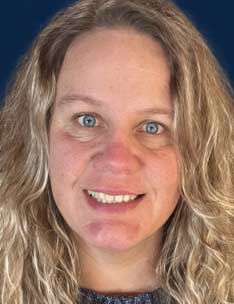
JESSICA FAIRCLOTH [NON/IND]
Alaska’s fiscal challenge is structural. We rely on volatile oil prices and federal spending, while many of the resources that belong to the people of Alaska remain mismanaged or underdeveloped. As governor, I will focus on three things; First, restructuring Alaska’s oil and gas tax system. I have a plan that closes loopholes, protects Cook Inlet production, and encourages responsible new development while ensuring a fair return to the people who own the resource. Second, responsibly developing Alaska’s resource potential. Our state has world-class deposits of minerals, energy, timber, and fisheries that can create jobs and generate long-term revenue. Third, keeping more value in Alaska means aligning taxes, infrastructure, and energy policy so it makes economic sense to process resources here, create jobs here, and keep more of the wealth our resources generate in Alaska. Alaska’s resources belong to the people, and they should benefit Alaskans first.
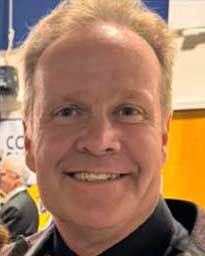
MATT HEILALA [R]
This problem stems from 30 years of saying “NO” to projects combined with unchecked spending. The solution isn’t higher taxes, it’s unleashing our resources and building a private-sector economy that generates jobs and revenue. I will take these concrete steps: Streamline permitting and cut red tape. Remember, if a Regulation or Rule has no obvious purpose, the default is DELETE! I will expand on the current AO360 and provide tools such as “The Algorithm and Virtual Digital Twins” in this effort. Advocate aggressively in Washington for full access to our lands and waters. Double down on transportation infrastructure with Energy and “Roads” to Resources. “Cheap Abundant Energy and Transportation is the Fertile Soil for the Seeds of Industry!” I’m a businessman who’s built companies and created hundreds of jobs right here in Alaska. I’ll apply that same results-driven approach to grow our revenue base.
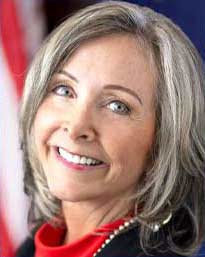
SHELLEY HUGHES [R]
We must transition from an oil-based economy to a strong, diversified one. This isn’t rhetoric. I’ll lead the transformation based on an action plan with feasible steps. It’s time for real solutions. I’ve met families who dream of owning a home, a business, a farm, who struggle with utility costs. Communities wait for roads to connect to opportunity. I was one of those families and lived in such communities. I will introduce a Homestead Act. I will fight to restore some of the statehood federal land grab that wrongly occurred. We’ll achieve cheap energy through a portfolio: gas, hydro, clean coal technology, geothermal, and modular reactors. We’ll restore our capital budget by cleaning our fiscal house so we can build again. Land, cheap energy, infrastructure statewide. That will spur new industry to diversity our state’s revenue. It will take trusted, proven, effective leadership. I’m your go-to to get it done.

JONATHAN KREISS-TOMKINS [D]
The candidate chose not to answer.
HENRY F. “HANK” KROLL [R]
The candidate chose not to answer.
JAMES PARKIN [R]
Plan for Alaskan Prosperity: Alaska’s deficit isn’t a product of volatile oil prices or federal reliance – it’s a self-inflicted wound caused by inefficient budgeting and the drain of SB21, which has subsidized oil companies since 2014 at the expense of our citizens. Step 1: Fix the Budget – We must establish a fair, sustainable four-year budget that guarantees a full statutory dividend. By empowering departments to save and invest through line-item accounts – backed by SMART directives and One-page Accountability Reports (OARs) – we incentivize performance over waste. If adopted at statehood, every department would have $2 billion in savings today, with dividends exceeding $5,000. Step 2: The Alaska Resource Development Cooperative Cooperative (ARDCC): We will replace SB21 with the ARDCC to develop our own resources, eliminate out-of-state wage leakage, and return billions to the state. This shifts wealth from corporations back to Alaskans, giving them shares, and fueling a robust, self-sustaining economy.
TREG TAYLOR [R]
We’re seeing what happens when Alaska’s economy is held back. Costs go up, opportunities shrink, and too many of our young people feel like they have to leave to build a future. As Attorney General, when the Biden administration hit Alaska with wave after wave of restrictions on our energy, mining, timber and infrastructure, I went to court and beat them. We defended projects like Willow, pushed back on federal overreach, and protected Alaska’s right to develop our own resources. As governor, we’re going to take that same approach and get things moving. That means getting projects permitted, unlocking responsible development, and advancing major opportunities like Alaska LNG so we can create jobs and bring in stable, long term revenue. Our nation and its allies are begging for what Alaska has to offer: rare earths, critical minerals and energy.
BRUCE WALDEN [R]
Alaska is not moving product for a couple of reasons. A.) We have no roads/railroads to speak of. B.) We have become too accommodating to the environmentalists. Teddy Roosevelt said it best, and I’ll paraphrase, but Conservation is not only the preservation of our resources, but the wise exploitation of the same. I always ask voters, run your own numbers on this. Take into account Coal, Oil, Gas, Helium, Gold, Copper, Nickel, and timber that we are sure is out there and factor in the going prices of those resources. At this moment, Alaska has, conservatively, well over $100 Trillion in those resources. Some estimates go to over $800 Trillion. That is approaching a Quadrillion. That being said, we require not only roads, but good roads and as it is, we cannot afford them. So, how do we do this? President Eisenhower saw the need to move troops around the …
(EDITOR’S NOTE: This answer was cut off after reaching the 150-word response limit.)
BERNADETTE WILSON [R]
The candidate chose not to answer.





6 Comments
None of them really want resource development for all those passive-aggressive characters will get shoved out of the way losing the admiration and influence they enjoy to New leaders brought up from New mega energy projects. I can’t see the current community leaders we have working well with community leaders who had worked in more national and international communities than Alaskas backyard neighborhood leaders who never faced competition and lead using small town bully dysfunctional tactics to control the group.
They all look like teenagers and visualize like a youth before life experience and education gives them more an ordered bullet list agenda for timely completion. Our leaders have no idea how to move Alaska forward. They can easily be replaced and could use the examples of New leaders brought up because mega projects like the building of a 800-mile gas pipeline.
Nothing from Bernadette or Dahlstrom? Interesting.
I appreciate the phrasing of the question, but most candidates seem to have missed it: “what concrete steps are you willing and able to take?”
Most simply re-stated the issue and gave us their opinions. They were asked for brass tacks. At this point, with so many conservatives running, the candidates should know we’re not so much interested in hearing where they stand on the issues, but what they’re plans are for tackling them.
On the issue of land, Hughes is right: make land affordable again so FAMILIES can flourish in Alaska. Developing our resources is important, but strong families are the most important infrastructure of any healthy society, and families invested in their own land is a catalyst for long-term stability.
Shelley Hughes has the most reasonable solution to move Alaska forward. Interesting not all candidates took the time to answer and share their plans. Hughes is my pick, really encourage Alaskans to vote for her as she was one of the hardest working legislators serving her constituents, she’s lived all over the state and has grandkids in Alaska. She’s in it for a better future, and is not a typical politician with side hustles and distracted. I’ve spent four decades watching this amazing go-getter serve her community. Ready to see her as our next Governor. Go Shelley!!
Shelly Hughes is an airhead repeating everything that others voice.
Shelley Hughes always has great Answers on many Issues . Why ? Because she has the knowledge and experience. She has a plan to take off running on day one . She has lived all over Alaska for many years. She knows what is important to Small towns all over Alaska. If you don’t know her well. Please read up and find out all her accomplishments. You will be amazed of how she truly cares for our State. Shelley Hughes for Governor!❤️