

Author’s note: My late friend and colleague Jeff W. Hahn, professor of Political Science at Villanova University, initially published this insightful article in the Allies in Wartime: The Alaska-Siberia Airway during WWII, 2007, edited by Alexander Dolitsky, Alaska-Siberia Research Center, Juneau, Alaska.
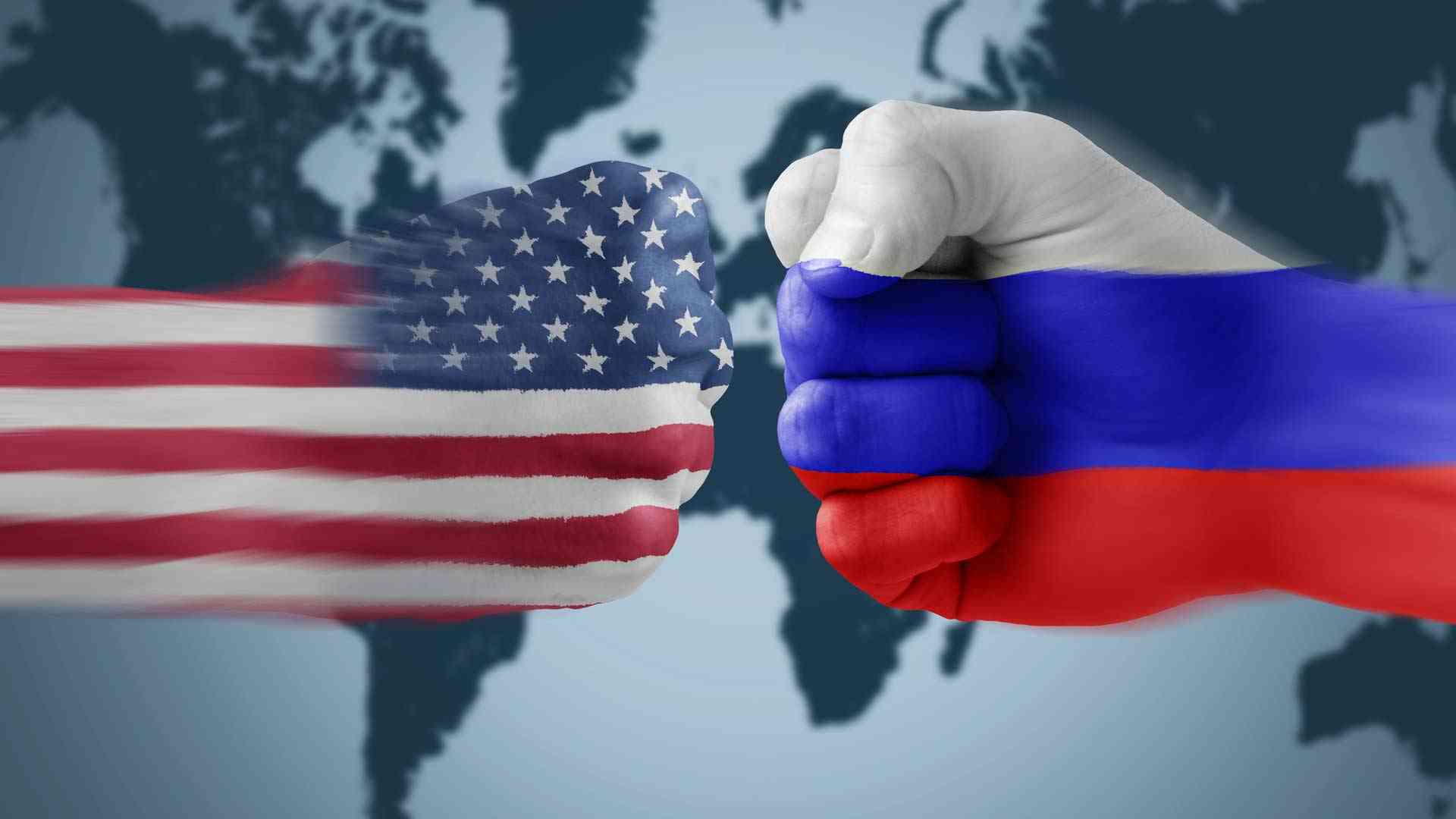
The purpose of this article is to place the story of cooperation along the Alaska-Siberia Lend-Lease Airway during WWII into a larger context—the development of Russian-American relations over time. Since 1917, relations between Russia and the United States have alternated between periods of competition and cooperation. My thesis is that whether relations have been cooperative or competitive has depended on the degree to which the leaders of the two sides have perceived that they have a common interest. This was clearly the case during WWII when the two countries allied in the face of Hitler’s aggression in Europe; the Lend-Lease cooperation was a particularly clear and dramatic example of that. At the time, the memorial to Lend-Lease operation was unveiled in Fairbanks, Alaska, on Aug. 27, 2006, the two countries again found themselves cooperating in the face of another common enemy—this time, the threat of global terrorism.
Initial American reaction to Soviet Russia was hostile. In 1917, after the October Revolution in Russia, the U.S. joined other European countries in efforts to weaken the Bolshevik regime. They originally supported a “Cordon Sanitaire” intended to isolate the Bolshevik government diplomatically.
The Cold War was replaced by a new period of cooperation known as “détente.” Again, cooperation grew out of a common interest—this time, a shared desire to control the growth of nuclear weapons.
Author’s additional note: French Prime Minister Georges Clemenceau is credited with the first use of the phrase as a metaphor for ideological containment. In March of 1919, he urged the newly independent border states that had broken away from Bolshevist Russia to form a defensive union and thus quarantine the spread of communism to Western Europe; he called such an alliance a cordon sanitaire. This is still probably the most famous use of the phrase, though it is sometimes used more generally to describe a set of buffer states that form a barrier against a larger, ideologically hostile state. According to historian André Fontaine, Clemenceau’s cordon sanitaire marked the real beginning of the Cold War; thus, it would have started in 1919 and not in the mid-1940s as most historians contend.
In fact, until 1933 the U.S. government refused to recognize the Communist government in Soviet Russia. In the 1930s, however, both countries increasingly found a common interest in their shared opposition to the emergence of fascism in Europe. From 1941 to 1945, they entered an alliance against Nazi Germany and its Axis powers.
After 1945, relations between the Soviet Union and the United States continued to alternate between cooperation and competition. The period from the end of 1945 to about 1965 was a time of great hostility known as the beginning of the “Cold War”— cold only because actual military conflict did not occur. American policy, based on a perception of the Soviet Union as an expansionist power, was one of “containment.” The Soviet Union was seen as an imperialistic power whose communist ideology justified its global ambitions. Soviet expansion could only be deterred by the threat of countervailing power. Containment theory received concrete expression in Europe in the NATO alliance and was later extended to alliances in Asia and the Middle East. By 1965, the Soviet Union was encircled by these hostile alliances.
ALASKA WATCHMAN DIRECT TO YOUR INBOX
At the end of the 1960s, the initial phase of the Cold War was replaced by a new period of cooperation known as “détente.” Again, cooperation grew out of a common interest—this time, a shared desire to control the growth of nuclear weapons. Although the recognition of this common interest can be seen in the 1967 Non-Proliferation Treaty, détente reached its zenith with the Strategic Arms Limitation Treaty (SALT) of 1972. The Anti-Ballistic Missile Treaty (ABM Treaty) was evidence that both sides accepted the concept of Mutual Assured Destruction (MAD), which assumes that the security of both sides depends on the ability of each to destroy the other. The other important result of détente, of course, was the political settlement in Europe known as the Helsinki Agreement, signed in 1975, which signaled an acceptance by all parties of a territorial status quo in Europe.
By the late nineteen seventies, however, cooperation was replaced once again by competition. First, the Carter administration (1976-1980) made human rights issues a priority in its foreign policy and accused the Soviet Union of violating them, pointing to the issue of Jewish emigration to the West in particular. It was when Ronald Reagan became the U.S. president in 1980, however, that relations became so confrontational that one could speak of a new “Cold War.” Going beyond human rights issues, Reagan condemned the communist Soviet Union as an “Evil Empire” and abandoned the SALT process of limiting arms, arguing instead that nuclear arms must be reduced to the levels established in the original Strategic Arms Reduction Treaty (START). Furthermore, Reagan insisted that the Soviet Union had forsaken détente by increasing its nuclear and conventional military forces. His response was to deploy a new generation of medium range missiles in Europe and to propose a comprehensive missile defense system known as the Satellite Defense Initiative (SDI) or “Star Wars.” By 1985, all negotiations between the Soviet Union and the United States had ended.
The views shared here are those of the authors.




1 Comment
Professor, keep these great words of history coming. Russia and the United states will always butt heads but never come to outright war. Here in Anchorage I remember the 12 year old girl piloting a small aircraft from Russia to Anchorage and landing at Merrill Tower in Anchorage, AK in the late 80’s. Her father was the co=pilot and they had a friend mechanic aboard. Then there was the huge aircraft carrying the Russian sailboat and crew to their sailing Internal challenge to Florida for world competitive cup, running out of gas at Anchorage International airport. FAA cleared them to fill up and come into town to have fun and return to the flight plan to Florida. How about the regular route to Russia from Alaska and the sharing of peacemakers, shopping downtown Anchorage and the malls of the time. And, how about our DNA in our bloodlines that are not at war or discontent with our families or friends or communities. Will we, USA, go to war with Russia? No!! We’ll compete, share bloodlines, argue and make-up and attend church together but we will not go to war. Loved this article from the professor!