
Assessing the role of strong historical personalities is challenging due to the complex dynamics between people and their social, cultural, and economic contexts. Another difficulty is the subjective nature of historical interpretation and the limited availability of reliable personal information from the past.
In short, personality and society have a complex, bidirectional relationship, where society shapes personality, and key individuals – in turn – influence social structures with their personalities, behaviors and faith. This dynamic interaction alters social development, collective consciousness and moral values.
Influential historical figures who changed the course of history include religious figures like Jesus and Gautama Buddha, ancient leaders such as Alexander the Great and Julius Caesar, modern political figures like Nelson Mandela and Mahatma Gandhi, and scientists and inventors such as Isaac Newton, Albert Einstein and Marie Curie.
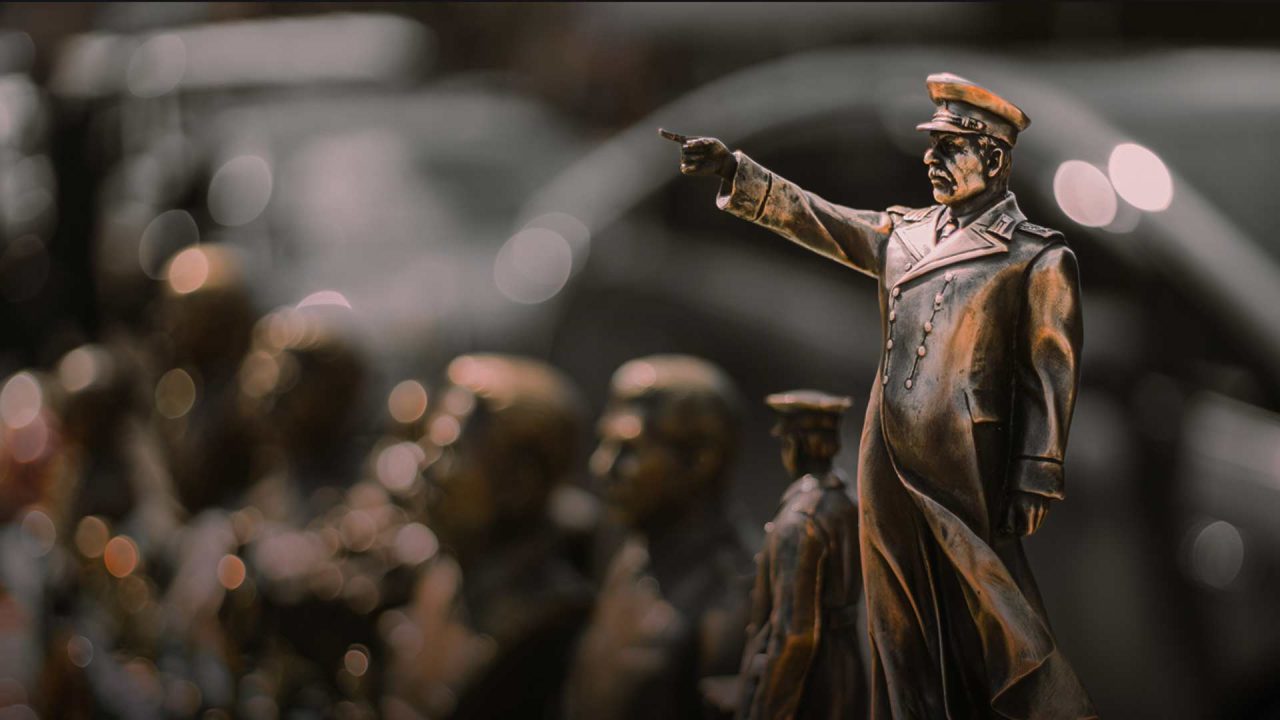
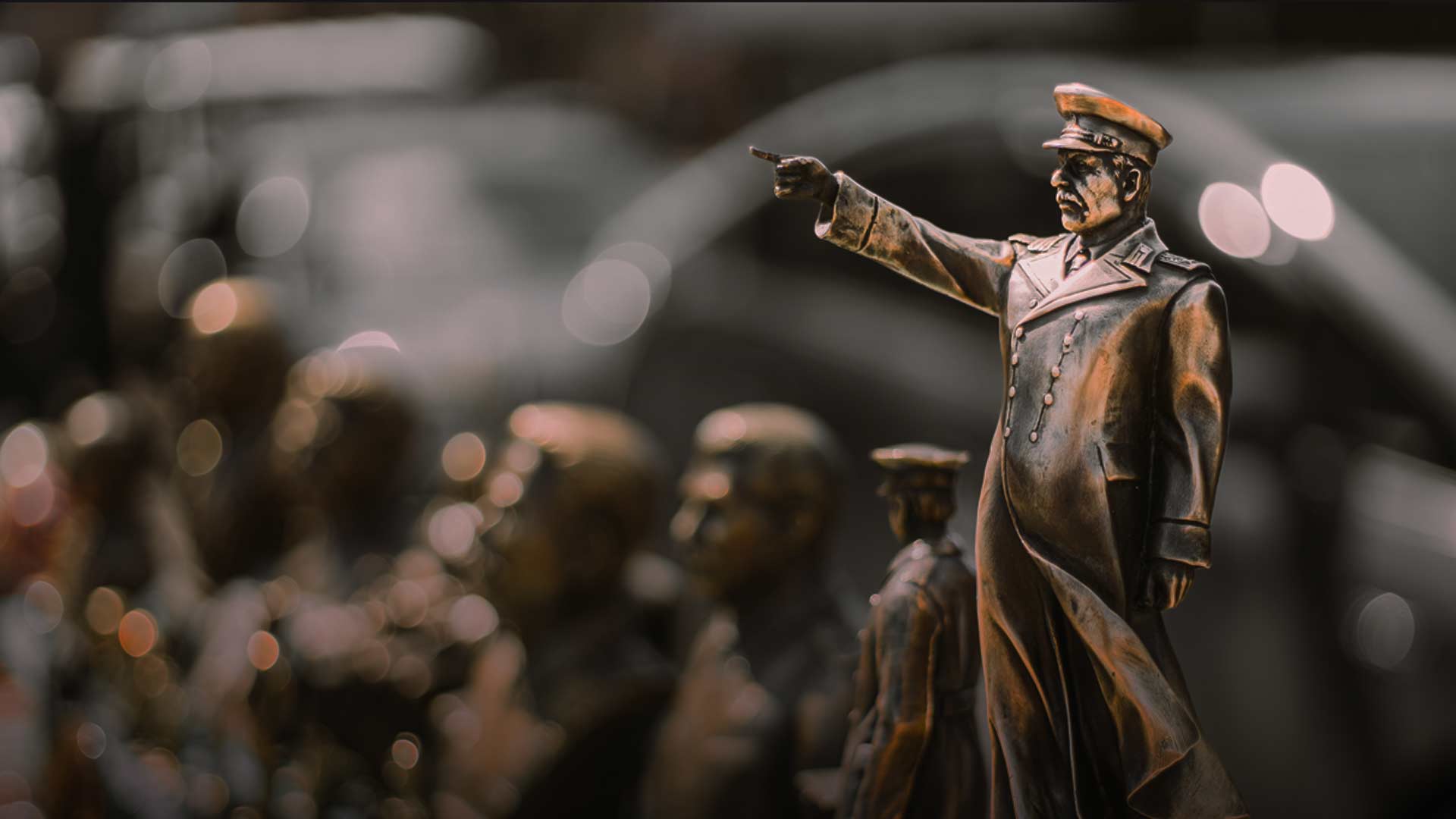
Here, I want to focus on Soviet leader, Joseph Stalin (1878-1953), a controversial politician and brutal totalitarian revolutionary who led the former Soviet Union from 1924 until his death in 1953. Posthumously, public opinions of him have changed from “good to evil and then back to good again,” reflecting historic periods and circumstances.
Vladimir Putin issued a decree renaming Volgograd airport to Stalingrad airport to perpetuate the victory of the Soviet people in the Great Patriotic War.
Stalin’s doctrine of socialism became central to the Communist Party’s ideology; and his five-year plans, starting in 1928, led to forced agricultural collectivization, rapid industrialization, and a centralized command economy. Despite Stalin’s bloody “Great Purge,” his brutal Five-Year-Plans, which consisted of political campaigns in which millions of people were executed or starved by orchestrated famine, and the many other Russians he condemned to Gulag work camps – his role in the World War II victory over Nazi Germany is undeniable.
In 1972, in Moscow, a friend and I attended a premier of the movie “Liberation” (Russian: Osvobozhdenie). This epic war movie gives a dramatized account of the Soviet Union’s war against Nazi Germany during World War II. The theatre’s attendance was meager that day, but at one point in the movie, Joseph Stalin appeared on the screen. Unexpectedly, several wartime veterans stood up to salute the fictional Stalin – proudly showing gratitude and respect to their former Commander in Chief.
After Stalin’s death in 1953, he was given a state funeral in Moscow, with four days of national mourning. On the day of the funeral, hundreds of thousands of Soviet citizens visiting the capital to pay their respects with at least 109 dying in a crowd crush.
Nikita Khrushchev was a successor of Stalin. In his 1956 “Secret Speech” to the 20th Communist Party Congress, he famously denounced Stalin’s cult of personality and dictatorship, stating: “It is impermissible and foreign to the spirit of Marxism-Leninism to elevate one person, to transform him into a superman possessing supernatural characteristics of a king …”
In 1961, Khrushchev’s administration changed the name of the city, Stalingrad, to Volgograd (“Volga City”) as part of the program of de-Stalinization. Stalin’s portraits and monuments were destroyed nationwide, and his publications were removed from all state libraries.
In fact, the initial pre-revolutionary city Tsaritsyn (“Tsar’s City”) was renamed to Stalingrad in 1925, in honor of Joseph Stalin’s leadership during the defense of the city in the Russian Civil War (1918-1921). This renaming was part of a broader effort to create a new revolutionary symbolism in the Soviet Socialist state, breaking, therefore, from the monarchist Tsarist past. The city was originally founded in 1589 as Tsaritsyn.
ALASKA WATCHMAN DIRECT TO YOUR INBOX
Today, as we approach the 80th anniversary of the victory of the Soviet Union and its allies over Nazi Germany, there are many Russians who want the city renamed to Stalingrad, once again. On April 30, 2025, Russian President Vladimir Putin acknowledged that it is up to residents of Volgograd to decide whether the city should revert to the name of Stalingrad, as it was called when Soviet forces defeated Nazi invaders in World War II’s bloodiest battle.
Subsequently, Vladimir Putin issued a decree renaming Volgograd airport to Stalingrad airport to perpetuate the victory of the Soviet people in the Great Patriotic War. Russians refer to World War II, from 1941 to 1945, dating from the Nazi invasion of the Soviet Union, as the Great Patriotic War.
Soviet veteran’s groups have led calls for the restoration of the wartime name – Stalingrad. Indeed, Stalingrad was the turning point of the war, when the Soviet Red Army, at a cost of more than 1 million casualties, broke the back of German invasion in 1942-43.
For good and sometimes ill, opinions about key personalities – even ones like Joseph Stalin – are subject to dynamic interpretations of the historical record over time.
The views expressed here are those of the author.





5 Comments
The number of people killed under Joseph Stalin’s regime vary significantly (but MUCH GREATER than 750,000), ranging from MILLIONS to potentially TENS of MILLIONS, with some sources citing figures as high as 20 MILLION OR MORE due to political repression, forced labor in the Gulag, deportations, and man-made famines, such as the Holodomor in Ukraine. The exact number is difficult to determine due to the limited availability of Soviet archives, but historical analysis of declassified documents and demographic studies has provided more precise figures for specific categories of victims. I’d say he was not worthy of admiration or honor by anyone, but everyone is entitled to their own opinions – just not their own set of facts.
He ranks right up there with Mao Zedong who had millions killed, while tens of millions more Chinese died from starvation and suicide in the Great Leap Forward. Two peas in a same pod.
Putin’s fantasy with the past Russian heroes of his liking were illustrated in the musical and art of the intermission at the Sochi winter games in 2014 in Russia. The choreography, musical and dance depicted the nearest history of Russia in the last two hundred years including the Stalin era after world war two. So, yes, Putin’s imaging of the past is still very prevalent in what he does today.
“Dynamic interpretations”? It’s an interpretation when a pockmarked and deformed man born Ioseb Besarionis dze Jughashvili opts to change his name to Joseph Stalin (practical translation: ‘The Man of Steel’) and then kill between 6mm – 20mm of his own citizens during his period of authoritarian leadership? He hated the jews, too. As a citizen of Russia, israel, and America when it suits you surely you have noticed that, no? I wonder what the dynamic interpretation of that might be? Obfuscating history by stating that an historical figure was responsible for 750k deaths while purposefully omitting mention of the other 5-19mm he’s known to have killed is a self inflicted assault on author credibility and a fictionalization of the historical record. By your measure Mao Zedong was just misunderstood when he killed 45mm of his own people between 1958 and 1962.
The only intelligent response necessary to this is “Have you not read THE GULAG ARCHIPELAGO? ”
That covers it . . . but I could add GULAG, A HISTORY by Anne Applebaum, and JUDGEMENT IN MOSCOW, SERIOUS CRIMES AND WESTERN COMPLICITY by Vladimir Bukovsky. (Also, the author of TO BUILD A CASTLE: MY LIFE AS A DISSENTER. I was honored to have made his acquaintance in Washington DC several years ago.)
One of my friends, in private correspondence, observed: “Interesting piece. I’m sure it will be misunderstood as an endorsement of Stalin, which of course it’s not. Good luck in the comments section!”