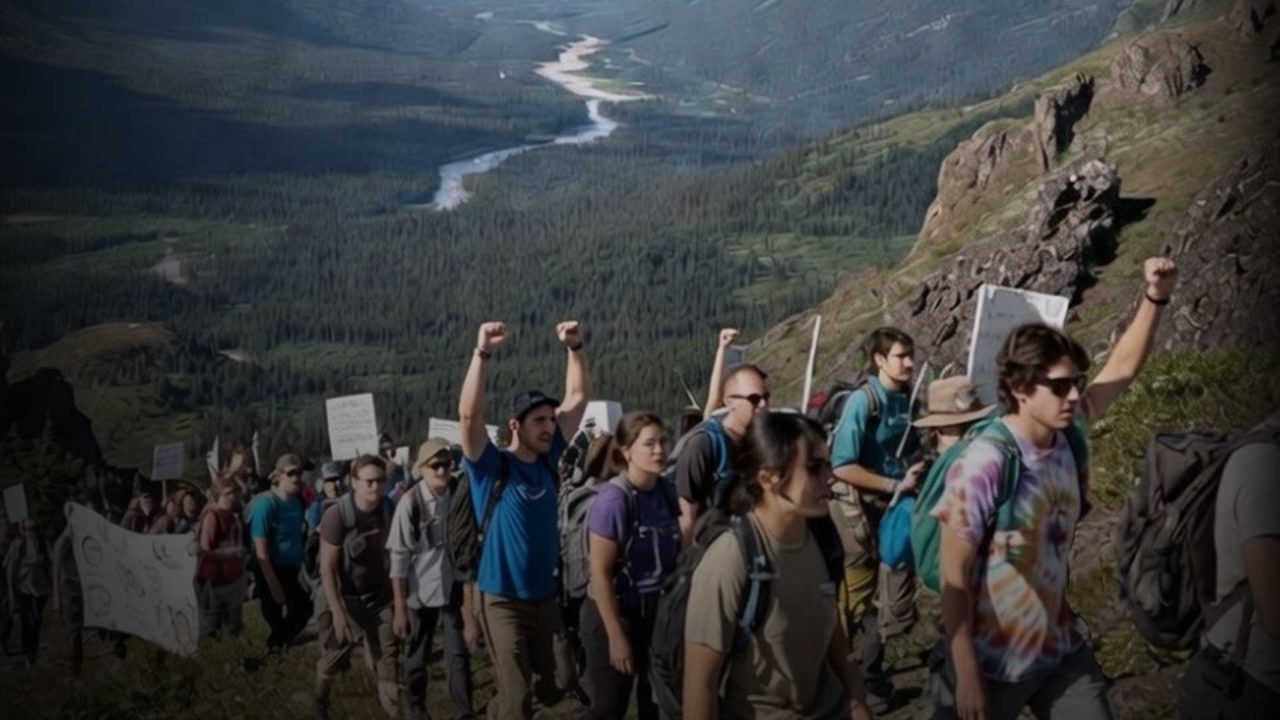


Alaska is our home, our workplace and the foundation of our children’s future. Yet more and more, major decisions about our development are shaped by organizations headquartered outside the state, advancing agendas that do not reflect the realities of families who live here.
Alaskans understand stewardship because we live it. We fish these rivers and hunt these lands. We raise our kids here. We depend on clean water, healthy wildlife and working landscapes. We also depend on jobs, affordable energy and responsible development to fund our schools and public safety. Stewardship and development are responsibilities we carry together.
What concerns me is the growing pattern of outside activism that treats any road as a threat, any mine as exploitation, any drilling project as desecration, and even reliable power generation as suspect. These campaigns are rarely spontaneous. National advocacy groups deploy legal teams, media campaigns and coordinated public comment drives. When they lose in one arena, they shift tactics and try again. They insist we put creation above the Creator.
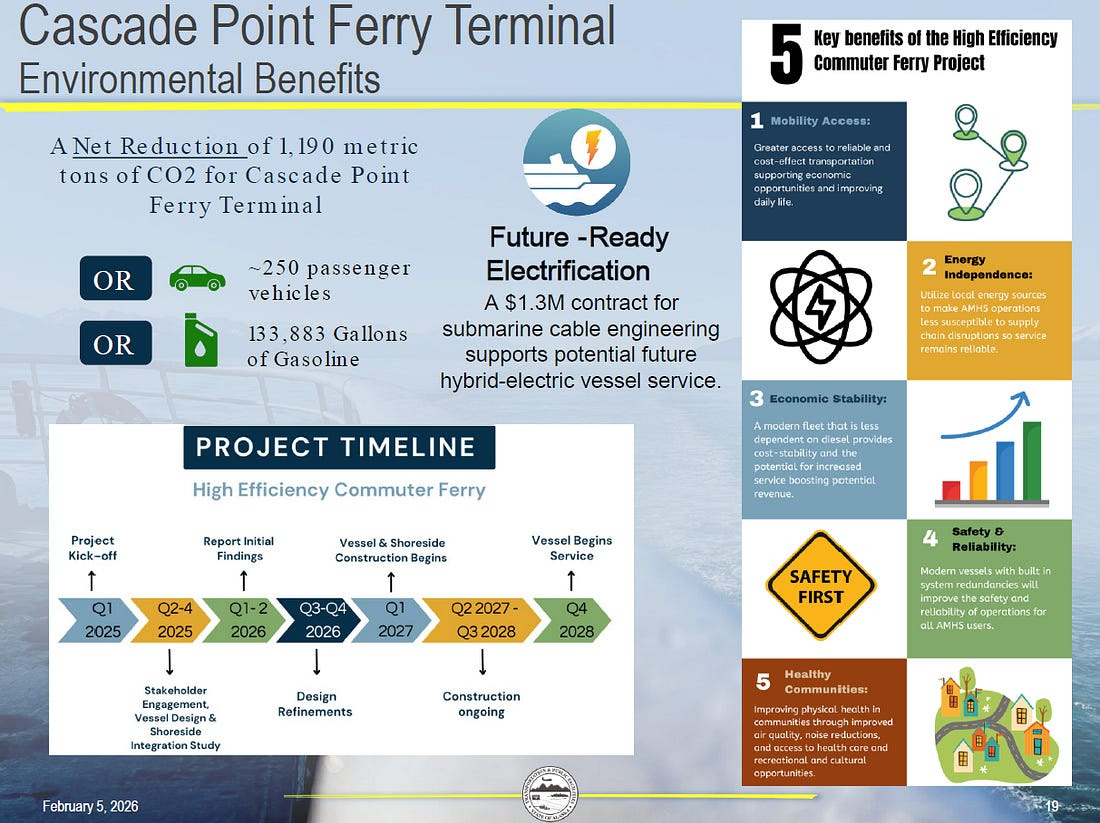
We have seen this clearly with the proposed Cascade Point Ferry Terminal and road extension north of Juneau. The project aims to improve efficiency in the Alaska Marine Highway System between Juneau, Haines, and Skagway, reduce travel times, lower operating costs, and cut emissions. Yet despite the obvious fiscal and environmental savings to the Ferry System, the discussion quickly shifted toward accusations that it primarily served mining interests. Outside-funded groups such as the Southeast Alaska Conservation Council amplified ecological and procedural concerns. A regional infrastructure improvement became a symbolic fight over development itself, and nuance gave way to ideology.
The Ambler Road shows the same pattern on a larger scale. National groups such as the Sierra Club have spent years blocking it through litigation, lobbying and media pressure. The goal has never been mitigation or refinement; it has been to stop the project entirely.
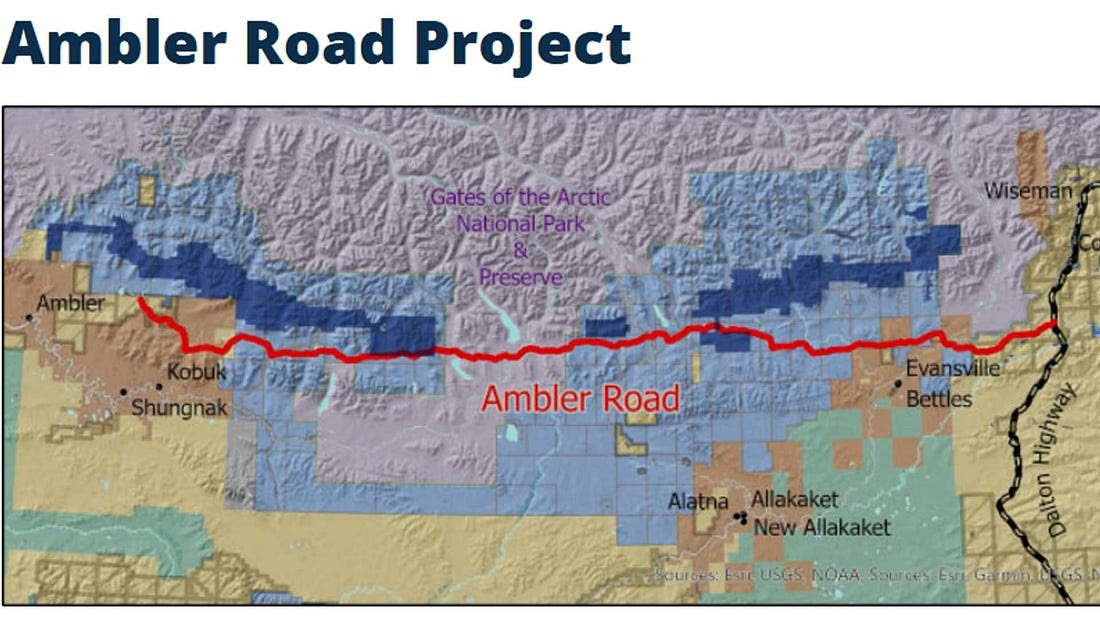
When regulatory and federal pathways became less certain, the strategy shifted into the Alaska Legislature through HB 124, which was presented as necessary structural reform. In practice, however, it would gut the Alaska Industrial Development and Export Authority and severely limit its ability to finance major infrastructure and resource projects. Exactly what those who oppose development at any cost want.
By requiring legislative approval for any financing over one hundred million dollars, HB 124 micromanages AIDEA and invites huge project delays and political interference. It politicizes the board by mandating legislatively assigned positions, which will tilt AIDEA toward the same anti-development priorities advanced by outside groups who oppose all Alaska development. Stripping confidentiality protections further deters private investment and transforms a nimble economic driver into a bureaucratic quagmire.

This is not about transparency. AIDEA already operates under rigorous oversight, federal review and public input. HB 124 is about control of Alaska projects. It hollows out AIDEA’s independence and weakens Alaska’s ability to fund roads, ports, energy facilities and access corridors vital to our prosperity.
And this fight does not end with Ambler. Development in the Arctic National Wildlife Refuge has long been targeted by national campaigns, despite congressional authorization and local support. The West Susitna Access Road faces coordinated resistance. Even discussions about coal or hydropower to provide reliable energy for Railbelt communities provoke immediate opposition from donors who will never pay the bills or feel the cold.
At the same time, President Donald Trump has made Alaska resource development a national priority, emphasizing domestic energy, strategic minerals and economic independence. Recent EPA actions signal a federal environment more open to responsible development. It is no coincidence that as federal barriers shift, activist networks intensify attacks on state institutions. If they cannot block projects federally, they target the financing mechanisms that make development possible.
This is not a narrow debate about oversight or environmental standards. Alaska already operates under some of the most rigorous review processes in the nation. Major projects undergo years of analysis, coordination and public comment. The safeguards are real and enforced.
What this debate truly comes down to is whether Alaska and Alaskans will retain the capacity to responsibly develop our own resources without outside influence. It is about preserving the institutions and financial tools that turn opportunity into Alaska jobs, infrastructure and affordable energy.
We can and should have honest disagreements about specific projects. We can insist on strong protections, meaningful consultation and careful mitigation. That’s responsible governance. But we should not allow outside-funded campaigns to hollow out the institutions that help Alaska build infrastructure, create jobs and provide affordable power. Nor should we allow them to sabotage the financing mechanisms created to grow our economy.
ALASKA WATCHMAN DIRECT TO YOUR INBOX
Alaskans should determine Alaska’s future. We can protect fish and wildlife and still pursue responsible drilling. We can maintain high environmental standards and still build access roads. We can ensure clean air and water while delivering reliable, affordable energy to families and small businesses.
Part of me wants to say, as I once heard Ted Stevens quip, “To hell with ’em, let ’em freeze in the dark.” But we, ourselves, can’t operate that way, because most of those who fund this type of eco-terrorism do not live in Alaska. They do not face our winters, pay our heating bills, or raise children on our lands. We do. That is why Alaskans must retain the power to make decisions for ourselves. We must talk honestly, and WE must decide. Not the power and money brokers on the East Coast.
Our goals for Alaska are not mutually exclusive. They reflect the balanced, practical approach Alaskans expect of all of us. The question before us is whether we will defend Alaska’s right to develop its resources responsibly and finance its own future, or allow outside interests to dismantle the tools that make that future possible.
The views expressed here are those of the author.



6 Comments
The United States bought Alaska from Russia. Much of it is still owned by all the people of the US. They do get to have a say in how the resources of the country are used. Again it is called democracy.
The states join the union on equal footing, NY state has about 1% of their land under federal control. In Alaska 60% of the state land is under federal control. That is not equal. To those who think they can tell Alaska what to do with her land, they can just pipe down, it is none of their business. And we are not a Democracy.
Oh Mark….
1. We live in a republic, not a democracy;
2. The federal government controls far too much of Alaska to the detriment of Alaska’s residents;
3. I wonder how Oregon, Washington, California and other leftist states would like it if Alaskans attempted to interfere in their affairs and economies?
You have hit a bull’s eye, Mr. McCabe. Thanks for an essay that badly needed to be published. To your critic Mark, I suggest that he considers the constitutionality of national parks, monuments, wildlife refuges, forests. If he desires Alaska as “America’s National Park”, which is what we have become, he cannot simply rely upon popularity to justify federal control. The Constitution — properly interpreted — is more of a restriction imposed upon federal power, than as a license for it to destroy a state’s economic livelihood.
Not bad for AI
I’m reminded of a remark Congressman Sam Gjedenson once made to Congressman Don Young, after a similar rant about the federal government sticking its nose into Alaska’s business: “If it wasn’t for the USA,” Gjedenson said with a smile, “you could have been giving that speech in Russian!” Today, if you don’t think we need the federal government, you might also want to brush up on your Mandarin Chinese.