

The 2026 Arctic Winter Games (AWG) concluded this weekend in Whitehorse, Canada. The closing ceremony was held on Saturday, and one thing was clear after the competition was over. While some older Alaskans may fear that today’s young people lack toughness, this competition demonstrated that the athletes representing Alaska are every bit as strong and determined as past generations of Alaskans.
For those who are unfamiliar with this competition, the Arctic Winter Games is a biannual event for countries in the circumpolar North, including one team from Alaska, five teams from Canada, one from Greenland, and one representing the Sápmi people from northern Scandinavia. The regions provide teams to compete in both men’s and women’s divisions, which are then further divided into junior teams under 18, and senior teams over 18 years of age.
There is some commonality between AWG and the recently completed Winter Olympics. Teams compete in some familiar sports such as hockey, cross-country skiing, and curling. However, the AWG also has sports with a cultural association to First Nations people from northern regions. Alaskans might be familiar with similar events held here in Alaska, we call them the Native Youth Olympics, or the World Eskimo-Indian Olympics, held annually in Fairbanks.
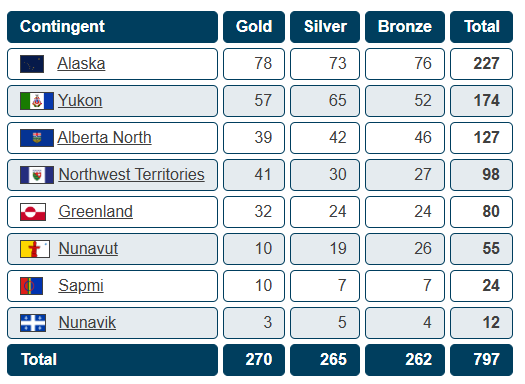
For those who judge results using the medal count, Team Alaska “won” this year’s AWG with a total of 227 medals, but that doesn’t tell the whole story. While some of the more popular sports, like hockey, receive lots of attention and coverage in the news media, there is one story that deserves to be told, which exemplifies what this competition is really all about. It’s the story of the women competing in a little-known sport that is far from the bright lights of the hockey arenas.
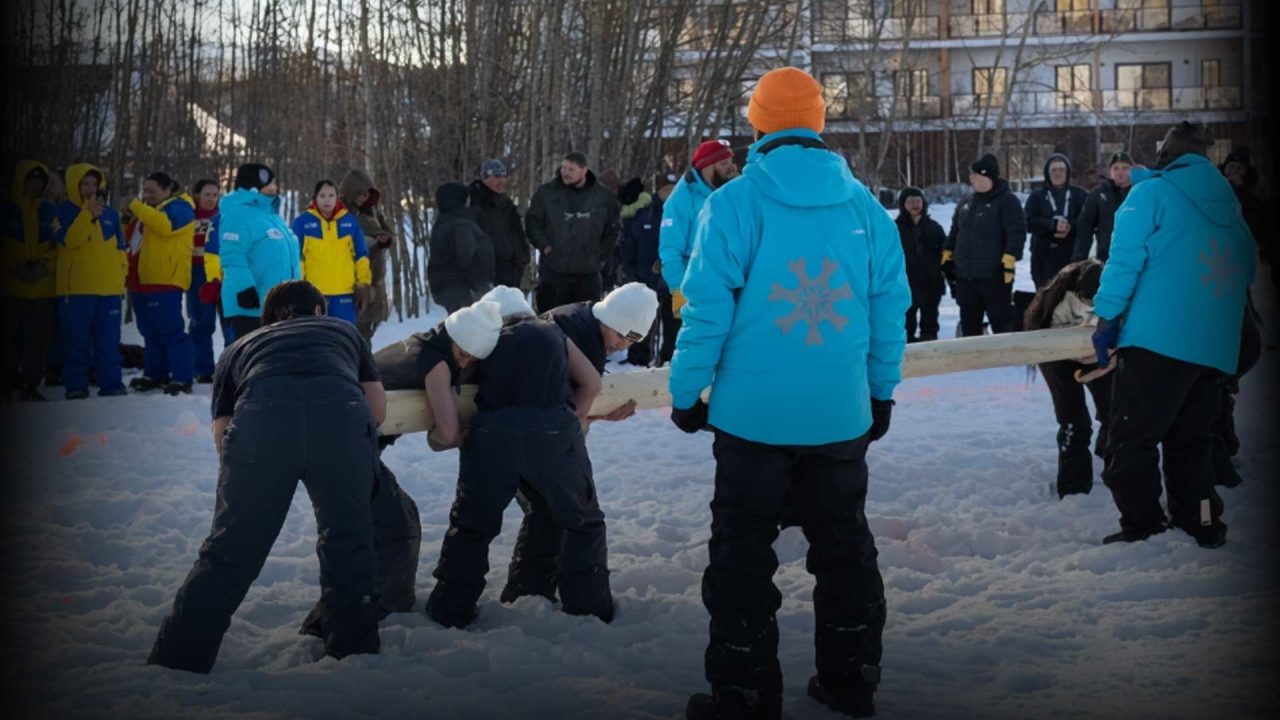
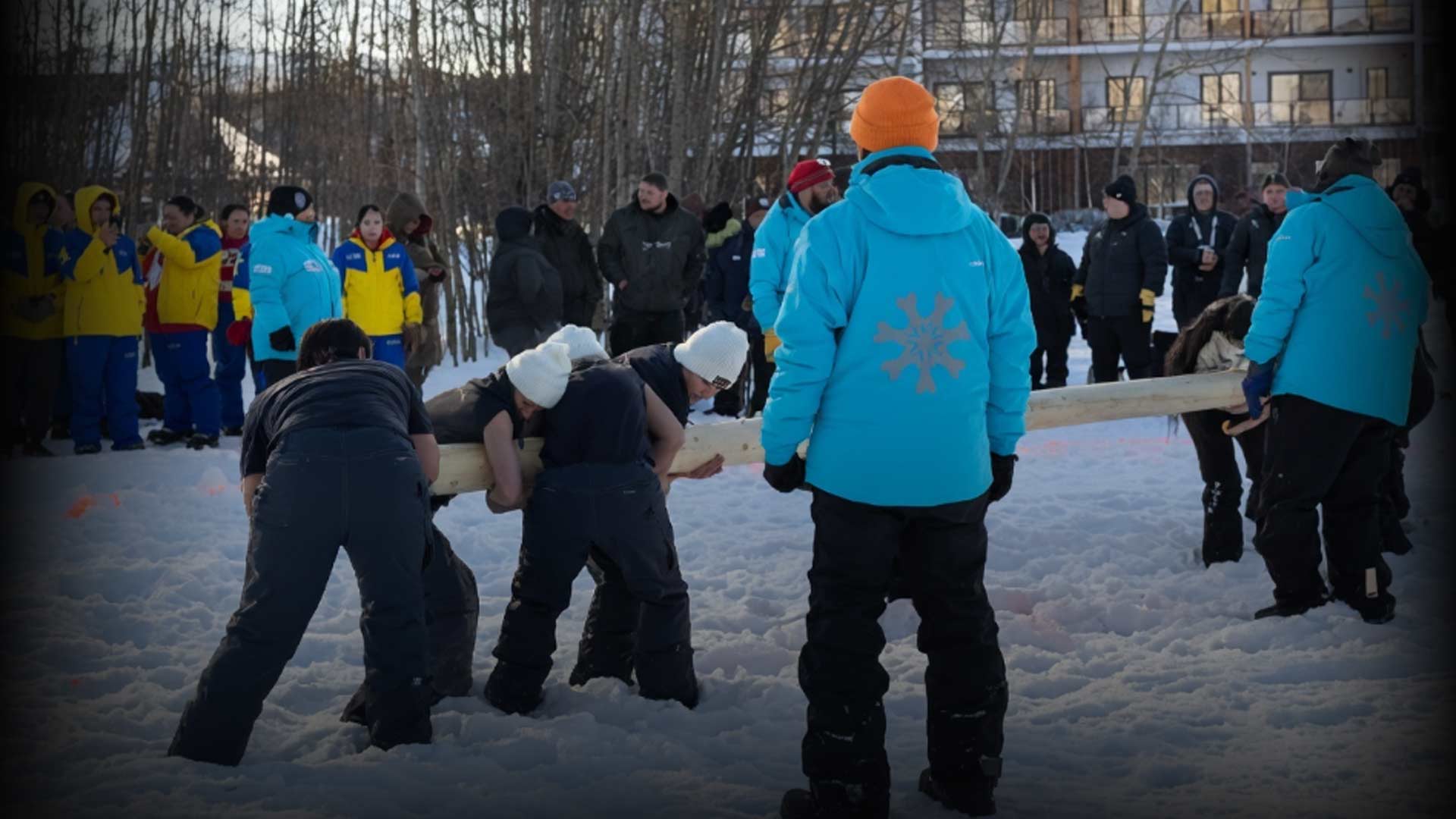
Part of the AWG is a series of events called the Dene Games, which is similar to a track meet decathlon event, but intended to honor and respect the First Nations of the north country. It is a series of five events rooted in cultural practices that emphasize strength, camaraderie, and determination, skills essential for survival in Arctic environments. The toughest and most physically demanding of those games is pole push, a game that can only be described as brutality in motion.
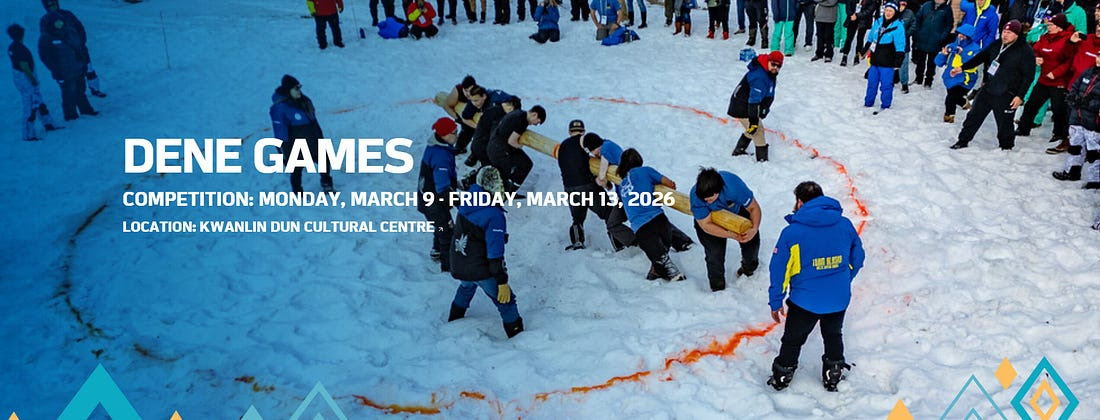
Imagine a tug-of-war in deep snow, using a 200-pound telephone pole instead of a rope, and instead of pulling, the two teams are trying to push each other out of a 33-foot diameter circle. For pole push, a team consists of four people. Teams raise the pole above waist level, and on the command to start, they begin pushing. When all four members of a team are either pushed out of the circle or forced to fall down, they lose that attempt. A match consists of the best two out of three tries.
As you might imagine, when trying to perform this sport in knee-deep snow, it is easy to fall and get injured. Physical exertion is tremendous, and the danger of getting hit by the pole when you stumble is very real. Injuries are common in this event, and there were several of them on Friday, including multiple athletes who were taken to the hospital for injuries.
The pole push was the last event before the closing ceremonies, for the simple reason that the potential for injury is so high that it could prevent athletes from being able to compete in the other events.
On Friday, the day dawned with the morning temperature of -27F. Man or woman, young or old, this is not a game for sissies.
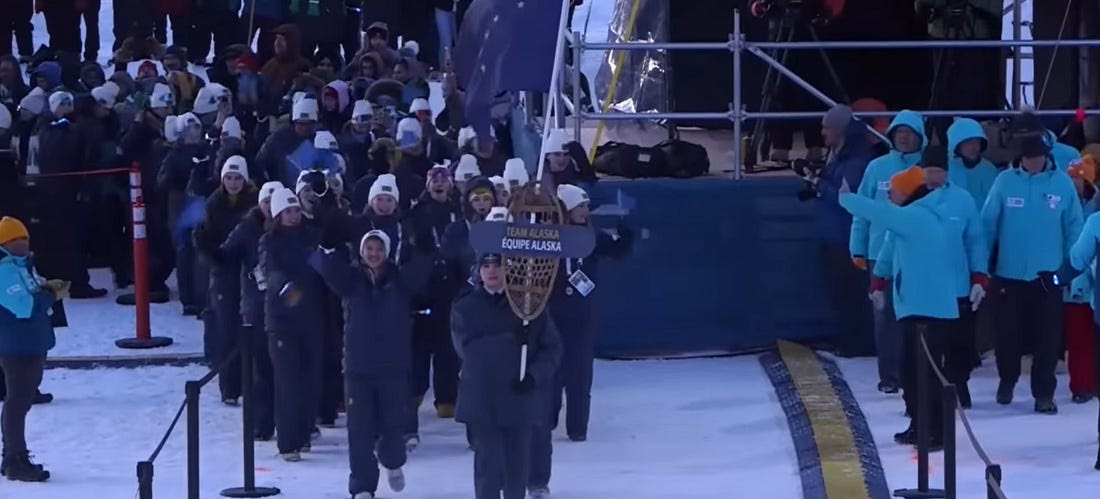
At one time, only men were allowed to participate in this competition. Women were prohibited for fear that they were unable to handle the brutality involved in this physically demanding sport. That changed recently and the Alaska women proved that they are more than able to face this challenging sport. Both of Alaska’s junior and senior women’s teams not only represented themselves well, but they won medals against teams from countries where this sport is better known and practiced. Alaska women overcame frostbite, injuries, and hypothermia to achieve the highest level of athletic competition in this sport against the best athletes in the world.
If there was ever any doubt about the toughness, skill, or athletic prowess of Alaska’s latest generation, it should be put to rest. As exemplified by the hardy women in the pole push competition, today’s young Alaskans are just as tough, if not tougher than those who came before.
If you see one of the athletes or volunteer coaches wearing a Team Alaska jacket, shake their hand and thank them for representing our state so well. Ask them about their events; you will be talking to the next generation of Alaskans, and they are ready to face any of the challenges the world will throw at them.
The views expressed here are those of the author.