

It happened again in Juneau, and Alaskans deserve a straight account of what was done and how it was done.
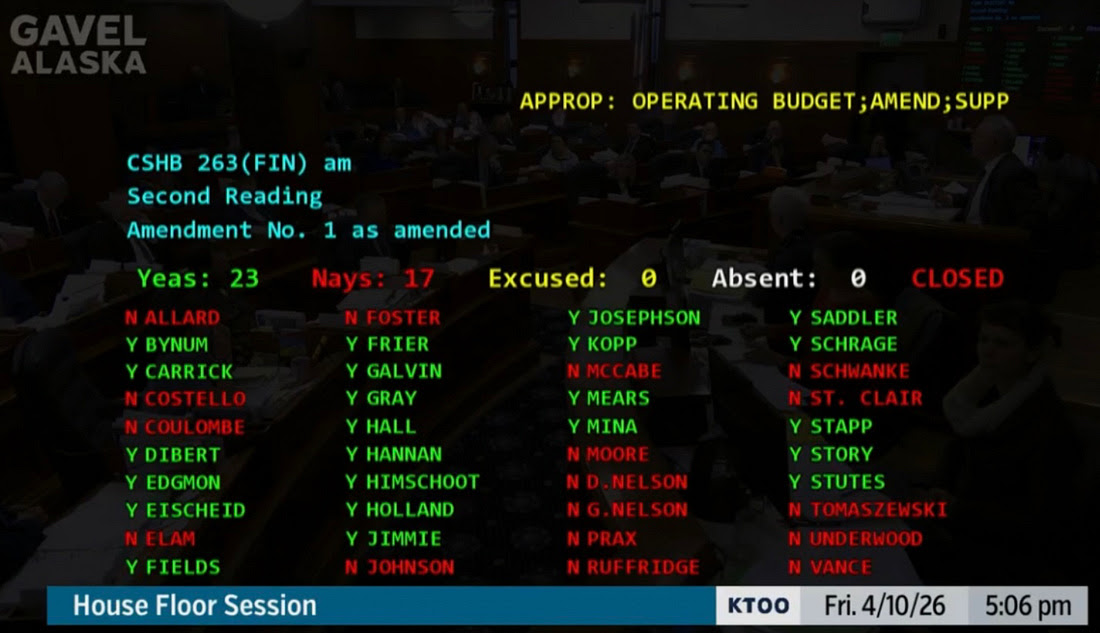
On the House floor, a 23-17 vote on April 10 killed the full statutory Permanent Fund Dividend. Proposed by the Governor and moved out of Finance just days ago, it was cut to roughly $1,500, with final passage scheduled for Monday.
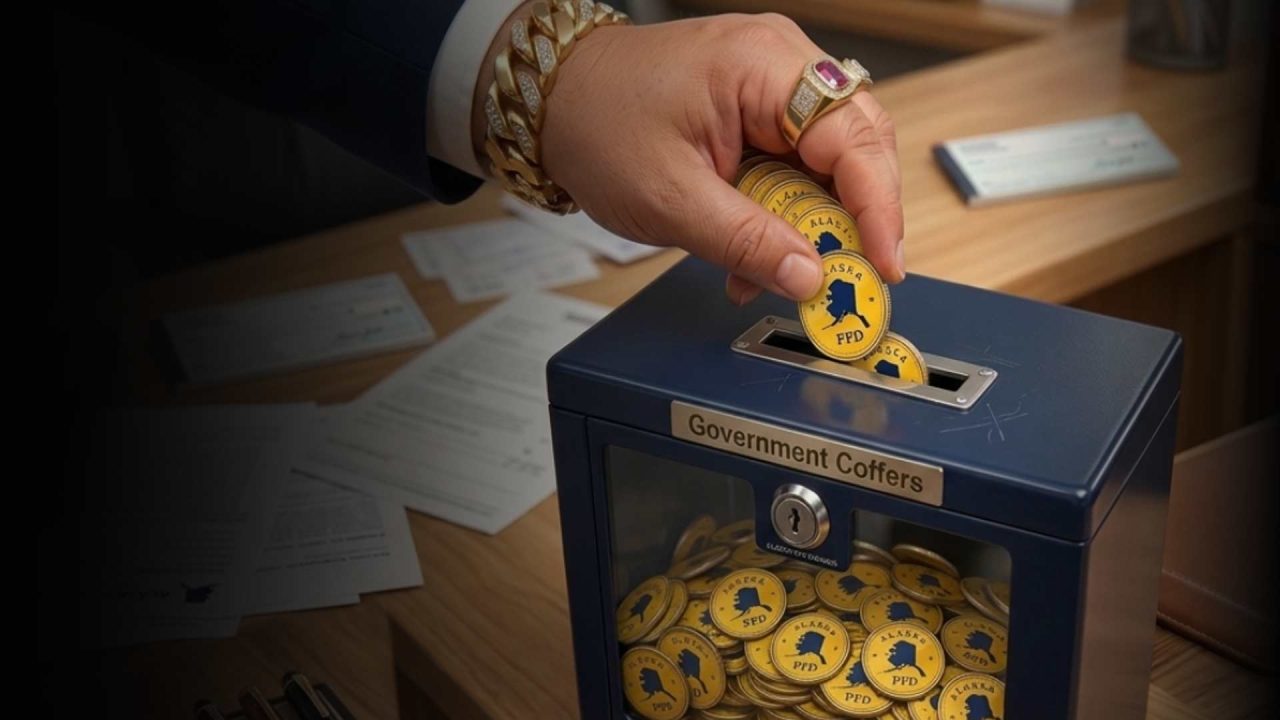
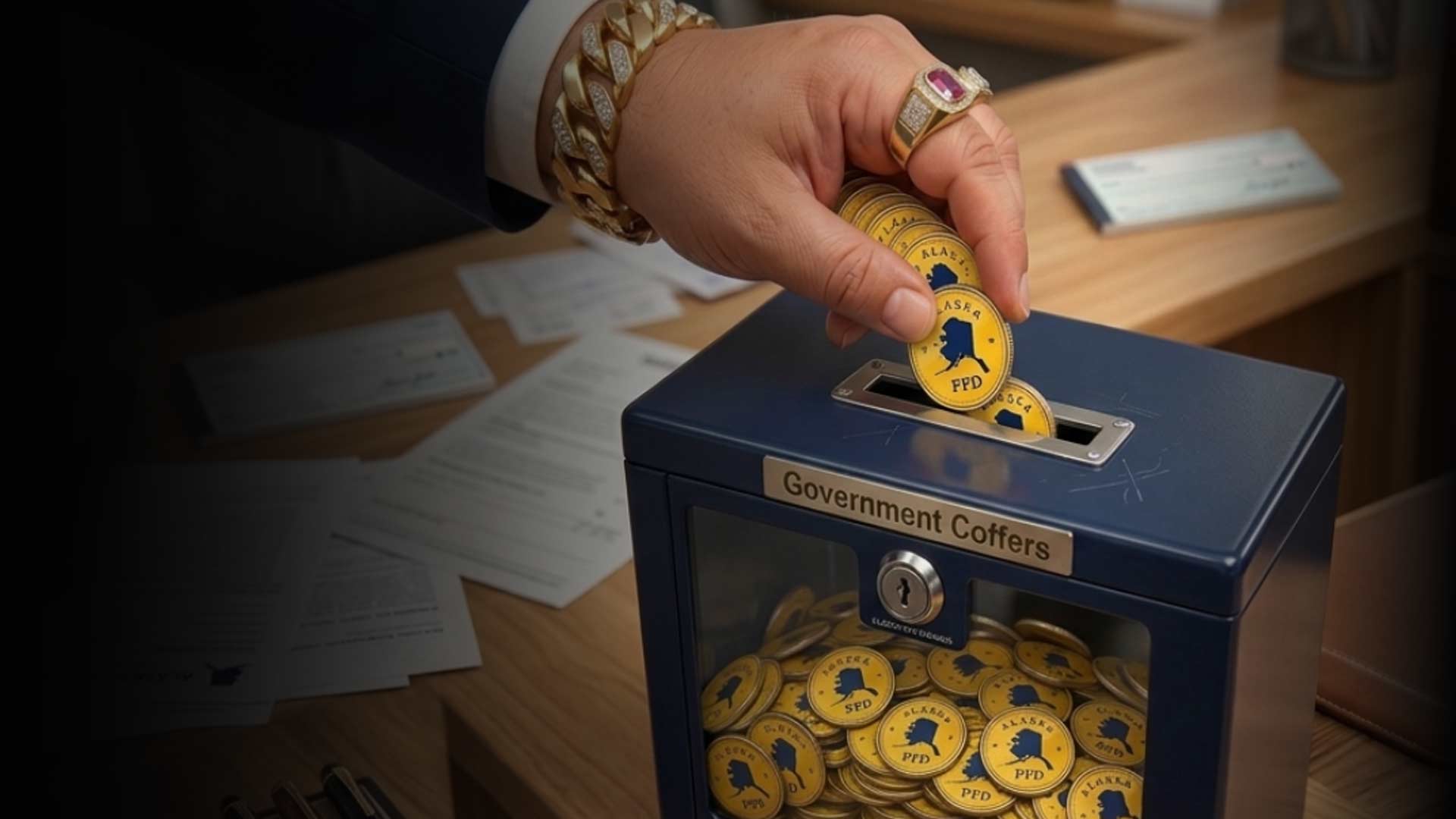
The pilfering of your dividend was not confusion. It was not a mistake. It was not even budget week chaos. It was a conscious decision to redirect your money to government spending.
I introduced amendment #1 during the House floor debate on the FY2027 budget to lock in the full statutory dividend of about $3,800, force an honest debate about spending, and provide a pseudo spending cap. That amendment was hijacked by Representative Calvin Schrage and the House majority coalition and turned into a vehicle to reduce the dividend instead. When it became clear what was happening, I moved to withdraw my own amendment, and that request was blocked. An amendment meant to protect your dividend was used to cut it, and I could not stop it.
Three Republicans crossed the aisle and provided the margin. One of them had created the $3,800 number in Finance just days before, using a structure that required a draw from the Constitutional Budget Reserve. When the CBR draw proved to be the obstacle on the floor, he reversed course and voted to cut your dividend instead. When I moved to withdraw my amendment after it was repurposed, the same colleague voted with the Democrats to kill my withdrawal. Those painful details matter because they show intention, not accident.
The math is straightforward. The Percent of Market Value draw produces roughly $3.8 to $4 billion each year from the Permanent Fund. That money either goes to the people through the dividend or to government through the operating budget. A full dividend would have left about $1.7 billion for state services and forced real prioritization. If we then needed more for government, we could consider a CBR draw, but for government expenses, not to fund the dividend.
ALASKA WATCHMAN DIRECT TO YOUR INBOX
A $1,500 dividend leaves billions more in the Legislature’s hands to spend. That should worry every Alaskan.
This is not about scarcity. The Fund sits near $87 billion; oil prices are strong and climbing, revenue projections are up roughly $1 billion, and the earnings reserve holds more than $14 billion. Alaska could follow its own dividend statute today, and every legislator knows it. Choosing not to do so is a policy decision about growing government at the expense of the people who own our resources.
Meanwhile, families across Alaska are feeling the squeeze. Food costs remain high, SNAP benefits are stretched, and food banks from Anchorage to Western Alaska are under pressure. A full dividend would have meant real relief, thousands of dollars per household circulating into local economies for fuel, groceries, and basic needs without bureaucracy or delay. We have seen it in full dividend years when food insecurity drops and local businesses benefit.
The unraveling began in 2016, when Governor Walker vetoed half the dividend. Wielechowski, Halford, and Tillion sued to stop him, arguing the statute required an automatic transfer to Alaskans that no governor could touch. They lost. The Alaska Supreme Court ruled in 2017 that the dividend is subject to annual legislative appropriation and the governor’s veto power. With that legal cover established, the Legislature moved quickly. In 2018, they passed SB 26, restructuring the draw from the Permanent Fund and codifying “appropriation” language into statute where “transfer” had stood before. The people’s mandatory share became a discretionary budget line item, and every year since the Legislature has treated it that way.

That’s the core issue. Too many legislators now see your dividend as a funding source for government rather than a distribution to Alaskans. They treat your dividend as their piggy bank. When budgets get tight or spending grows, the PFD becomes the easiest target. That mindset flips the system on its head. Government is supposed to be built around what remains after the people are paid, not the other way around.
The dividend is not a handout. It is not a welfare program. It is the return on a shared asset owned by the people of Alaska. When the dividend is reduced to make room for spending, it is not fiscal discipline. It is a shift in who benefits from Alaska’s resource wealth.
My record on this is clear and consistent. I have supported the full statutory dividend, opposed arbitrary splits, and backed a constitutional solution to take this fight out of the annual budget process in every venue and every committee or working group I sit on. Those efforts have come up short, often by just a few votes, and this year was no different. Those in the minority caucus who believe in a full PFD held strong at 16, but it was not enough.
The budget now moves to the Senate, where an even lower dividend has already been discussed. That is the next round in a fight that continues because the underlying problem has not been fixed.
The long-term answer is to put the dividend requirement in the Constitution so it cannot be negotiated away each session. Until then, this pattern will repeat and Alaskans will continue to receive less than what the law lays out. The only real fix is voters electing legislators who believe the people of Alaska should be paid first.
Elections decide this, not press releases, Substack essays, or floor speeches.
The Permanent Fund belongs to you, and the dividend is the clearest proof of that ownership. This is an election year. If you want your full PFD, vote for legislators who believe that the dividend belongs to Alaskans, who should be paid first.