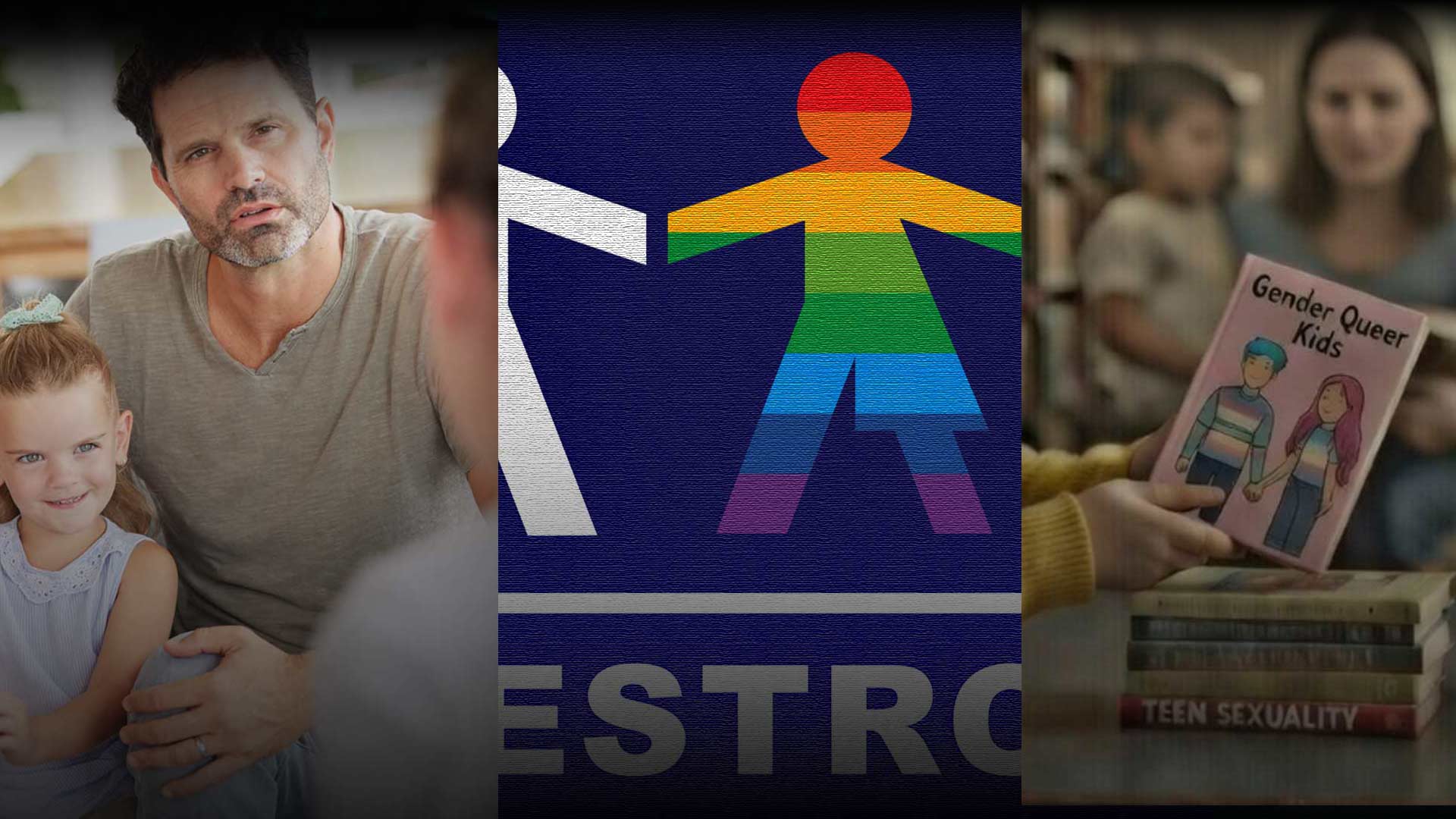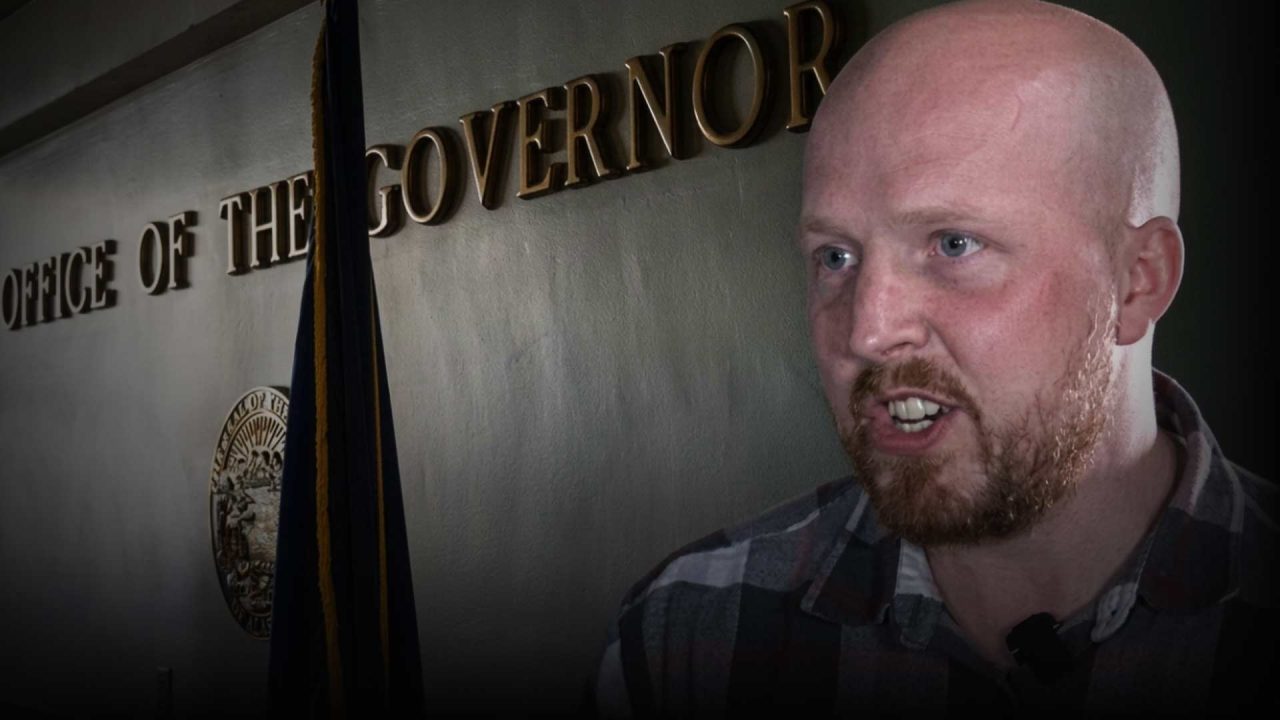

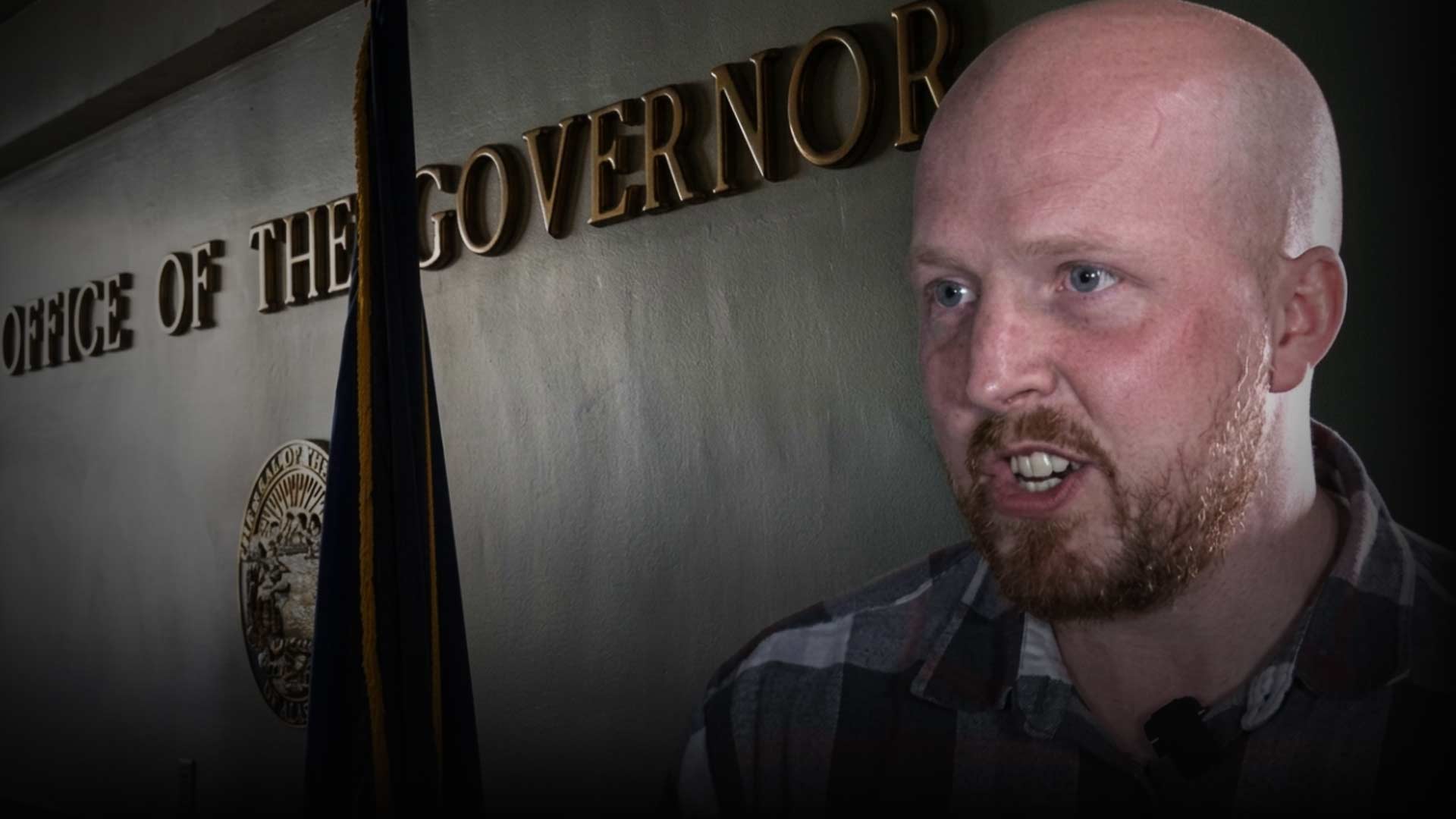
How would a Governor JKT (Jonathan Kreiss-Tomkins) Administration and full-throated Democrat-controlled Legislature impact Alaskans who adhere to the teachings of Scripture?
Ultimately, all of this election and campaign madness right now is much more about policies than personalities. Certainly, we want upstanding people to run for and serve the people as public office holders.
At the same time, the often-quoted proverb stating that the people rejoice when the righteous are in power and groan when the wicked rule (Prov 29:2) also means that when righteousness increases, flourishes or gains influence within society, the people benefit, and when falsehoods about God and reality gain governing power, a society suffers.
The statement, likely written by King Solomon, son of King David, wasn’t saying that perfectly righteous people had to – or even could – rule. He knew about his own transgressions, and he certainly knew about those of his father. Biblical wisdom, as laid out throughout Scripture, seems to emphasize what rulers actually did with the authority entrusted to them.
WHAT A DEMOCRAT-DOMINATED GOVERNMENT MEANS FOR ALASKANS OF FAITH

For Alaska pastors and Christian leaders, the consequences of state government extend far beyond taxes, budgets and traditional partisan politics. Decisions made in Juneau can directly affect the protection of unborn life, religious liberty, rights of conscience, parental authority, Christian education, sexuality and gender policy, women’s sports, and the freedom of churches and ministries to operate according to their convictions.
Democrat Alaska lawmakers have already introduced measures involving most of these. Some proposals died in committee. Others advanced. Some passed a chamber. In at least one important example discussed below, legislation passed both houses but was stopped by a Republican governor’s veto.
Simply put, Democrat control of the governorship and both legislative chambers would change the institutional landscape considerably.
For pastors, this is therefore more than a political discussion.
It is a policy question about the environment in which churches minister, Christian schools educate, parents raise their children, medical professionals exercise conscience, religious organizations seek to remain faithful to their beliefs, and ultimately, whether the taking of innocent life will be exacerbated.
The following analysis examines what the Alaska legislative record tells us could be at stake.
ABORTION — MUCH MORE THAN KEEPING IT LEGAL
Perhaps nowhere could the policy consequences be greater than abortion.
The question would not simply be whether abortion remains legal in Alaska. The Alaska Supreme Court has repeatedly manufactured a “right” to abortion “emanating from the penumbra” of our State Constitutional privacy clause. We are as bad as it gets in terms of protections provided to the preborn.
A Democrat-controlled Governor and Alaska Legislature would almost certainly double down even further, as they have in radical pro-abortion states like California and New York where abortion policy extends far beyond legality itself.

Governor JKT and a willing Democrat-led Alaska Legislature could:
— Increase abortion availability in state law and/or the Alaska Constitution
— Expand state financial support for abortion providers or abortion-access programs
— Require broader insurance coverage involving abortion
— Expand public funding of abortion
— Promote abortion pill access through telehealth
— Shield Alaska abortionists from investigations, subpoenas or lawsuits originating in states with more restrictive abortion laws
These aren’t merely theoretical policy models.
California constitutionally protects abortion and invests more than $200 million in abortion access initiatives. It has established an Abortion Access Fund and enacted protections involving providers and medication abortion. New York requires Medicaid and state-regulated private insurance coverage of abortion, allows minors to obtain abortions without parental permission, and has enacted interstate “shield” protections.
Alaska legislators have already considered movement in this broader direction.
HB 241 — Reproductive Health: Legal Protections proposed protections involving search warrants, arrests, extradition, subpoenas, medical information, telecommunications records, civil litigation and enforcement of laws from other states.
There is a significant policy distance between allowing abortion and affirmatively protecting or facilitating access through funding, insurance, telehealth, medication access, privacy protections and interstate shield laws.
A unified Democrat-led state government would most certainly determine where Alaska falls on that spectrum.

CHEMICAL & SURGICAL MUTILATION OF GENDER CONFUSED MINORS
The Alaska State Medical Board has taken significant steps toward prohibiting chemical and surgical mutilation of minors. In 2025, the Board unanimously adopted a statement opposing hormonal and surgical treatment for gender dysphoria in minors, citing what it characterized as insufficient evidence of long-term benefit and risks of irreversible harm, and supporting legislative limits and psychological counseling as an alternative.
The Board subsequently developed and submitted to the Department of Law regulations prohibiting this egregious malpractice. Unfortunately, the Dunleavy administration has still not given the regulations back to the Board for a final vote and public input.
Governor Jonathan Kreiss-Tomkins would most certainly appoint members who support chemically and surgically mutilating minors. Full stop.
SEXUAL ORIENTATION & GENDER IDENTITY
Legislation adding sexual orientation and gender identity to Alaska’s civil-rights statutes has been introduced repeatedly by Democrats in the State Legislature.
Current HB 301 would expand nondiscrimination protections involving sexual orientation and gender identity or expression. The Human Rights Commission says the legislation would extend its jurisdiction in these areas beyond employment into public accommodations, real estate, credit/financing and state and local government practices.
For churches, Christian schools and ministries, this raises important questions about religious hiring, codes of conduct, facilities, public accommodations and participation in government programs.
Although constitutional religious-liberty protections would remain, despite our uber-liberal Alaska Supreme Court, disputes over the boundary between nondiscrimination requirements and religious exercise would almost certainly increase.
ALASKA WATCHMAN DIRECT TO YOUR INBOX
RELIGIOUS LIBERTY & CONSCIENCE
The issue isn’t that religious liberty would disappear.
The issue is what happens when newly created statutory rights or government mandates collide with religious beliefs and conscience claims.
Potential conflicts could involve Christian schools, faith-based employers, ministries, health professionals, counselors and religious social-service organizations.
A critical legislative question would therefore be:
Will new mandates contain meaningful religious and conscience protections? Doubtful.
COUNSELING & The LGBTQIA2+ ISSUE
HB 43 and HB 8 were introduced in the Alaska Legislature to prohibit counselors from providing support to clients who have unwanted same-sex attraction or gender confusion. That ordinance is actually in place in Anchorage right now.
Of course, counselors can provide all the help they want to clients who want to embrace homosexuality or pretend they are another sex.
Similar legislation, almost certainly, would return and Governor JKT would quickly sign it into law.

PARENTS vs. SCHOOLS
Alaska has already debated legislation involving some of today’s most controversial parent-school questions:
Who decides what children are taught about sexuality and gender?
Must parents be notified about changes involving their child’s name or pronouns?
Should parents affirmatively consent to sexuality-related instruction?
When should student confidentiality take precedence over parental notification?
Future legislation with a Democrat trifecta in Juneau would determine where Alaska places the balance between parental authority, student autonomy and school discretion.
GIRLS’ & WOMEN’S SPORTS
Alaska legislators (Shelley Hughes and Jamie Allard) have repeatedly proposed protections to prevent males from competing against females in school athletics, but we haven’t been able to get that across the finish line as they have in other states.
Our Alaska Board of Education has implemented regulations effectively accomplishing the same thing, but guess who gets to appoint those members? The Governor.
A JKT administration would most assuredly fill this board with allies who believe confused males have every right to enter women’s sports arenas.
If Alaska turns blue, legislation will certainly be introduced to give males the right to enter female sports. We only need to look to California, New York and Minnesota with laws already on the books doing that exact thing.
CONTRACEPTION & HEALTH-CARE MANDATES
This area provides particularly strong evidence of how changing control of government can affect legislation.
HB 17 required insurance and medical-assistance coverage involving contraceptives and related services. It passed both houses before Gov. Mike Dunleavy vetoed it.
There is also a direct connection to Jonathan Kreiss-Tomkins’ legislative record.
Kreiss-Tomkins was a sponsor of HB 58 in 2021, an earlier proposal mandating insurance and medical-assistance coverage for contraceptives and related services.

SCHOOL CHOICE & CHRISTIAN EDUCATION
Major policy fights could involve charter schools, correspondence programs, homeschooling, education funding, parental authority and Christian/private education.
There is also an important new issue: the Federal Scholarship Tax Credit program.
The federal program provides a 100% federal tax credit for qualifying contributions to scholarship-granting organizations, which can provide scholarships for eligible educational expenses. State participation is required.
That makes the next governor’s decision extremely consequential for Christian education.
A Governor Jonathan Kreiss-Tomkins almost certainly would choose not to opt Alaska into the program, as Governor Dunleavy already has.
If Alaska opts out, Alaska families would lose access to a significant new source of funding for educational expenses, including assistance benefiting students attending Christian schools.
For Christian education, the financial consequences could be significant.
THE GOVERNOR MATTERS EVEN WITHOUT NEW LAWS
The governor’s influence extends beyond signing and vetoing bills.
An administration influences agencies responsible for education, health care, civil-rights enforcement and regulations, while the attorney general determines important state litigation positions.
Appointments to boards and commissions also dramatically impact implementation of existing law. Significant policy changes can occur even when the Legislature passes nothing new.
THE BOTTOM LINE
For Alaska pastors and Christian leaders, the question is not merely who occupies political office. It is what policies those offices have the authority to advance, stop, sign, administer and enforce.
For Alaskans concerned about life, religious liberty, conscience rights, parental authority, women’s sports, protecting gender-confused minors, school choice and Christian education, November 3rd is about more than character, disposition, or temperament, although those are certainly important.
How you vote will determine how you can live out your faith and what kind of truth, or falsehood, is advanced in the Great Land.
The views expressed here are those of the author.