



Editor’s note: In November, Alaskans will vote on whether to repeal the state’s current ranked-choice voting system.
I believe deeply in honest elections, clear choices, and leaders who tell voters exactly where they stand. A republic only works when voters can compare real ideas and real records, then make informed decisions based on truth rather than manipulation. Ranked Choice Voting undermines those foundations. It presents itself as reform, but in practice it rewards political camouflage and punishes conviction. Instead of speaking plainly, candidates learn to soften their positions, blur the truth, and chase second- and third-choice preferences instead of telling voters what they actually believe.
That’s not leadership. It is structured dishonesty built into the system itself.
When Yukon voters endorsed Ranked Choice Voting in their 2025 plebiscite, I warned our northern neighbors that this system does not improve democracy, it dilutes it. Under Ranked Choice Voting, politicians are pushed toward the political middle, not because their ideas are better, but because they are afraid to be honest with the public. A candidate who believes strongly in protecting innocent life, limiting the size and scope of government, or balancing budgets is encouraged to stay quiet, because true clarity costs votes in later rounds. The system trains candidates to treat truth as a liability. That is deception designed by process, not accident.
Supporters claim Ranked Choice Voting makes politics more fair or more civil. The truth is that it makes politics more homogenized and less transparent. When candidates must appeal to everyone in order to survive elimination rounds, they abandon strong positions and replace them with vague platitudes while their real beliefs are carefully hidden. That is not compromise. It is dishonesty disguised as pragmatism. Countries that have used Ranked Choice Voting for extended periods show where this leads. Australia has used it for more than a century, and what you see today is a political class that looks and sounds the same, regardless of party label. The major parties differ more in branding than in substance; and real debate on difficult issues disappears because the incentive structure punishes it.
Ranked Choice Voting also shifts elections away from substance and toward image and performance. When candidates are forced to sound alike, or to subjugate their true positions in favor of being “good enough” for some, voters are left to judge based on personality, appearance, or media presence rather than philosophy or policy. When real differences disappear, vapid image fills the vacuum. Elections become contests of charm rather than contests of ideas. We stop asking, “What do you believe?” and start asking, “Who seems likable?” That is not just a minor cultural change as many RCV advocates say, it is a dangerous shift for any serious republic.
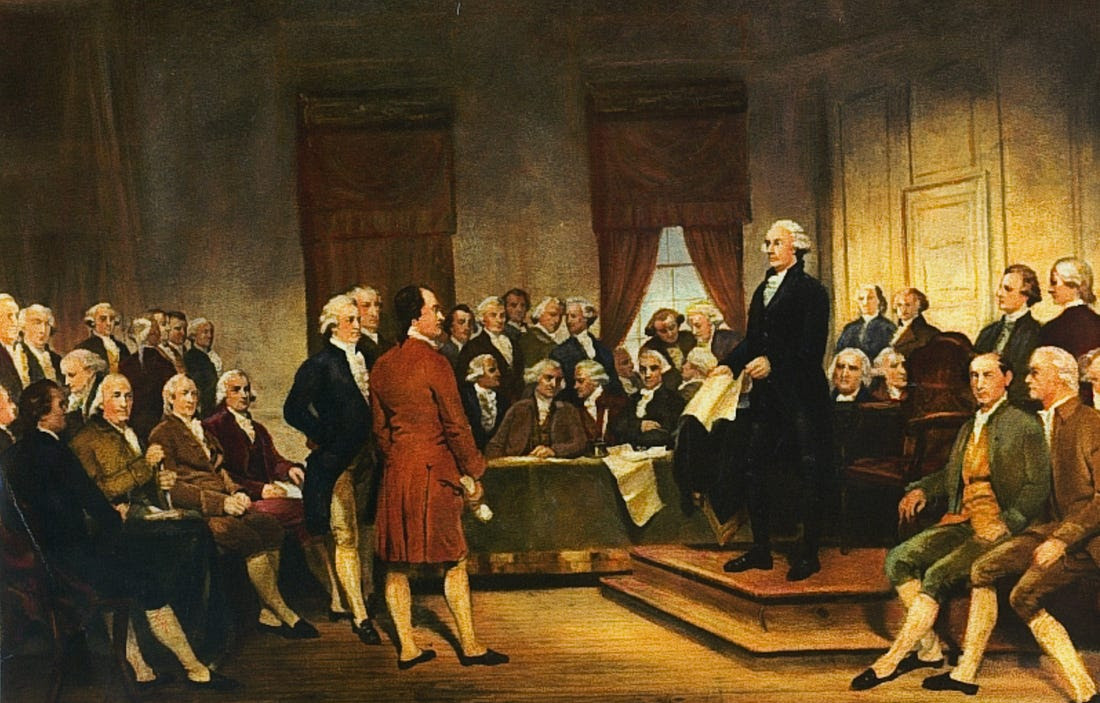
Many of the founders of this country were not likable men. They were difficult, stubborn, strong-willed, and even bullies at times, and that is part of what made this nation great. They argued fiercely, held unpopular views, and refused to soften the truth to make themselves more appealing.
What troubles me most is that this system breaks the fundamental promise of American elections, one person, one vote. Instead of a clear decision that every voter can easily understand, we now have a complicated redistribution process that most voters cannot verify on their own. Ballot exhaustion means legal votes simply vanish from the final tally once a candidate is eliminated. These voters are not counted in the final decisive round, even though they followed the rules. That destroys confidence and makes people feel like their voices no longer matter. Under the hive mentality encouraged by Ranked Choice Voting, only the collective voice matters, not the individual voice. Individual accountability is replaced by statistical outcomes.
In a healthy democracy, elections force real accountability. Officials must stand on their record, defend their ideas without hiding behind process, and face voters who can draw a straight black-and-white line between promises and performance. Ranked Choice Voting erases both clarity and accountability. When candidates all sound the same and outcomes depend on mathematical redistribution rather than direct voter intent, elections become formalities instead of real decisions. The system turns elections into exercises in managed outcomes rather than moments of citizen judgment.
I believe Ranked Choice Voting should be rejected wherever it appears. Alaska should repeal it, other states should prohibit it, and voters should demand systems that reward honesty instead of political gymnastics of mediocrity. We need elections that highlight courage, clarity, and direct responsibility. Democracy depends on real choices between real ideas, not the ranked illusions and engineered outcomes of vapid talking heads.
I will always stand for transparent elections, straightforward ballots, and leaders who are brave enough to tell the truth, even when it costs them votes.
The views expressed here are those of the author.






14 Comments
Amen Brother, Very good artical, and this speaks to the “Rhino” affect we deal with. Nepotism in Murkowski’s case also.
Murkowski’s staffers brought ranked Choice Voting into Alaska from the DC swamp so that she would win reelection. She would have lost had she not brought this into our state. Since then many mediocre legislators were elected that do not have integrity or honesty. and are making decisions according to unions. These dishonest legislators do not treat the Alaskan citizens as their boss. Instead lobbyists who has access to them are favored. This is dishonest and we as Alaskan citizens have little or no access to the capital where the legislators hide out apart from mainland of Alaska. Observing France’s elections, ranked file voting is used and the best candidate who rises to the top for votes and is the best choice does not get elected. During the most recent presidential election, the voting took place over more than twelve days, and at the beginning of the 12th day we were winning on gettting rid of ranked-choice, at the end of the same day, the votes flipped “magically” and we were losing concerning elimination of ranked-choice voting. Hmmmm.
RCV, just another method Lisa Murkowski used to swindle us all.
So now moderates are “politically camouflaged.” Way to spin it.
GREAT
We need elections that highlight courage, clarity, and direct responsibility. Democracy depends on real choices between real ideas, not the ranked illusions and engineered outcomes of vapid talking heads.
Observing France’s elections, ranked file voting is used and the best candidate who rises to the top for votes and is the best choice does not get elected.
Observing France’s elections, ranked file voting is used and the best candidate who rises to the top for votes and is the best choice does not get elected………………………….. .
Time to vote RCV out. Its as bad as the politicians that are voted in using this type of voting. The other issue and problem are the Dominion voting Machines. So, I am looking forward to the Voter ID and paper ballot bill in Congress and the Senate along with voting for the RCV to end. Hope everyone is registered and gets to the voting booths. Be careful in Anchorage if you go to Div. of Elections office. Last big election the machines were on but not counting the ballot as it was rolled into the machine. Make sure the green light is on and your ballot is being counted.
beautiful
Maccabe is a punk who refuses to name the phony governor Dunleavy who has had the power and ability to remove RCV!
I disagree. You’re main mistake is in thinking that you will always have the same candidates, but they just won’t “speak their minds”. What RCV is actually supposed to bring is better candidates. A candidate doesn’t have to be a liar to win, they just have to appeal to the most voters. What I find funny is that you think that R candidates will have to lie in order to get votes. How about you change your unpopular, hateful and extreme positions instead and find candidates who are reasonable people who will do their best for ALL Americans?
Vote RCM. Vote Murkowski. Vote Peltola. Fix Alaska and the country.
I agree with Rep. McCabe, and am glad I voted for him. But whatever one may say about RCV, one fact is indisputable: In Peltola’s first victory, apparently due to exhausted ballots, RCV (which was supposed to prevent a winner with less than 50%) failed in it’s ESSENTIAL PURPOSE. Peltola, the final round winner, had LESS than 50% of the total vote (round 1): She actually only received 48.4% of the total vote. It’s just simple arithmetic. See https://www.elections.alaska.gov/results/22SSPG/RcvDetailedReport.pdf
BTW, did you EVER see Big Media report on Peltola winning with less than 50%? Nada thing.