

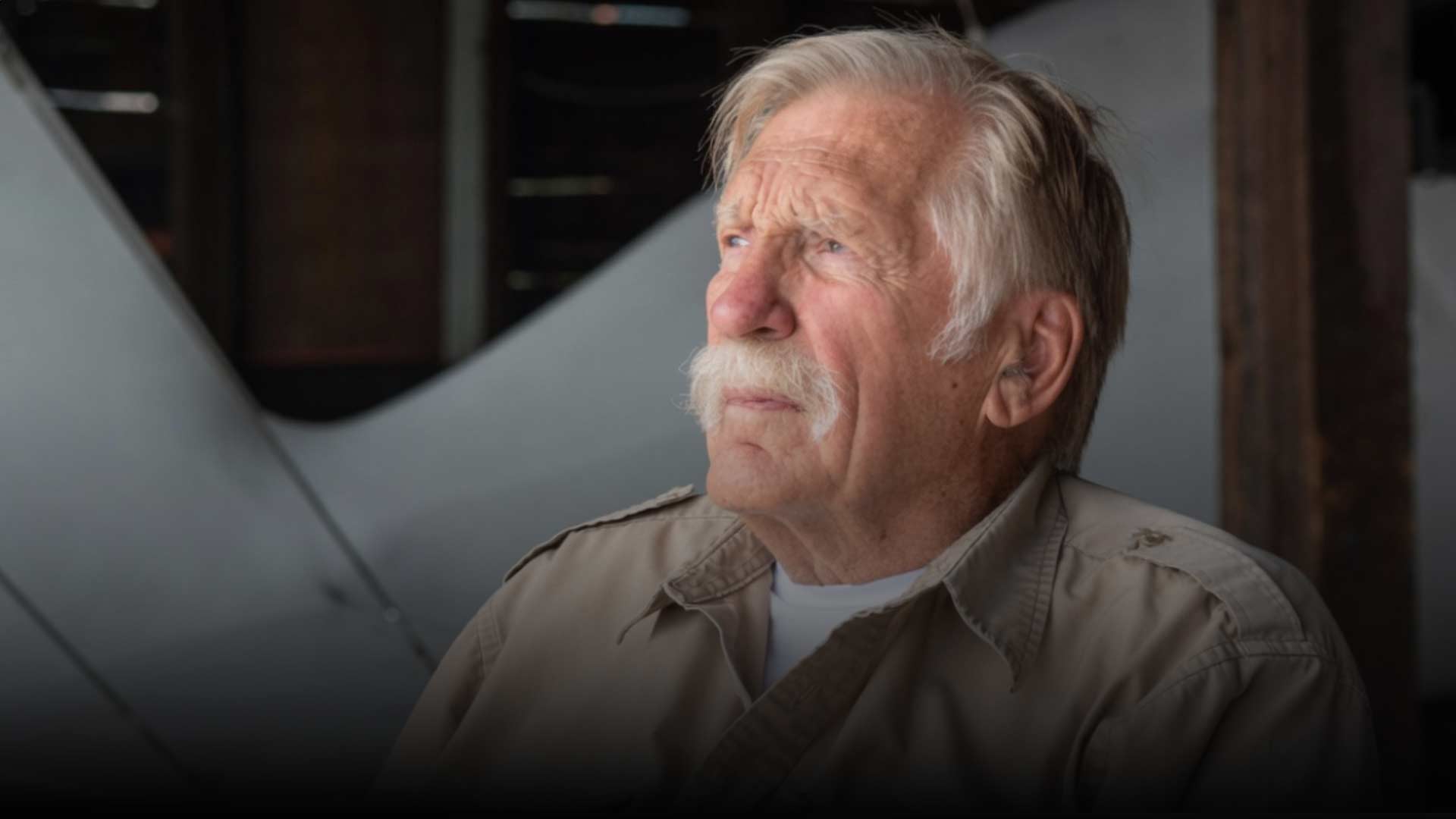
Nearly 15 years ago, Alaska bush pilot Ken Jouppi lost his $95,000 airplane when law enforcement officers spotted a six-pack of beer on board.
Now the U.S. Supreme Court has decided to take up Jouppi’s case to determine whether confiscation of his plane was excessive punishment.
For decades, Jouppi flew his Cessna across the Alaskan wilderness, shuttling locals and tourists who depend on bush pilots.
In 2012, things unraveled when Alaska State Troopers found a pack of Budweiser tucked in a passenger’s luggage. Both Jouppi and the passenger were charged with misdemeanors, fined $1,500 and sentenced to three days in jail.
That wasn’t all, however, and for the past 14 years, the state has fought to take Jouppi’s plane as additional punishment for a passenger’s beer.

Now in his 80s, Jouppi is still fighting for his plane, and the highest court in the nation has agreed to decide whether the state’s actions amounted to an unconstitutionally excessive fine.
“The Excessive Fines Clause of the Constitution was built for cases like this,” said Sam Gedge, a senior attorney at the Institute for Justice (IJ), which represents Jouppi. “As government agencies increasingly exploit fines and forfeitures to pad their budgets, it’s vital that the Supreme Court make clear that the Excessive Fines Clause is a meaningful check on government overreach. We’re confident that it will do so here.”
According to a notice from IJ, the saga started as a “normal day,” on April 3, 2012, when Jouppi was preparing to ferry a passenger and her groceries from Fairbanks to the village of Beaver, which had voted in 2004 to ban alcohol outright.
Hidden in the passenger’s luggage were three cases of beer, two Budweiser and one Bud Light, meant as a gift for her husband, the local postmaster. State troopers found them before Jouppi took flight, claiming one six-pack was in plain view. That was enough, they said, to make Jouppi complicit.
In addition to charging Ken with a misdemeanor offense, the state also sought to seize and keep his plane. After 13 years, in April 2025, the Alaska Supreme Court rejected Jouppi’s argument that forfeiting his airplane violated the Excessive Fines Clause.
ALASKA WATCHMAN DIRECT TO YOUR INBOX
“[T]he illegal importation of even a six-pack of beer causes grave societal harm,” the court reasoned, so forfeiting Jouppi’s airplane “does not violate the Excessive Fines Clause.”
The U.S. Supreme Court will now have the final say.
“I’m thrilled that the U.S. Supreme Court has agreed to hear this case, because this case isn’t just about me or my airplane anymore,” Jouppi said. “I’m in my 80s now, and I’ve been fighting this for over a decade because I see it as my duty to ensure that the Bill of Rights actually means something in protecting against government overreach.”
The Institute for Justice (IJ) is a public-interest law firm that litigates nationwide to vindicate individual liberties and the right to be free from excessive fines in particular.




8 Comments
Our government wants to take everything from us. Tax this, tax that, fee for this, free for that. They even tax you when you sell your savings, let’s not forget unrealized gain for living on the property you bought. And when they find you’ve violated one of their rules that hit you really hard, there’s is a rule for everything… you just don’t know it yet!
Right, the government owns you. If your house or property is payed off, and you don’t pay your taxes, they can take your house. Even tho your property taxes are in the thousands and your house is in the hundreds of thousands.
I’ve never once had anything taken from me or been threatened by the Mafia or any other criminal organization. Not once. But I’ve sure had plenty of money taken from me by force and been threatened, coerced, bluffed, groped and lied to multitudes of times by my own government. You think we’re a free people? Let’s say you can’t pay your property taxes or income tax, or fail to have the proper permits, license’s or inspections; see who shows up to enforce. Pay what you are told to pay or pay the price. But it’s not organized crime at all………. Liberty is an illusion.
The so-called Bill of Rights in the FEDERAL constitution ought not to apply to the states. When you make a federal case out of something, a local/state problem will then be applied to the other 49. If the SCOTUS decision winds up being an unjust one, then it becomes operable over the entire country. See the Kelo v. New London case of 2005. Jouppi’s remedy lies not with the federal judiciary, but with Article 3, Sec. 16: the executive/governor could opt to refuse to enforce the state judicial decision on the grounds that it violated Alaska’s identical constitutional provision about “excessive fines” and “cruel and unusual punishments.” The old joke of “Don’t make a federal case out of it!” was sound advice. We must return true constitutional justice to our local governments. It is time to declare that “The era of judicial tyranny is coming to an end.” The courts are utterly subordinate to the executive and legislature.
While I agree with you on the concept, it strikes me as odd: this guy paid such a huge price for such a little thing, which one could argue is not even his crime, but the crime of his passenger. Was he supposed to search every bag?
However, Alaska has SUCH A HUGE human trafficking problem. The state clearly doesn’t go after slave traders the same way they go after personal use alcohol consumers. I get it that alcohol is bad. But would his prosecution set any precedents on which states/feds can reply to let the really bad bad guys go?
How many people KNEW about the seven “massage parlors” operated by a gang of Asian immigrants and white locals? I guess if you’re drinking a six pack you’re a really naughty person, but blowies in dank massage parlors from trafficked Chinese teenagers, have your delights, I guess!
Where was the state when those women and girls were being imported and placed into sexual bondage? Too busy arresting bush pilots, I guess
Implied by bob’s comments is that Dunleavy has been an utter failure! I absolutely agree!
Now that his case is accepted by the US Supreme Court, he’s going to get his plane returned. Thank God for him that the current US Supreme Court majority of their Supremes are not social justice activists like AK Supreme Court and Superior court. Alaskas courts (even though are official courts) act more as a kangaroo court.
Dave Maxwell: Bull’s Eye.
Tina: let us HOPE he will win at SCOTUS. But if he doesn’t … What then?
But which remedy was easier: approaching your local governor or hoping to be one of the very few that make it to SCOTUS? With all the interminable waiting and expensive legal fees? Article 3, Section 16. A governor can read statutes and constitutions, too. He gets ADVICE, not binding decisions, from the judiciary. Once we figure that out, we can end judicial tyranny without even changing the judicial council! Has anyone even thought of that???!!!