

Small villages in rural Alaska may be far removed in both distance and technology from the latest high-tech AI data centers, but they share a common problem: access to cheap, reliable electricity. Fortunately, a novel solution to this issue is now being tested in Idaho and Utah. Small modular nuclear reactors (SMRs).
Data centers have huge power requirements, and when they are connected to the electric grid, they have driven up electricity prices for existing users. In response, Governors in Oklahoma, Florida, and Oregon have recently signed legislation to protect consumers from price hikes when data centers are constructed. To avoid financial penalties, companies building data centers have started moving to on-site power generation, primarily powered with gas turbines, but are also exploring the concept of using small modular nuclear reactors (SMRs) for on-site electrical generation.
When thinking of a nuclear power plant, you might imagine massive facilities with large cooling towers and with the potential for some kind of Fukushima or Chornobyl-like environmental catastrophe, but that isn’t the case with SMRs. These nuclear power plants are quite small and contain intrinsic fail-safe features to prevent an environmental incident.
To understand the power output of the SMRs currently being tested, 100 kilowatts is enough electrical power for about 50 homes.
There are four companies currently testing micro reactors. One company, Antares Nuclear, has been testing a 100-kilowatt micro reactor at NASA’s Marshall Space Flight Center since 2025. It is being tested as a potential power source for a future lunar base, and on June 4th of this year, they began testing another of their SMR reactors in Idaho. Antares is under contract to deliver these microreactor power generation facilities to the US military starting in 2027.
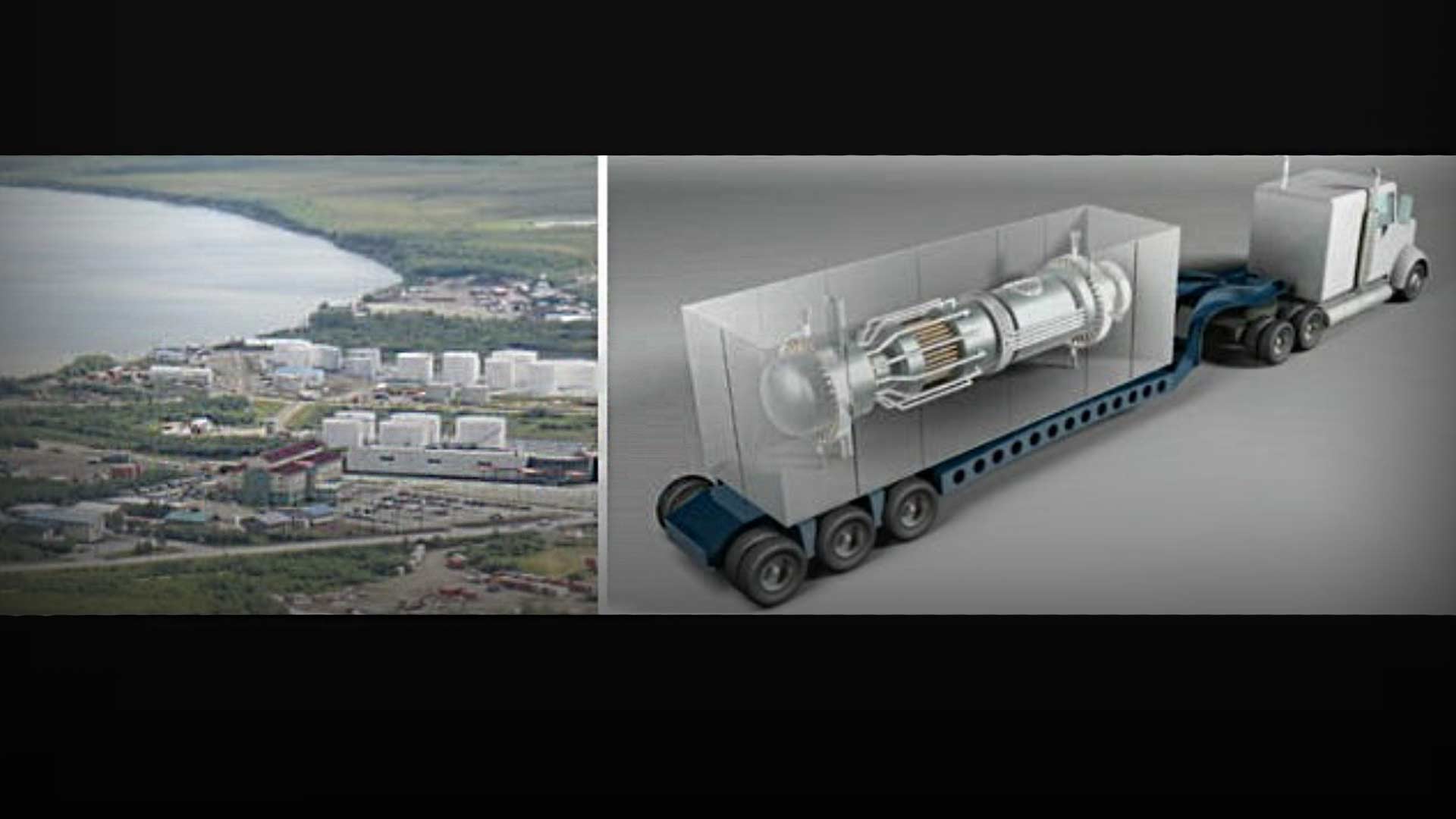
The second company working on microreactors is Valar Atomics, which is currently testing a 5-megawatt plant in Utah that is small enough to be flown there on an Air Force C-17.
A third company, Deployable Energy, wanted to prove how truly small their design is, so the company’s president drove his company’s 1-megawatt reactor core to the Idaho test facility in the bed of an F-150 pickup. It began operation on June 30th. These are not your father’s monster facilities; these are small power plants that fit into a sea container or large cargo aircraft. They are easily portable and are designed to be taken anywhere in the world.
To understand the power output of the SMRs currently being tested, 100 kilowatts is enough electrical power for about 50 homes. 1 megawatt will power 500 homes; 5 megawatts is enough for about 2500 homes. The systems being tested are perfectly sized to not only provide power for an AI data center, but also a small off-grid community.
Giving them financial assistance to buy more expensive diesel fuel or building worthless solar panels and electric school buses doesn’t provide a real solution to their problems.
An SMR would be ideal for providing power for rural villages in Alaska. While 75% of Alaska’s population lives in the rail belt, and their electrical needs are addressed primarily by relatively cheap natural gas, coal, and hydro power, the people living in small off-grid communities face much more significant challenges. They get their electricity by running diesel-powered generators, an incredibly expensive fuel source, which causes electricity costs in rural Alaska to be more than double that of urban areas of our state.
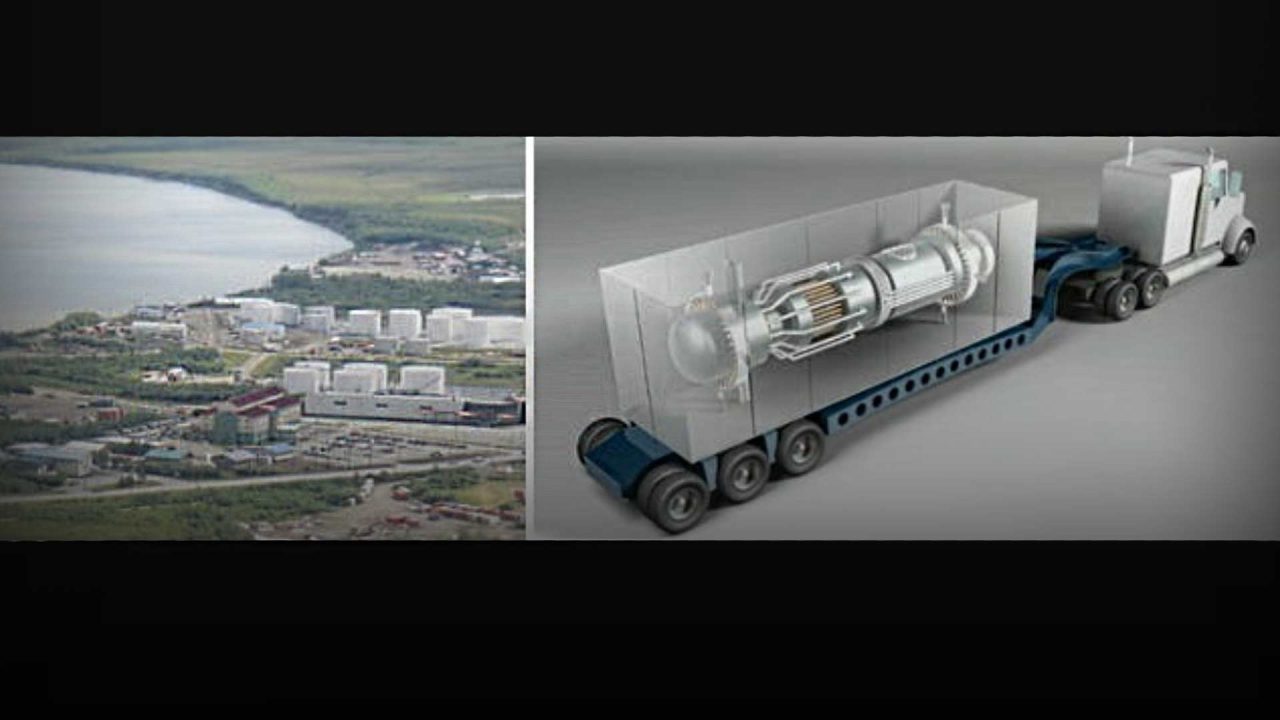
For example, the village of Emmonak, shown in a picture at the top of this article, is dominated by a large tank farm. Most communities in Western Alaska have a similar setup because fuel can only be delivered in summer when the rivers are ice-free. This constraint requires them to store enough fuel for power generation for the entire winter. With the war in Iran, fuel for this coming winter will be even more expensive than in past years.
Unfortunately, our Alaska political leadership hasn’t done anything meaningful to solve this problem. In the recently passed state budget, the legislature gave the village of Allakaket $2.9 million to build a solar power system that won’t work in the wintertime. The legislature also raised the amount rural communities can borrow for the purchase of diesel fuel and increased the Power Cost Equalization payment budget by $11.4 million to help subsidize rural electric bills. At the national level, in 2021, Lisa Murkowski fought hard to get $7.5 billion for green energy funding for Alaska projects, including battery-powered ferry boats and electric school buses.
ALASKA WATCHMAN DIRECT TO YOUR INBOX
None of these initiatives solve the problems bush villages face with power generation. 230 villages in western Alaska can’t afford to keep the lights on in their schools or their homes because of high energy costs. Giving them financial assistance to buy more expensive diesel fuel or building worthless solar panels and electric school buses doesn’t provide a real solution to their problems.
The technology for power generation from small modular nuclear reactors is being driven by the demands of the AI data center industry, but might also be the perfect solution for rural Alaskan villages. These power systems are being tested for both military and civilian use today. The question isn’t whether they will be widely used around the country; it is whether Alaska’s political leadership is smart enough to take advantage of them to help rural Alaskans.
The views expressed here are those of Greg Sarber. Read more Sarber posts at his Seward’s Folly substack.






14 Comments
If you are trying to create a good idea to pass on, don’t! The Crime Boss Dunleavy is ahead of you on that, as he encouraged another of his “lying under oath buddies,” Com. Thune to write a bill on energy including nuclear energy and said it was for the use in Native village to aid in fuel and heating costs. So, the commissioner did. And he and his assistant, who was an active practicing attorney at the time, went to the Senate Finance and made the declaration, under oath of the wonderful safety for such energy use. They were both questioned by all senators and lied under oath as to the safety of the nuclear energy and then stated that there was no witness that could be produced to say otherwise even though the same testimonial questioned were posed to a different commissioner and witnesses, two years earlier that gave facts and testimony of the serious dangers in use of this energy in villages in primitive areas. Well, Thune and his assistant stated there were no negative effects of nuclear energy use for homes and businesses and the Senate gave them the bill and the Crime Boss Dunleavy signed it into law when he had an energy meeting at the Denali Center. When Native leaders and villagers found out about the bill and the energy type, they were very upset and stated they would have liked to know about that first before the commitment to use it in their homes and villages because they never wanted that dangerous energy in their villages and don’t today.. They didn’t appreciate Dunleavy’s lies to them. Crime Boss Dunleavy is on a roll to make a name for himself and he has succeeded. By the way, who is “they” in your context? Sounds insulting.
What is your point?
Before you get too giddy, please think about who will maintain these systems and who will pay for replacement parts and who will pay for disposal.
Yes, you are correct. No possible way to maintain and operate a SMR in the bush. Who’s gonna do it? Send the local operators to a 3 day class at AVTEC?
I agree Greg. This is a great solution to the power problem faced in rural areas. Here’s the trouble: you and we see a problem and our reaction is to provide a viable solution. Not so for everyone. There are people in positions of political power that see problems as potential money making opportunities, as long as the trouble exists they profit.
The AI data centers did not drive this. These were in design, build, and testing before the data center issues even started. However the data centers purchasing these will drive demand up quickly, far exceeding supply and thus the prices will rise fast. They will not be cheap anymore.
Good article Greg. Remember when Galena was offered a free modular nuclear power plant from Hitachi? Fear mongers prevented that proof of concept project, and a couple years later the air force, the major power consumer put the site in standby mode removing most of the personnel and power consumption. They paid more for electric that could have been free and set an example for the rest of the state.
The sky is falling, another lame thing supposed by you know who Lisa.
Lisa Murkowski fought hard to get $7.5 billion for green energy funding for Alaska projects, including battery-powered ferry boats and electric school buses.
I thought there had to be place for Lisa in this story buying votes with our tax dollars to boost her reputation among the natives, whom are standing there helplessly with their hand stretched out again.
Princess Lisa obviously did not study the feasibility of electric school buses actually working in Alaska’s weather conditions. More likely she was more interested in money laundering her cut of the money being doled out via US taxpayers to the company making the buses.
… and contributing to her campaign fund.
Makes perfect sense for all of Alaska.
… standing there with their hands stretched out. Lisa is turning Alaska into a socialist welfare state. Next thing you know we’re a Blue state represented by a declared Democrat Lisa Murkowski.
Bechtel is a manufacturing SMR units, too. They are commissioning one for Google, this month. Next, Cheyanne Wy. But, they will never work for rural Alaska. The villages can hardly maintain a basic diesel powerhouse. No possible way to maintain a SMR in the bush.