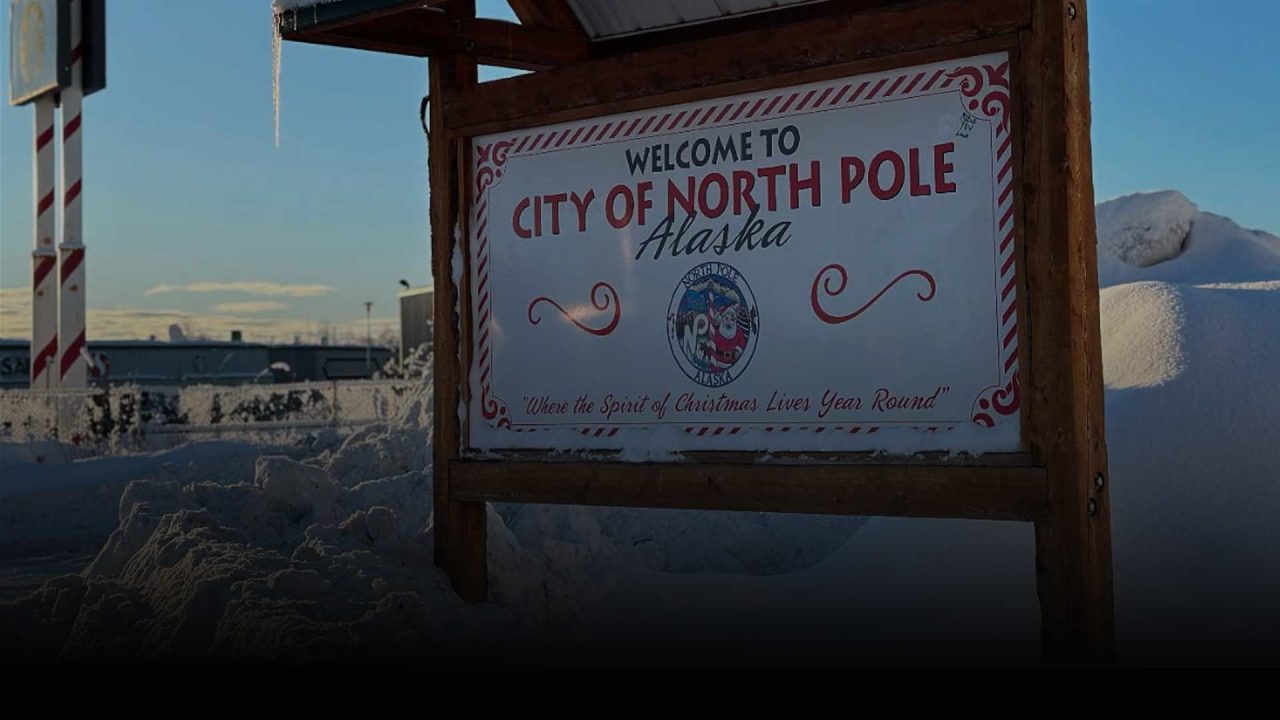


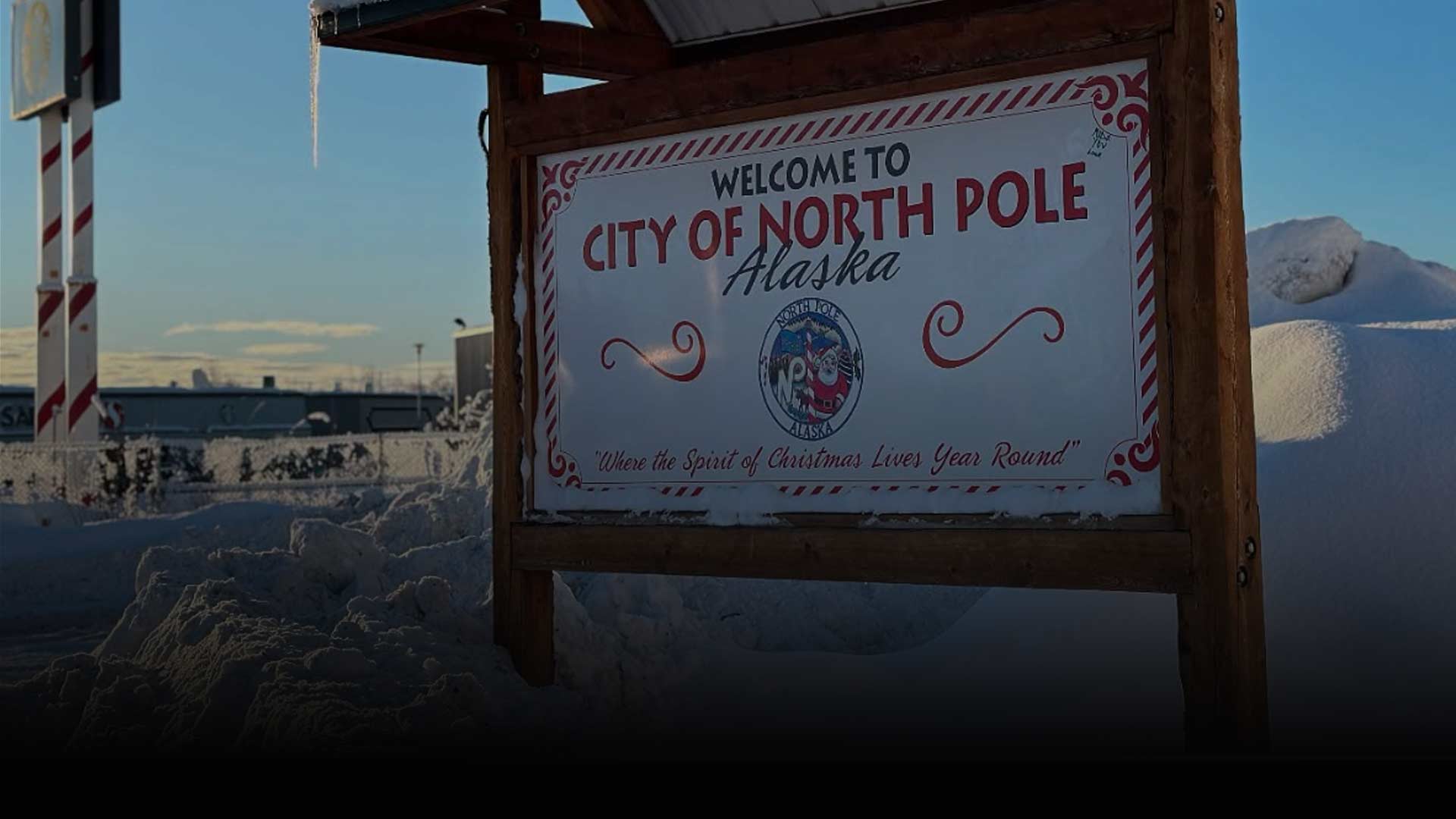
On October 20, the Alaska Department of Environmental Conservation quietly published a proposal that would redraw the air quality map of the Fairbanks North Star Borough. If adopted, the single borough-wide PM2.5 nonattainment area that has existed since 2009 would be divided into two: a “Fairbanks area” and a “North Pole area.”
DEC says the goal is to “better match local conditions with local solutions.” That sounds reasonable. Before North Pole accepts it, though, residents deserve to know exactly where the line will be drawn, what it will mean for their homes and their road money, and why the regulation itself answers almost none of those questions.
The public comment period closes November 30. That is not much time for a decision that could shape life in North Pole for the next decade.
WHAT THE SPLIT GETS RIGHT
The data is not in dispute. During winter inversions, fine particulate levels run higher around North Pole than in Fairbanks, and the Fairbanks–Goldstream side of the borough is now meeting the 24-hour standard. Keeping both halves in one box means Fairbanks stays tied to a problem it no longer has.
A split could let the Fairbanks side move toward attainment, and it could let the state direct federal air quality grant money to the neighborhoods that actually need it. DEC’s own FAQ also states that splitting the area would not, by itself, create any immediate requirement for North Pole households to change their heating systems.
This is not a new idea. The state asked EPA for nearly the same split along Badger Road in 2015, then asked EPA to shelve the request in 2018. The question now is whether the state has done the homework this time.
WHAT IT MEANS FOR NORTH POLE
Here is the part DEC’s notice does not say plainly. Once the line is drawn, North Pole becomes a small, standalone serious nonattainment area that contains the worst monitor in the borough. The most recent North Pole design value, excluding wildfire smoke, was 55 micrograms per cubic meter. The federal standard is 35.
Today that burden is shared across the whole borough. After a split, every future control measure, every sanction, and every headline about “dirty air” lands on North Pole alone.
“No immediate changes” is not the same as “no changes.” The next attainment plan for the North Pole area is where the real costs will be written, and this package contains no estimate of what those costs might be for families, businesses, or the industrial facilities on our side of the line.
Local transportation planners are already studying what a split could mean for federal highway funding. The notice says nothing about it. North Pole residents who drive the Richardson Highway every day should want that answer before the comment period closes, not after.
A REGULATION THAT DOESN’T SAY WHERE THE LINE IS
I have spent decades reading legislation and regulations, as legislative staff in Alaska and Illinois and as a member of the Borough Assembly. This package has problems that should be fixed before anyone signs off on it.
— The regulation never adopts the boundary. A detailed North Pole–Fairbanks line already exists. It was adopted in 2016 as a control-zone boundary in the State Air Quality Plan, following Hobgoblin Lane, Prester John Drive, Sonja Street, and Badger Road. The new rule lists two names, “Fairbanks area” and “North Pole area,” and never cites that line. DEC’s FAQ says only that the split runs “roughly” along Badger Road. If the 2016 line is the boundary, the rule should say so.
— The names don’t match. The regulation uses one set of names; DEC’s own FAQ calls the areas the “North Pole AQCZ” and the “Fairbanks–Goldstream Valley AQCZ.”
— The status of each area is never stated. The rule calls them “air quality areas,” not nonattainment areas. It does not say whether the Fairbanks side remains in nonattainment. It also says nothing about Goldstream, which today is its own control zone. Three zones become two, and the rule leaves readers to guess where Goldstream lands.
— The legal authority doesn’t line up. The regulation cites AS 46.14.010 as authority. The public notice leaves that statute out and lists others instead.
— Other rules may be left pointing at nothing. Existing air quality rules refer to the “Fairbanks North Star Borough PM-2.5 nonattainment area.” If that term is repealed without conforming changes, which rules apply where?
— An undisclosed second amendment. The history note on 18 AAC 50.030 reserves a slot for an additional amendment that this package does not explain.
— No cost analysis. The notice asks the public to comment on costs to private persons, then provides no cost information to comment on.
Finally, the state cannot split a federal nonattainment area on its own. EPA must approve the boundary change, and a separate, smaller North Pole nonattainment area has already been recommended under EPA’s revised annual PM2.5 standard. The package does not explain how the two fit together.
ALASKA WATCHMAN DIRECT TO YOUR INBOX
SHOW UP AND ASK
A split may well be the right answer. It should not be adopted on a two-page regulation that leaves the boundary, the legal status of each area, and the cost to North Pole families unwritten.
DEC has to answer questions it receives by Friday, November 20. Comments close at 11:59 p.m. Monday, November 30. You can testify in person at either hearing, both 3:30 to 7:00 p.m.:
— Tuesday, November 17, Noel Wien Library, Large Conference Room, 1215 Cowles Street, Fairbanks
— Wednesday, November 18, Hotel North Pole, Meeting Room, 449 N. Santa Claus Lane, North Pole
Written comments and questions go to dec.air.comment@alaska.gov or through DEC’s online comment page for the 2026 Fairbanks Nonattainment Area Split Regulations. Ask DEC to put the boundary in the rule, state each area’s status, fix the authority citations, and show North Pole the estimated costs to households and the state before the line is drawn.
We live with the air in North Pole. We should not have to live with a regulation we were never allowed to fully read.
The views expressed here are those of the author.
Click here to support the Alaska Watchman.