

Public schools were created with one simple purpose: teach children. Reading, writing, math, science, history, and the skills that help young people grow into capable adults and productive citizens.
That was the mission. The core mission. The only mission.
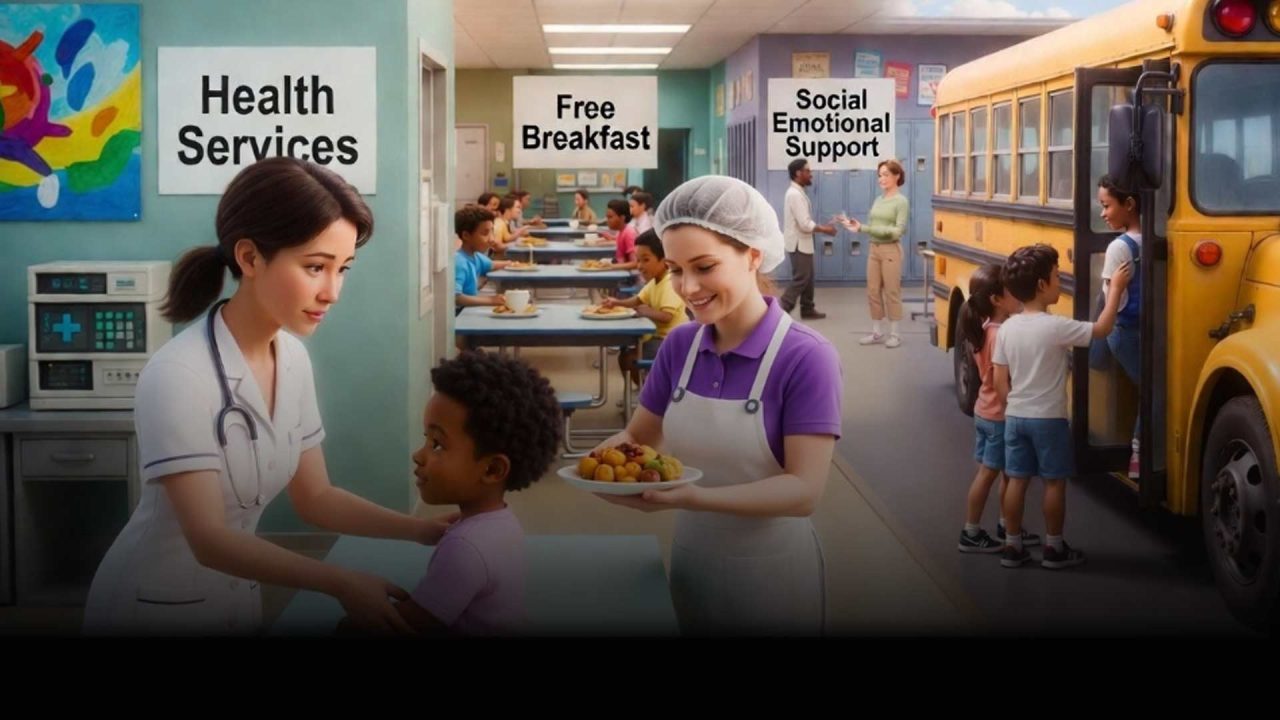
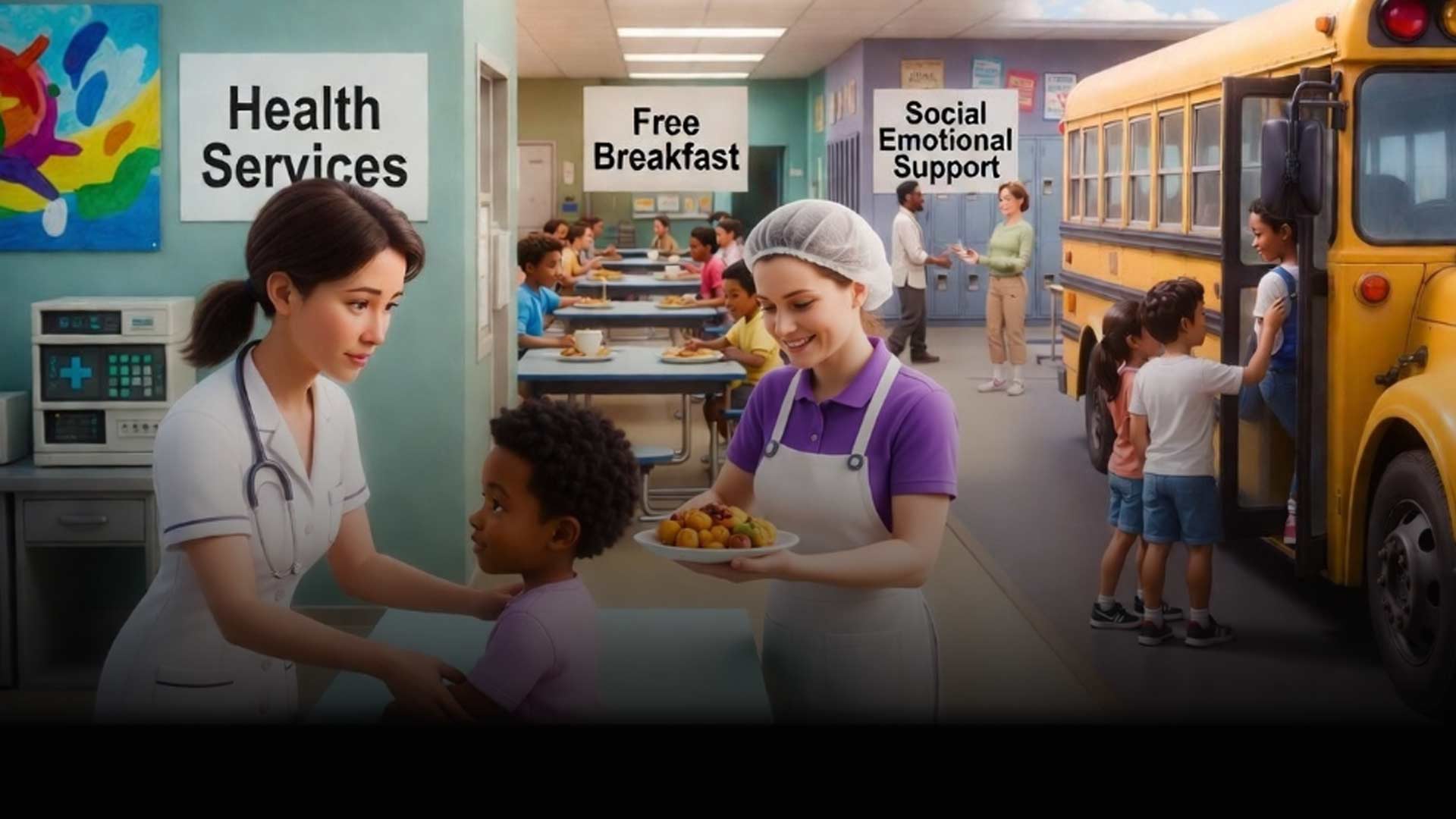
But public policy has a habit of drifting. Over time, that mission expanded. What began as institutions focused on education gradually took on additional roles. Schools shifted from education centers churning out good factory workers and became meal programs, daytime supervision centers, and even providers of basic healthcare.
Many of these changes came from good intentions. Some were promoted by policy advocates who believed expanding services would help children succeed. Others reflected the influence of large public-sector unions such as the NEA, organizations that benefit when school systems grow larger and more complex.
The result is something few people openly discuss. The focus has shifted away from education itself and toward managing the broader needs of the child. In the process, families have become increasingly dependent on government-run schools to handle parts of daily life that once happened primarily at home. Nutrition. Basic health support. Behavior management. Even childcare during working hours. This is the very definition of socialism.
Neighborhood schools should be places of strong academic instruction first. If they are not, more families will move their children elsewhere. We are already seeing it in the growth of correspondence programs and homeschooling.
When that dependency is identified or threatened, the emotional reaction is strong.
But passion and emotion do not fund schools. The math must work.
In the Mat-Su Borough School District, neighborhood schools now provide free meals, structured supervision during the day, and basic health services through school nurses. These programs do have value, especially in a place like Alaska where distances are long, costs are high, and alternatives can be limited.
Free breakfast and lunch help students focus on learning instead of hunger. School nurses manage medications, treat minor injuries, and run screenings that keep students in class. The school day also gives working parents a reliable place for their children in a state where long workdays, commutes, and dual-income households are common.
But every added service carries a fiscal cost and, let’s be honest, a hidden dependency cost.
Each new responsibility requires more staff, more administration, more infrastructure, and higher long-term operating expenses. Over time, the structure of school systems has grown far beyond teachers in the classroom. Administrative layers expand, specialized positions multiply, and the overall system becomes more expensive to operate even as enrollment declines. And each new program creates a cohort of families more dependent on the government to take care of every need. And nobody talks about true education.
ALASKA WATCHMAN DIRECT TO YOUR INBOX
Schools were never designed to replace parents in handling nutrition, healthcare, discipline, or daily supervision, and when they move too far into those roles, expectations begin to change. Help becomes reliance. Reliance becomes assumption. Assumption eventually becomes entitlement.
The financial reality now facing Mat-Su shows the limits of that model.
The Mat-Su Borough School District faces a projected budget gap of roughly twenty-two to twenty-three million dollars for the 2026–2027 school year. To address part of that gap, administrators have proposed closing three schools: Meadow Lakes Elementary, Larson Elementary, and Glacier View School. It is the first time in more than a decade that school closures have been seriously considered.
No one takes that lightly. These schools are part of their communities. Parents attend meetings. Teachers organize student walkouts. Rallies appear with “Save Our School” signs. The dependency is front and center with little discussion of education and more comments on busing, school nurses, and how the closure will affect family life.
Closing the three schools could save roughly four million dollars. That still covers only a fraction of the projected shortfall. The remaining gap would require deeper reductions, including more than one hundred full-time positions and cuts to support services and activities throughout the district.
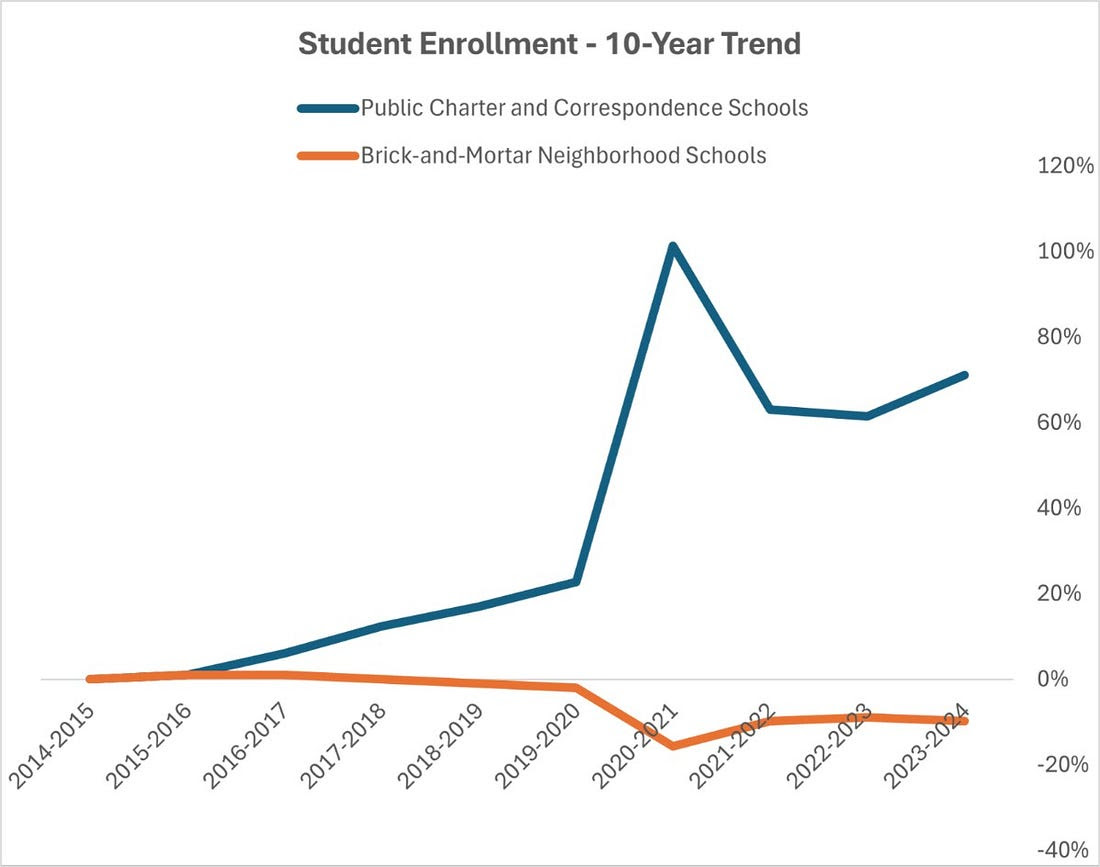
Enrollment trends make the challenge even harder. Across Alaska, fewer students are attending traditional neighborhood schools. Some families are leaving the state. Birth rates have declined. Others are choosing correspondence programs or homeschooling, which shifts funding because the money follows the student.
Meadow Lakes Elementary illustrates the problem. A few years ago the school served roughly 345 students. Today, enrollment is closer to 316. A small drop at one school may not seem dramatic, but across an entire district, those losses create real financial pressure.
Operating costs do not shrink as quickly as enrollment. Buildings must still be heated and maintained. Utilities must still be paid. Buses must still run. When fewer students fill a fixed-cost system, efficiency disappears.
The district is now forced to set priorities. Protect classroom instruction. Focus resources on teaching outcomes. Close buildings that no longer have enough students to justify their operating costs and refocus schools on their core job of teaching.
None of these choices is pleasant. But they reflect the reality of inflation, flat state funding, changing family preferences, and the long-term risks that come with dependency on distant government systems.
Neighborhood schools should be places of strong academic instruction first. If they are not, more families will move their children elsewhere. We are already seeing it in the growth of correspondence programs and homeschooling. When that happens, enrollment falls further and financial pressure only grows.
Parents remain primarily responsible for their children’s education, nutrition, health, behavior, and daily care. Communities can help families who truly need support. But the public school system cannot carry unlimited expectations forever.
Education works best when roles are clear.
Parents parent.
Schools teach.
Communities support both.
When those roles stay clear, schools can focus on what they were built to do: educate the next generation, not warehouse children.
The views expressed here are those of the author.





11 Comments
Maccabe you’re getting beyond annoying! Shut and go away and take your AI with you!!! UN perspective not wanted!!!
> UN perspective not wanted
I agree, but McCabe did not bring up the UN at all.
To McCabe ‘s point, he is spot on. Government schools have jumped the shark and brought into their purview tasks which they should never have considered. That creep is more akin to the world view of government school workers who are mostly socialists. Regardless, government schools are anachronistic and no longer fit for purpose. They are an old model, which as the graph illustrates, is failing.
The issues maccabe brings up are never given in a solution perspective! That’s because his purpose isn’t solving anything! Blathering for self advancement and ego! The UN is famous for this crap and it cost plenty!
If Dave’s article is all AI, which I doubt, then AI wrote a stellar article. I appreciate having a legislator that takes the time to give us a perspective.
Your comment makes no sense! Maybe you were writing about stellar sea lions???! There are some similarities!
After Rockefeller revolutionized the school system to create workers, school has been a mindless drivel of studies the poor children will never need. Over time new leaders have turned away the purpose of creating workers to creating children to grow up thinking others will take care of them.
To be honest I can’t in good conscience make any child memorize the things we grown up learning when the child doesn’t even have the Word of God memorized which in these days seem more important than a times table, division, or periodic table, or writing using good grammar and mechanics.
After. Rockefeller revolutionized the school system to create workers, school has been a mindless drivel of studies the poor children will never need. Over time new leaders have turned away the purpose of creating workers to creating children to grow up thinking others will take care of them.
To be honest I can’t in good conscience make any child memorize the things we grown up learning when the child doesn’t even have the Word of God memorized which in these days seem more important than a times table, division, or periodic table, or writing using good grammar and mechanics.
Again my representative has rattled on about the problem, but failed to offer any solutions. He might change state law which reduces funding to students in an organized borough. The closures will only save 4 million dollars. will the superintendent cut the other 18 million from Mat-Su School District’s Administration budget. Don’t hold your breath on either of these opinions
The only answer is homeschool your kids, or send them to part time, parochial programs. No need to put yourself up against an indoctrination machine. Just throw them all off your back, and keep them all away from your children!
Our schools have indeed become hugely overpriced and tasked with far too many services they were never intended to provide. Still, as the highest or second highest per student combined allocation – I often wonder where is the money going? In small communities the school does become a community center to a degree. I would say the impact of closing such schools has far greater effect than closing schools in more densely populated areas. In places like Glacier View, which compares to a small village, the school is like a family extension. In the long run this actually can improve learning and well being of the students.
I would rather see some of the superfluous, not connected to academics, programs cut. Administration trimmed. Seek other uses for school buildings that could generate revenue. Does the district charge for school gym use outside of school use? As for school nurses, denser communities have ample access to medical services and maybe school nursing can be contracted out in those denser communities, or fewer nurses who make rounds between schools. Maybe all of this has been examined, I don’t know.
Overall I feel our entire public school system is a mess. We home educated K-12, independently without government involvement until sports necessitated enrolling in Matsu Central for high school. Still, we spent a tiny fraction in comparison to the mind boggling amounts spent on students in the classrooms and I would say with a far better outcome.
The comments from Rep. McCabe could be taken seriously if the school system which he describes was churning out some amazing educational statistics in educating children. Yes, parents parent but can we say that public schools teach?