


The argument I keep hearing against the Alaska gasline project sounds simple and, at first glance, reasonable. If it’s worth doing, free enterprise will build it. If it needs public support, then maybe it is not worth it.
I get it. Alaskans are not interested in writing blank checks to billion-dollar developers, and they have seen enough big promises fall apart to be skeptical when government money gets involved. I share that skepticism. But a principle only matters if you apply it consistently, and on that test, this argument falls apart the moment you compare it to Alaska’s own record. It’s worth walking through that record before the Legislature finalizes HB 381, SB 280, and SB 275, because the “subsidy” framing being used against the gasline collapses when you hold it up against what we have already done, repeatedly and with bipartisan support, for renewables and for plenty else besides.
In 2008, the Legislature created the Renewable Energy Fund with a unanimous vote. Over the next decade we appropriated roughly $270 million in state general funds into that program. That is direct cash, not a tax adjustment, not deferred liability, not a structural incentive. It is a check written by the State of Alaska to subsidize energy projects. That funding supported more than 100 developments across the state. In 2023, we removed the sunset entirely. In 2025, we added more funding again. At no point in those debates did the Legislature stop and say, “If these projects are truly viable, free enterprise will build them.”
At the project level, the pattern holds. Fire Island Wind, a $162 million project, depended on roughly $70 million in combined state and federal support to pencil out. The developers said as much at the time. Without that support, it does not work. Support was provided, and the project moved forward.
Nobody stood up and said perhaps it is not worth doing.
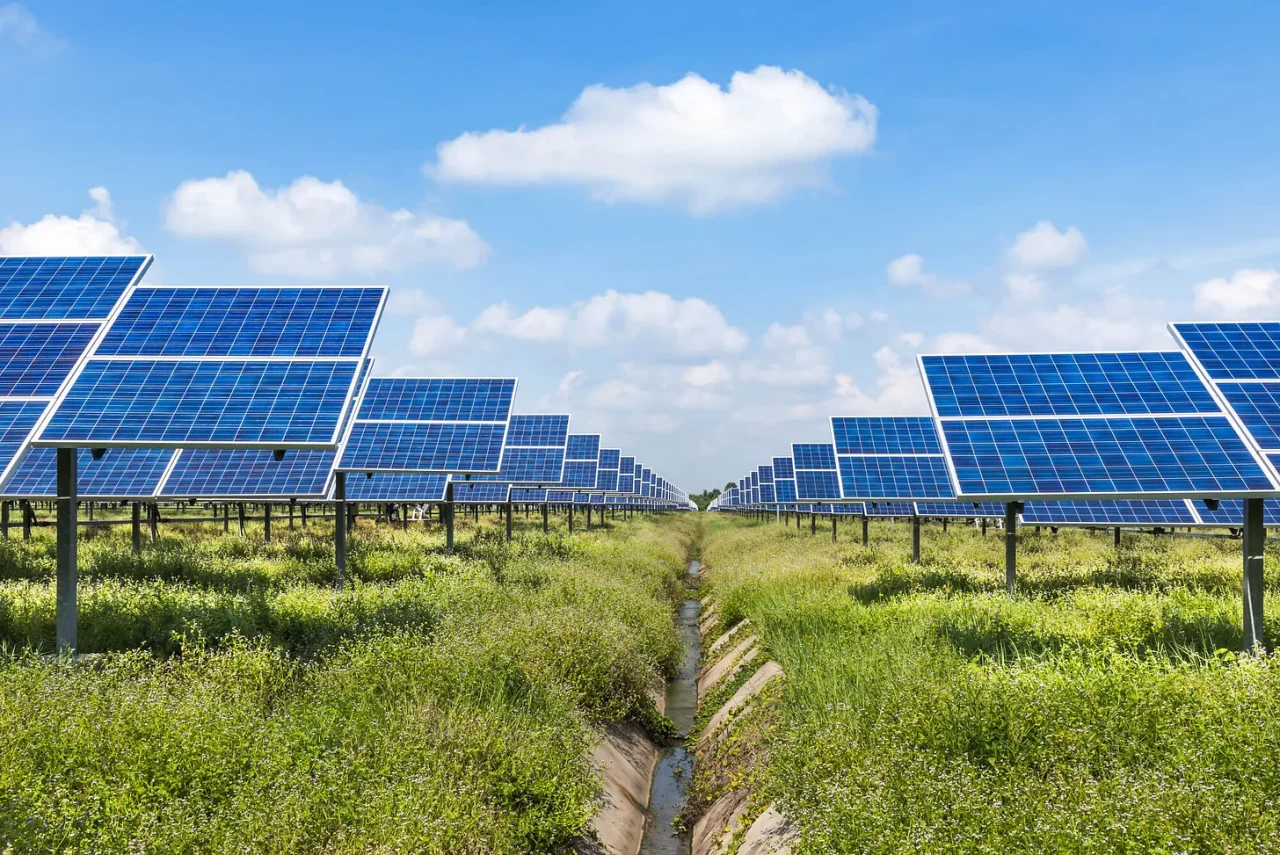
Look at the Houston solar project – borough land, private developer, outside capital, utility purchase agreements. A layered public and private structure designed to make the project viable. We did not call that a subsidy. We called it a partnership.
Then add the federal stack that underpins nearly every renewable project, tax credits, loan guarantees, accelerated depreciation and direct grants. These are not small adjustments. They are foundational to the economics. We have accepted that reality for years without pretending otherwise.
The state’s involvement in energy infrastructure runs deep. The Alaska Industrial Development and Export Authority (AIDEA) has financed projects for decades. The Healy Clean Coal Project moved forward with AIDEA bonding and federal support, struggled, and sat idle for years before being reworked. AIDEA financed the Snettisham hydro acquisition. The state has supported geothermal exploration. We have provided land, infrastructure, financing, and risk-sharing across energy types for as long as anyone paying attention can remember. Some worked. Some did not. None were built without the state playing a material role.
That matters, because it exposes the flaw in the argument. The claim is not just that this project might be structured poorly. The claim being made is broader – that the state should not be involved at all. That is not consistent with Alaska’s history or with the votes many of the same legislators have already taken.
The Senate Resources Committee is asking hard questions about the gasline, and they should. They want to see the numbers. They want disclosure from Glenfarne and AGDC. They want to understand pricing, volumes, and long-term revenue. That is legitimate, and I support asking those questions.
But I do not recall that level of insistence on the projects we have already funded. I do not recall detailed economic disclosures being demanded before Fire Island received public support. I do not recall a full accounting of project economics for every Renewable Energy Fund round before appropriations passed. I do not recall anyone pressing for a full cost breakdown before borough land was committed to solar development in the Mat-Su. The scrutiny we are seeing now, while appropriate on its own terms, has not been applied evenly. The standard changed. Why?
It cannot be both ways. If the principle is that the state should not participate in projects that require fiscal support, then we should be honest enough to say the Renewable Energy Fund was a mistake, AIDEA’s energy investments were a mistake, and those projects should not have been built.
No one in Juneau is making that argument.
What I hear instead is a selective standard. Renewable projects are evaluated on long-term benefits, lower costs, energy security, jobs and diversification. The gasline is dismissed with a slogan about free markets that we do not apply anywhere else.
In truth, the state owns the resource. We are involved whether we like it or not. The question in front of us is not whether there is some theoretical subsidy. The question is what structure gives Alaskans the best outcome over time. That means total state and local revenue, in-state energy costs, and the likelihood the project is actually built and competitive in a global market.
ALASKA WATCHMAN DIRECT TO YOUR INBOX
Those are real questions. They involve property tax treatment, the production tax rate, in-state gas price caps, the AGDC equity position, and audit and disclosure requirements. The work being done to refine those pieces matters. I am open to a final bill that looks different from where we started.
But we should be honest about the framework. This is not a debate between pure free enterprise and government involvement. That ship sailed a long time ago. This is a debate about which projects we are willing to support and which ones we are not.
Alaskans deserve a straight answer on that. Either we have a consistent principle, or we have a preference. And over the next few days in Juneau, it will be clear which one is driving the vote.
The views expressed here are those of the author.





6 Comments
You are touting the Fire Island windmill project and the Houston solar project as successes?!?
Glenfarne, who nobody had ever heard of before (I’m a 35 year vet in oil&gas business) is going to successfully execute one the largest industrial projects in the history of mankind?
Really.
I’m still waiting for comment from the North Slope producers – they are oddly SILENT on this project.
This is not a debate between pure free enterprise and government involvement. Renewable Energy Fund was a mistake, the sky is falling, Drill baby drill.
Just like the failed fire island windmills. They wanted to add 12 more windmills and sell to Chugach electric. They were like, are you crazy we’re not paying you more for your failed windmill power. We can generate more electricity and cheaper with Natural Gas. Go pound sand windmill farm, end of story, no new windmills were built. Thank God, and I can’t stand looking at them either.
Just like the solar panel farms, they have slaughtered a tremendous number of birds, and bats. And yes, the blades of the windmills have slaughtered eagles, and other birds… If I slaughtered “one” of the protected species of birds, or bats, I would be subject to incarceration, and tremendous fines.. The solar panels fry the birds, and bats before they can escape the area.
So, he’s trying to tell us that the Fire Island wind farm was a success?
Well, about that title – how about
Rep. McCabe : Slouching Towards Socialism .
There. Fixed it for ya.
Taxpayer subsidies are the motive for most all of the “clean” energy scams . You might justify future failures based on past precedent but I won’t. Even the non-Solyndra projects never break even , but the earth worshipping stooges claim to save our planet. It’s 2026 and about time to quit pretending CO2 and cow farts are harming us.
Those who have lived here for a while remember the states pathetic track record of big spending failures like Susitna dam. Bechtel Corp made at least $300mil.
A no subsidy gas line might be a success if the state has minimal involvement in construction and the gas resource which belongs to all Alaskans is sold with beneficial contracts.
Rep. McCabe’s column asks whether critics of the gasline are applying a free market principle they don’t apply consistently. It is a fair question for a different debate. It is not the question in front of the Legislature right now.
The question in front of the Legislature is this: the state has already structured zero state corporate income tax for the midstream operator. Not deferred, not phased in. Zero through every year in DOR’s own modeled period. The property tax has been restructured favorably. Alaska’s geology, its regulatory framework built under HB 50, and its permanent liability after the 12-year closure fund closes are all part of the package Glenfarne receives.
On top of that accumulation, the 45Q federal credit stream flows to the operator at approximately $595 million annually, with no statutory mechanism requiring any of it to reach Alaskan ratepayers. Rep. McCabe never mentions 45Q once in his column.
That omission is worth noting because CO2 separation from natural gas processing on the North Slope is not a new technology requiring federal subsidy support to be viable. Operators have captured and reinjected CO2 for decades as part of Enhanced Oil Recovery, justified entirely by the value of the additional hydrocarbons recovered. No 45Q credits were needed because the process paid for itself.
What changed is not the technology. What changed is the disposition method. Permanent sequestration rather than EOR cycling produces no hydrocarbon recovery revenue, so the financial justification shifts from oil revenue to federal tax credit. The credit is not enabling something new. It is replacing a revenue stream that previously made the same basic process work commercially, and routing that replacement revenue to the operator rather than to Alaska’s treasury or ratepayers.
Rep. McCabe asks whether critics have a consistent principle or just a preference. Alaskans deserve the same question directed the other way. After zero corporate income tax through 2062, restructured property taxes, Alaska’s geology, and Alaska’s permanent liability, what specific burden remains that requires $595 million annually in additional federal credits, and who captures that value?
That question does not appear in his column. It is the only one that matters.