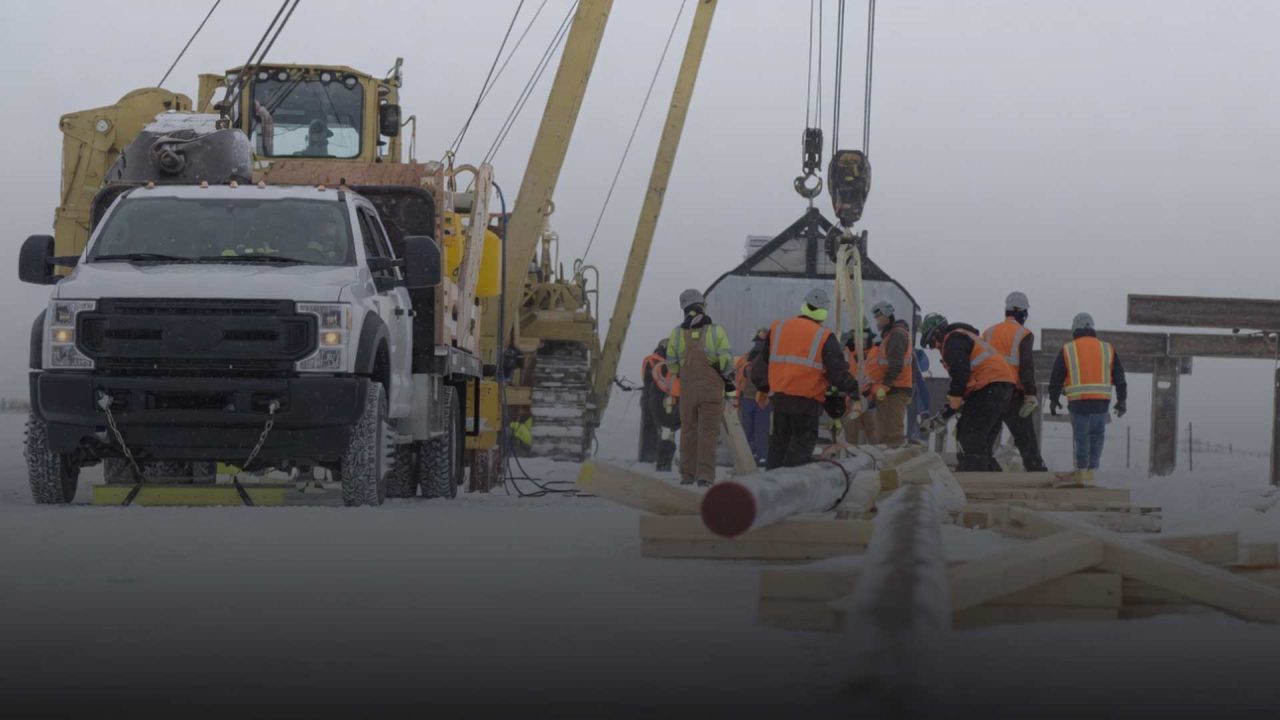


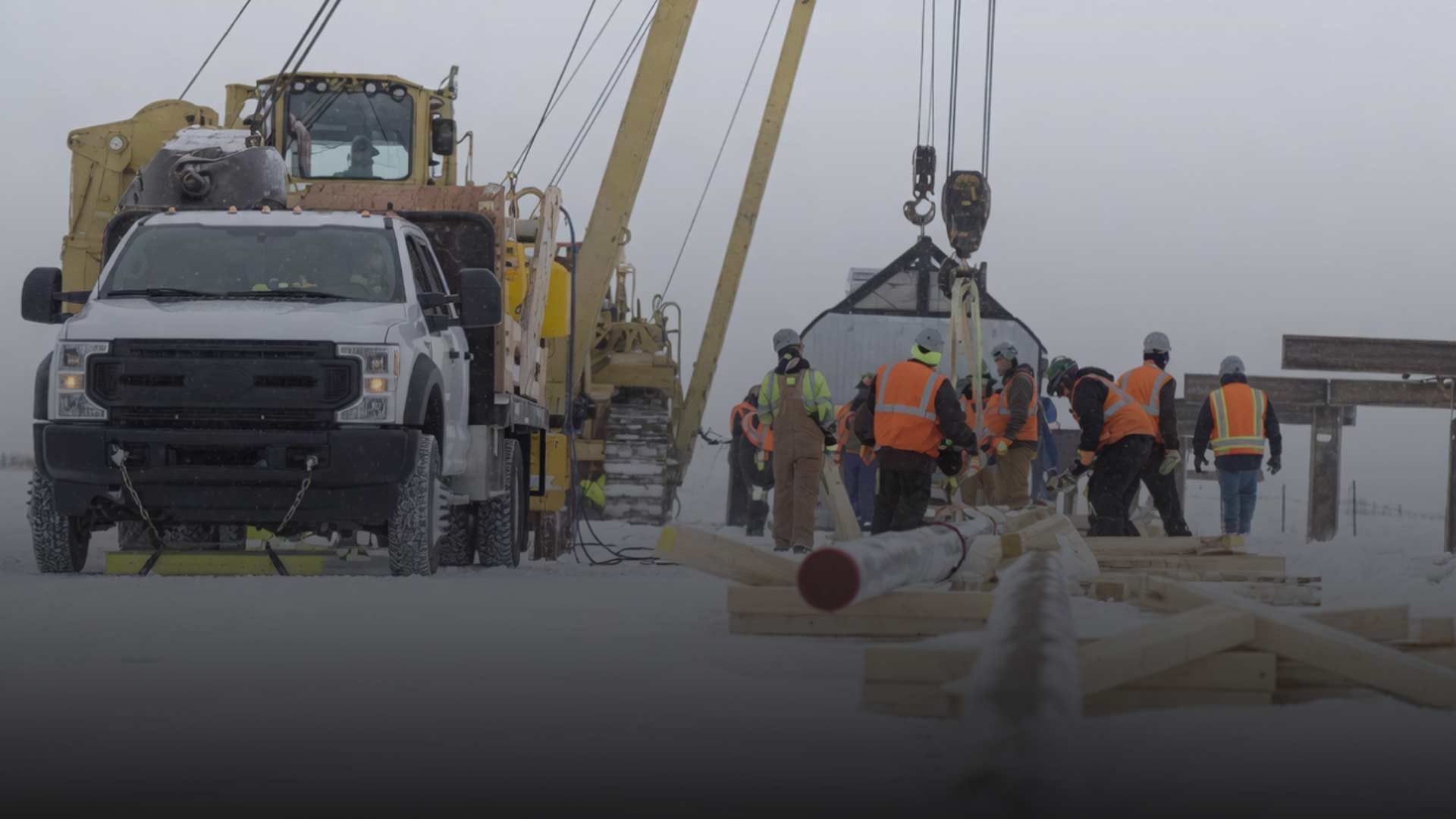
This spring, oil started flowing from the Pikka field on the North Slope. It’s the first major new oil project on the Slope in a generation, and within a few months it should be running at 80,000 barrels a day. What matters for the point I want to make is how it got there. Pikka sits on state land. The State of Alaska approved it. No president signed off on it, and no future president can undo it.
Now look at the Arctic National Wildlife Refuge. In June, the federal government held a lease sale on the coastal plain, the same ground conservatives have wanted opened for 40 years. The administration in Washington wanted that sale to succeed. Almost nobody showed up. The only real bidder was a state agency.
Two patches of Alaska, both sitting on oil, both supposedly open for business. One is producing right now. The other can’t get off the ground, even with a friendly White House cheering it on. Title is the whole story here.
Start with the land we own outright. The federal government holds most of Alaska, and no amount of complaining changes that.
That is the whole case for Alaska using the authority it already has as a state. Plenty of Alaskans are frustrated enough to want to tell Washington that its rules over our land simply don’t apply here, and after decades of watching the federal government lock that land up, I understand where the impulse comes from. But the courts have never let a state override federal law that way, and a fight we’re guaranteed to lose tends to leave us with a moral victory and an empty checkbook. I’d rather spend our energy where it actually moves the needle. The good news is that Alaska already owns an enormous amount of land, but we don’t act like it.
Credit where it’s due: we have a real opening right now. The Trump administration reopened the Refuge, put most of the petroleum reserve back on the table, approved the Ambler road, and has generally treated Alaska like a partner instead of a problem to be managed. We should take every bit of that and run with it.
But Alaskans have watched this cycle too many times to bet the farm on a friendly term in office. The Refuge has been opened, frozen, canceled in court, and reopened again as Washington changed hands. An oil company weighing a 15-year project in the Arctic looks at that record and keeps its checkbook shut, because whatever one administration grants, the next one can yank back. Goodwill in Washington is worth having, but it’s a poor foundation to build a state’s future on.
So, the question I keep coming back to is this: what can Alaska do that doesn’t ride on who wins the next election? It turns out the answer is quite a lot.
We wouldn’t be hunting for a fight, only making sure the ones we never asked for don’t end up costing us everything.
Start with the land we own outright. The federal government holds most of Alaska, and no amount of complaining changes that. But alongside the federal acreage, the state holds a vast estate of its own, and on that ground the decisions are ours. We set the lease terms and the royalty rates. We run the permits. We say yes. Pikka is what that looks like when we use it well, and it isn’t alone. Every barrel and every cubic foot we can move onto state-controlled ground is a resource no future Interior Secretary can take off the table, and that permanence is exactly the thing investors will pay a premium for.
Then there’s home. Here on the Kenai, we’re living the other half of this story. Cook Inlet gas is running down, and the utilities that heat Anchorage and the Peninsula are now scrambling to retrofit an old terminal at Nikiski so they can import liquefied natural gas. Think about that. We are about to ship in gas, which we are perfectly capable of producing ourselves, as a stopgap, while the North Slope pipeline that would actually fix the problem is still years away. Both ends of that, the near-term patch and the long-term fix, are ours to push. The tools that keep Cook Inlet producing are state tools: royalty relief on aging fields that would otherwise shut in, lease terms that pencil out, and a permitting process that moves at the speed of a genuine emergency. Keeping the lights and the heat on in Southcentral was never Washington’s job to begin with.
We can also bring authority home that the feds are willing to hand over. A surprising number of federal programs are written so a state can take them over and run them, and Alaska already administers its own air and water permitting. We should get authority over the permitting of carbon-storage wells and take a serious look at running our own wetlands permitting, so that a single state office, not a regional federal one, becomes the front door for a project on Alaska soil. We’d just be doing the job ourselves, faster and closer to home. There’s nothing radical in that.
ALASKA WATCHMAN DIRECT TO YOUR INBOX
And yes, when an administration eventually does come after our resources again, and one will, we ought to be ready to defend them in a courtroom instead of being caught flat-footed. The Legislature can fund that work ahead of time, protecting the resource rights and the land access that came with statehood. We wouldn’t be hunting for a fight, only making sure the ones we never asked for don’t end up costing us everything.
None of this is dramatic. Call it governance, the slow and durable kind that doesn’t make headlines. Lean hard into the open door in Washington while it’s open, by all means. But put Alaska’s real weight behind the things that stay ours no matter who’s in charge back east: the land we control, the gas under our own feet, the permits we’re able to issue ourselves.
Alaska entered the Union on equal footing with every other state, with the resources beneath us meant to let us pay our own way. Living up to that promise has very little to do with shouting at Washington, and these days it has nothing to do with fighting it either. The work is quieter and harder: produce on our own ground, issue our own permits, build what lasts, and stop waiting on permission we were never required to ask for in the first place.
The views expressed here are those of the author.




1 Comment
Federal Jurisdiction Within a State:
Between October, 1775, and the middle of 1776, each of the colonies separately severed their ties and relations with England, and several adopted constitutions for the newly formed States. By July, 1776, the exercise of British authority in any and all colonies was not recognized in any degree. The capstone of this actual separation of the colonies from England was the more formal Declaration of Independence.The legal effect of the Declaration of Independence was to make each new State a separate and independent sovereign over which there was no other government of superior power or jurisdiction. This was clearly shown in M’Ilvaine v. Coxe’s Lessee, 8 U.S. (4 Cranch) 209, 212 (1808), where it was held: This means the only Federal jurisdiction within a state is forts, magazines, arsenals, dock-yards, and other needful buildings. This means Federal lands and BLM are in violation. Do we Alaskans want to correct this issue?