

Editor’s note: This article was updated to include additional information from this year’s organizers.
An organization dedicated to celebrating paganism, witchcraft, animism, Druid rituals and other heathen practices is hosting its annual “Heathen Days and Pagan Nights” festival in Salcha, 40 miles outside Fairbanks.
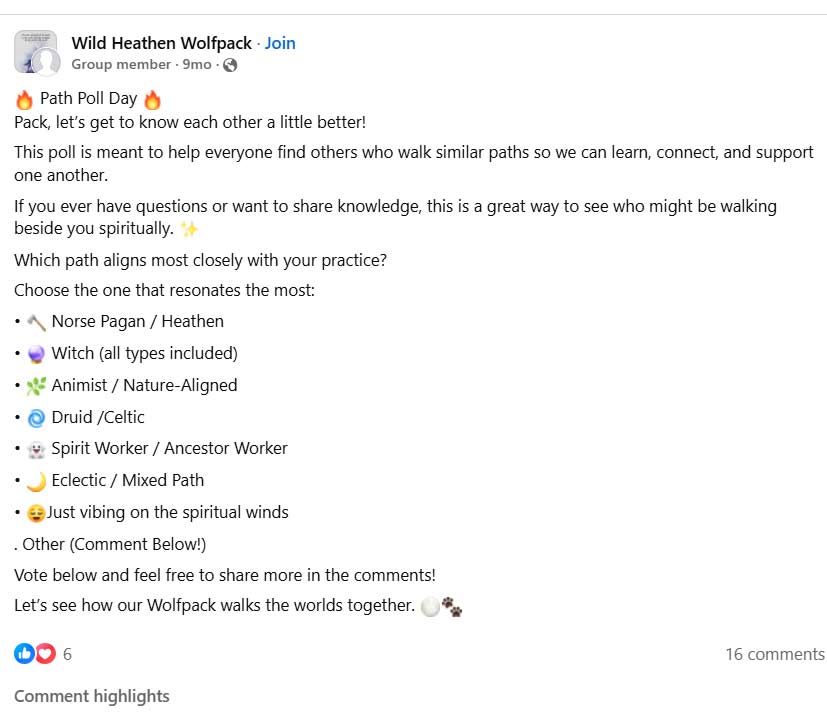
Organized by Wild Heathen Wolfpack, the event is presented as a Viking-themed, Renaissance-fair festival set in the Viking Age – roughly 793–1066 AD, a time when much of Scandinavia was pre-Christian.
Founded in 2023, this year’s festival is themed “Realm of the Gods.” Activities will include live music, pagan art and trinkets, food vendors, traditional Viking games, classes, meditative bonfires and lectures.
While the event is presented as a family-friendly cultural gathering, the organizing group describes itself as a “fast-growing heathen group in the state of Alaska.”
Together, they seek to establish space “where people of all heathen/pagan beliefs can share and collect information without bullying, religion bashing, racism, or politics.”
Event organizers claim to have 650 people in their group. Despite numerous online posts encouraging members to explore pagan beliefs, the group claims it does not “promote religion.”
“I think we all deserve a space where we do not have to be judged or shown hate for whatever religion we choose,” the one organizer wrote in an email.
Last year, the event drew more than 1,000 attendees, he noted.
During the day, the event focuses on Viking-era history and culture. The “Pagan Nights” include a 21+ bonfire every year where “the pagans get to come out and play,” the organizer explained.
“Our bonfires usually consist of a meditation, a bonfire, a fire dancer, and karaoke in the woods,” he said. “It’s just a bunch of people coming together as family and community without judgment of what they believe.”
The growth of the festival comes at a time when visibility and interest in pre-Christian, pagan spirituality is growing across the nation. While such adherents are still a tiny fraction of the larger population, social media, seasonal festivals and intrigue with nature spirituality and occult practices have amplified in recent decades.
ALASKA WATCHMAN DIRECT TO YOUR INBOX
A Pew Research Center study found the share of Americans who identify with religions other than Christianity has increased from 4.7% of U.S. adults in 2007 to 7.1% in 2023-24. Roughly 2% of Americans now identify with Unitarian Universalism, Pantheism, Wicca, or other pagan beliefs.
Modern pagans often focus on communing with nature, celebrating the solstice and other seasonal rituals and observing the so-called spiritual connectivity within the natural world.
According to a recent article in the Maine Monitor, which covers an area where paganism is widespread, researchers note that paganism’s growth is “tied to the second-wave feminist movement of the 1960s and 1970s, where many were interested in the idea of the feminine goddess at the center of Wicca, and in the independent nature of its rituals, which attracted women and LGBTQ people who felt shut out by Christianity.”
According to the Monitor, Sociologist Helen Berger describes this trend as a movement away from organized religion and toward “nature-based spirituality fueled by feminist and gay rights movements, as well as environmental concerns.”
“This is a non-dogmatic religion,” Berger said. “It’s a religion of practice; it’s a religion that you get to do your own thing.”





13 Comments
Is this frightening to christians: “ Modern pagans often focus on communing with nature, celebrating the solstice and other seasonal rituals and observing the so-called spiritual connectivity within the natural world.”
“This is a non-dogmatic religion,” Berger said. “It’s a religion of practice; it’s a religion that you get to do your own thing.”
Non serviam -that’s what it is.
More like ‘serve myself as I am my own god’. Well everyone of us will eventually answer to God. The real one.
Without Jesus, it’s all evil against God.
That’s pretty arrogant of you to say that.
Can you Elaborate KKirk?
A group of misfits searching for something to believe in and community for belonging to.
I know how they feel. But. I didn’t look toward people for finding Light. I think I always knew the True light (since four years old and likely meeting a Sunday school teacher watching and preschoolers in a Presbyterian church before the Presbyterian Church became culturally relevant) so I could tell the difference between darkness’ mimicry of Christ’s Light.
The group’s Facebook worded post sounded like to me a cry for help.
It’s unfortunate the Real Church the bride of Christ still think the only way that we meet together is in a church building under an institution setting. I feel like the American Church won’t fully understand House Churches and what being the Church really means like China and Iran churches understand them unless the American Church and believers are persecuted. Our comfort and protection made the Church unreachable to such lost sheep as those “pagans.”
A thousand people showing up for Viking games, crafts, food, music, fire dancing and a bonfire in the woods doesn’t strike me as particularly shocking.
Christians, these people shouldn’t threaten you. Everyone has their own beliefs, don’t impose your beliefs on otherd
You are ironically making a claim that not only imposes itself upon one religion, but every religion that has ever or will exist. You are being the moral “pope” of all religions, and thus defeat your own argument.
A conservative Christian judging anothers belief? Shocked.
There is a thorough historical records of Norse and Druid pagans sacrificing people to their gods. Even if they only used their own people from time to time. That demographic often included children. Child sacrifice, raping and pillaging all sound very “forced upon” and not voluntary. The bonfire for this event is 21+ that will include drinking and drugs, which will lead to promiscuity. Do you think every single encounter, under the influence of said substances, will all be voluntary? If no religion has the moral high ground, then who are you to stop me from overpower yours or you overpowering mine.
Heathens throw much better parties than the orthodox does. Pagans express beauty and the divine in many forms which inspire others to seek the mystical for themselves instead of having some expensive middleman church org.
Have faith and true connection to the creator and leave the false institutions behind.
Just like TV programming, entertainment and mainstream religions are just corrals for the minds of simpletons.