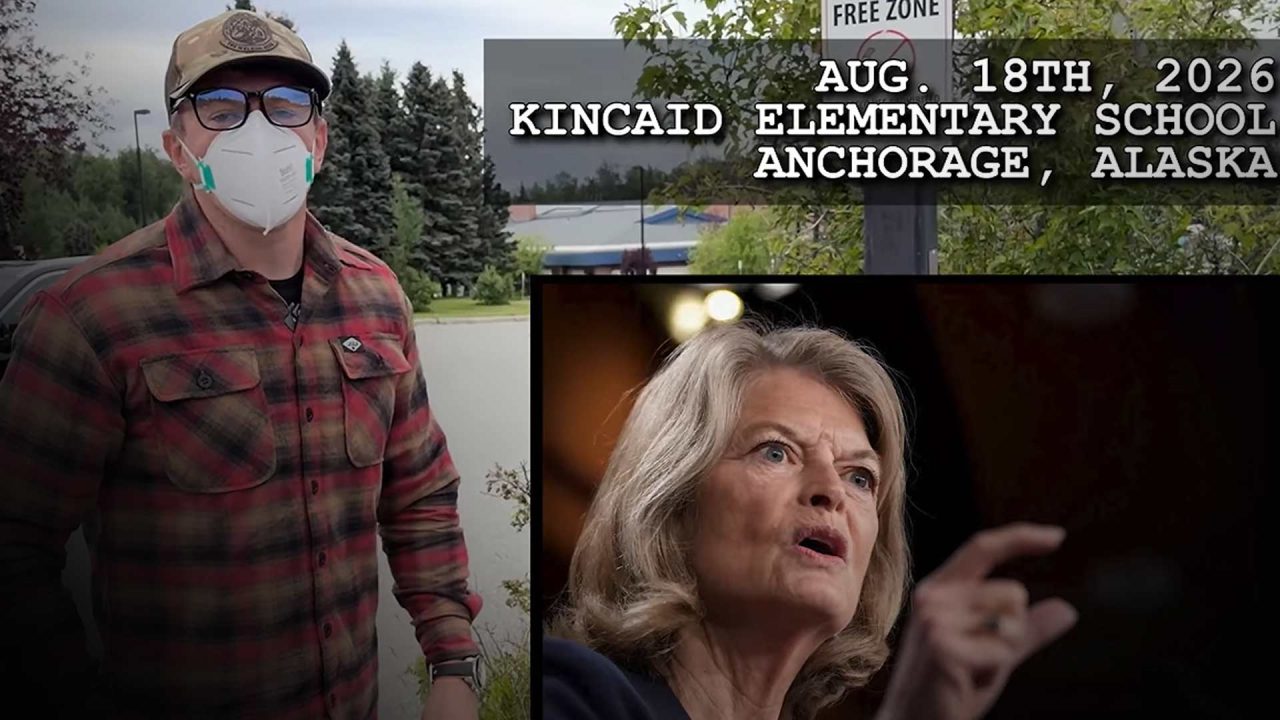

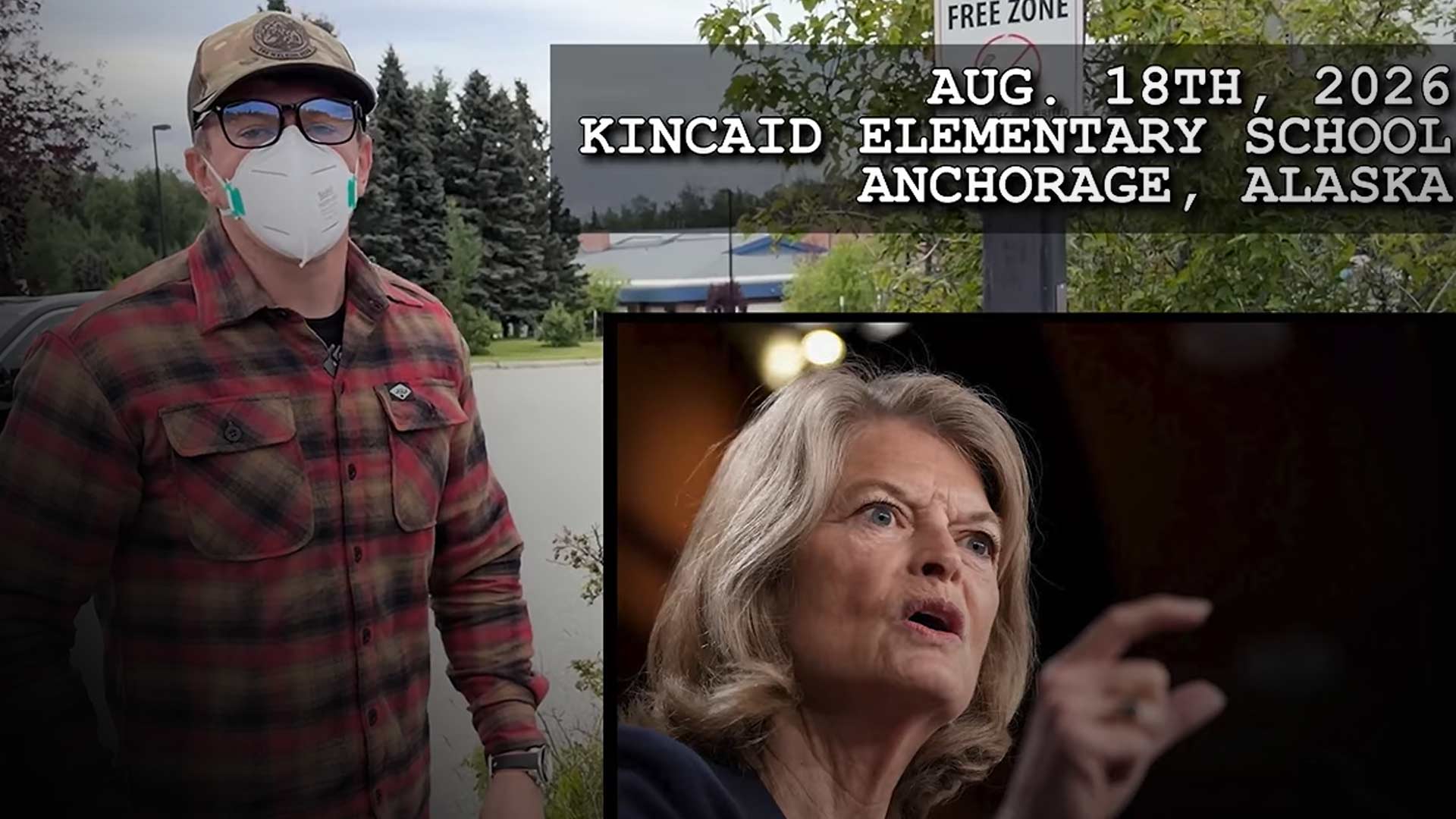
Nationally renowned investigative reporter James O’Keefe has offered some new reflections on his recent undercover mission to Alaska in which he exposed election vulnerabilities during the state’s Aug. 18 primary.
Equipped with hidden cameras, O’Keefe’s team visited several polling places in Alaska to test whether it was possible to vote without an ID or even under another person’s name.

“Anchorage, Alaska. Primary day. There is a folding table, a laminated binder, and a perfectly nice woman working the poll book the way she probably has for years,” O’Keefe wrote in an Aug. 28 reflection on his Alaska trip. “I give her a name. It is not my name. The name is Brian Murkowski. He is the brother of a sitting United States Senator. He does not live in Alaska. He lives in Texas.”
O’Keefe then notes that he told the poll worker that he did not have his ID.
“She looks up at me and says, ‘Absolutely possible,’” he recalled. “I asked her again anyway, because I wanted it recorded and I wanted it to be completely unmistakable to anyone who watched it later. All I have to do is fill out the question ballot, and then I can vote?”
“Yes, sir,” the woman responded.
O’Keefe summarized the encounter with five points:
— ONE. A total stranger walked in off the street carrying no identification of any kind and was offered a ballot.
— TWO. The name on that ballot belongs to a United States Senator’s brother who lives roughly three thousand miles away, in another state entirely.
— THREE. We did it again. Different polling place, same morning. One of my reporters gave the name Karina Waller — Senator Murkowski’s own State Director. No ID. Same offer.
— FOUR. Alaska law says you show identification to get a ballot, and the one narrow exception written into it is that the poll worker personally knows the person standing in front of them. Nobody in either of those buildings had ever laid eyes on us before in their lives.
— FIVE. Nobody wrote anything down. Nobody picked up a phone. Nobody flagged a single thing. We asked, we got our answer, and we walked back out the door.
O’Keefe’s mission was to expose vulnerabilities in Alaska’s voting system, while applying pressure on Sen. Murkowski to support the voter-ID SAVE Act, which she has adamantly refused to do.
“Senator Murkowski has spent this year fighting the SAVE Act, which her office describes as ‘an overly burdensome, one-size-fits-all mandate from Washington,’ and the argument underneath that position has always been the same one we hear everywhere: that the hole we keep describing does not actually exist outside of our imagination,” O’Keefe reflected. “We just showed her the hole. In her own state. Using her own brother’s name.”
But rather than acknowledging O’Keefe’s findings, Murkowski chose to criticize the reporters.
“Her office did not say they were going to fix it,” O’Keefe wrote. “Her office said this: ‘Voter impersonation is a crime and should be prosecuted to the fullest extent of the law.’”
O’Keefe made it clear, however, that he never broke the law during the investigation.
“I did not vote. I did not sign anyone’s name. I never touched a ballot,” he said. “I asked a question, I recorded the answer, and I left. That is what reporters do. The response from a sitting United States Senator’s office was to start talking about prosecuting me for it.”
O’Keefe titled the video, “The Big Murkowski.”
“A stranger with no ID was offered a United States Senator’s brother’s ballot, and the Senator’s office answered by talking about prosecuting the man who filmed it,” O’Keefe concluded.
O’Keefe published a second video, exposing claims by Murkowski that the SAVE Act would be difficult to impossible to implement in Alaska – a vast and sparsely populated state in which many communities are only accessible by plane or boat.
Specifically, O’Keefe traveled to Unalaska, a location Murkowski used in a presentation on why she refused to support the SAVE Act. In interviewing prominent residents on the ground, O’Keefe demonstrated that Murkowski’s claims were largely unfounded and misleading.



10 Comments
“Nothing to see here ” keep walking , the typical Democrat response , murky is no different than Spanberger . She ran as a centrist then went full socialist after the election . Murky runs as a republican but she’s actually surpassed even being a RINO at this point
Yep, the same response I got back from Lisa when I asked her why she couldn’t support the Save Act. Lisa believes and worships fraud in our elections, how else is she going to remain a powerful Senator. If she’s not a Senator, she’s NOTHING!
Does he know what a questioned ballot is? Does he know, it not official and counted until the election officials check out if he is really who he said he is. If he doesn’t prove who is is, than he is presumed to be committing election fraud.
Andrew, sounds like you’re attacking the messenger. How do you know that a question ballot isn’t counted, just because you’re told so?
How do you know your regular ballot was counted, because someone told you so? It’s Alaska Statute 15.15.215 and without evidence to the contrary I’ll believe the Division of Elections followed the law.
Kevin, I don’t know that my legal ballot was counted. But I do believe with the current voting system and rules governing the election can be manipulated. We’ve seen corruption on the national stage with these Dominion machines, why wouldn’t it be manipulated in order to keep Lisa (DeepState) in office?
It definitely wouldn’t be manipulated to keep Lisa in office, since she’s not on the ballot…
It is richly ironic that in order to fly you definitely need an ID BEFORE you fly. In order to do any banking you need a valid ID BEFORE a transaction. I could give you more examples of basic transactions in everyday life where a valid ID is essential BEFORE the transaction. Then you come to voting, and we have to wait until AFTER the voting takes place? You have the example of this reporter. You could also use a dead person’s name, or someone who used to be a resident, but has moved out of the state etc etc etc and you can vote….and vote OFTEN in the same election! We have computers right? Why don’t we use them and valid IDs to immediately check if the name of person presenting themselves is the actual person, and if that person is registered to vote in our state? ( And here, we are not even addressing the fraud that happens with mail in ballots). Why does common sense not exist anymore?
James O’keefe is a man after my own heart!
Lisa the Liar, NEVER believe anything she says.
We must pass the Save America Act