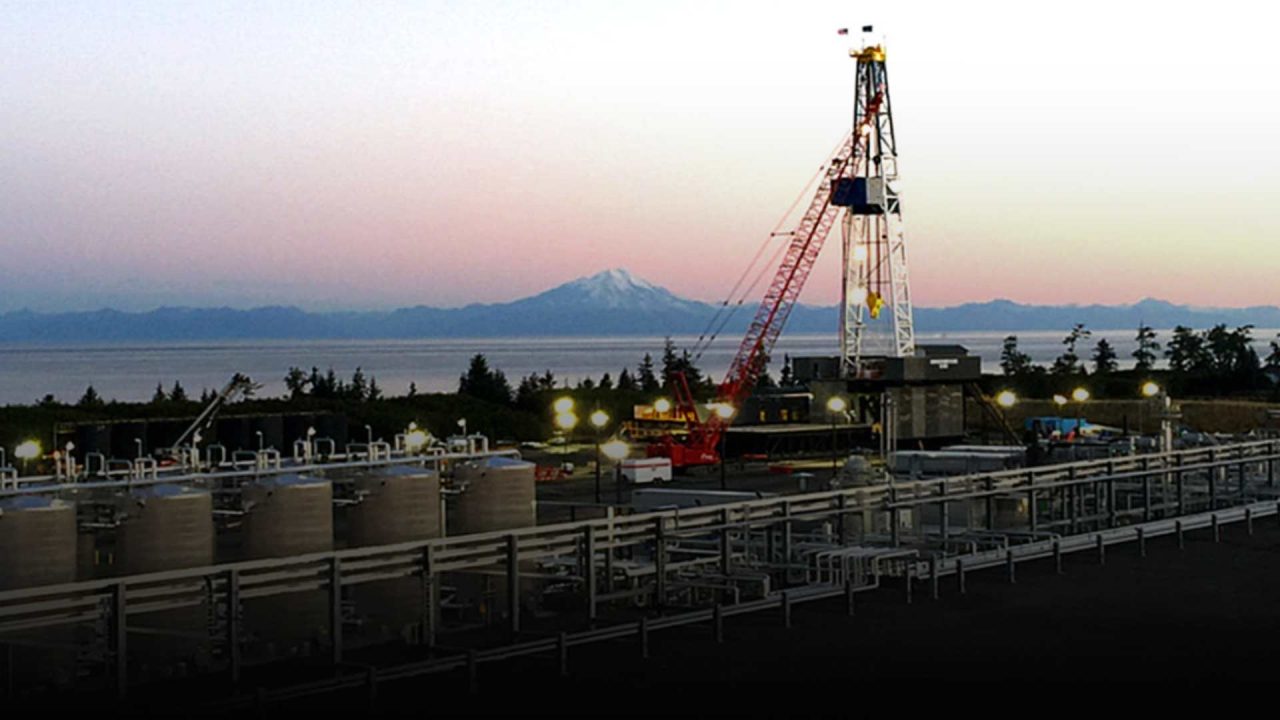

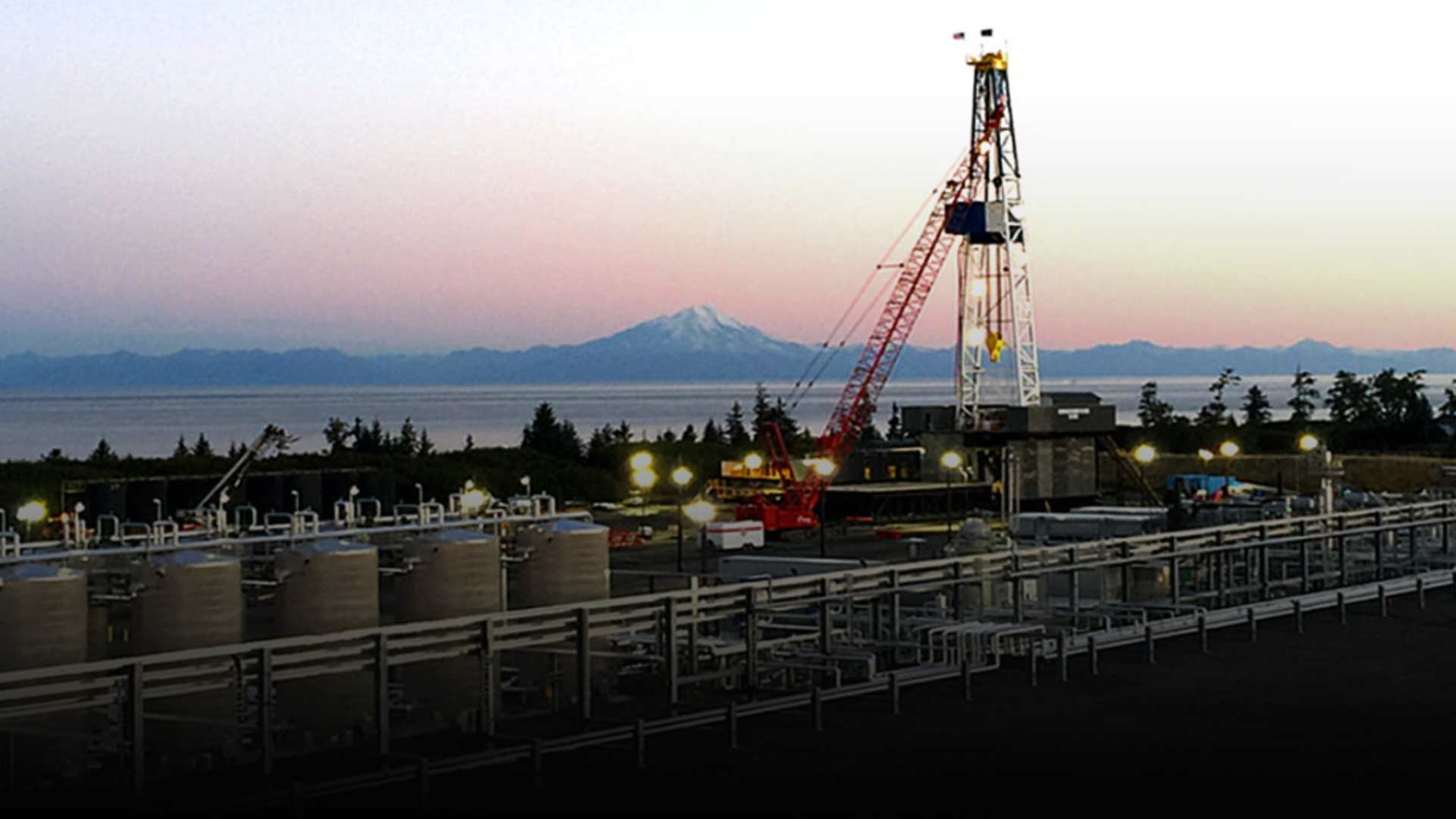
BlueCrest Energy Inc. just announced that it has secured funding to advance development and production of new, usable Cook Inlet natural gas by early next year.
The announcement promises to be one of the few near-term, locally produced gas projects that could actually add new Cook Inlet supply, while Southcentral Alaska attempts to address gas shortages, decades of declining supply and the potential for strict conservation, higher bills, and, in a worst-case scenario, rolling winter blackouts.
The Sept. 15 announcement notes that the company’s development program includes recertification of BlueCrest Rig #1, final well engineering, procurement of long-lead equipment, expansion of the Hansen Production Facility, and drilling and completion of the H-17 Lower Tyonek A extended-reach gas well.
BlueCrest anticipates first natural gas production from H-17 by March 1, 2027, with an anticipated initial production rate of approximately 25 million cubic feet per day. The company said it is committed to “achieve first Lower Tyonek A gas no later than March 31, 2027.”
ALASKA WATCHMAN DIRECT TO YOUR INBOX
The H-17 gas well will be drilled from BlueCrest’s existing onshore Hansen pad beneath Cook Inlet. Following production and evaluation of H-17, BlueCrest plans to use the actual well results to optimize and advance a second Lower Tyonek A extended-reach development well.
“BlueCrest will be part of the solution to the natural gas supply shortfall facing the Cook Inlet region,” said J. Benjamin Johnson, Chief Executive Officer, and John M. Martineck, Chief Operating Officer. “With funding secured, our focus is on execution and bringing additional locally produced natural gas to the Cook Inlet market as quickly and responsibly as possible.”
While BlueCrest’s latest announcement will not produce enough gas to permanently solve the current crisis, it will help address the possibility of a pending winter gap. It also represents production from a new well, rather than tapping aging fields.





3 Comments
The left will just complain, where’s the windmills and solar panels.
At what cost?
They’re still pumping out scarytales at MRAK about how we’ll all freeze in 2029.