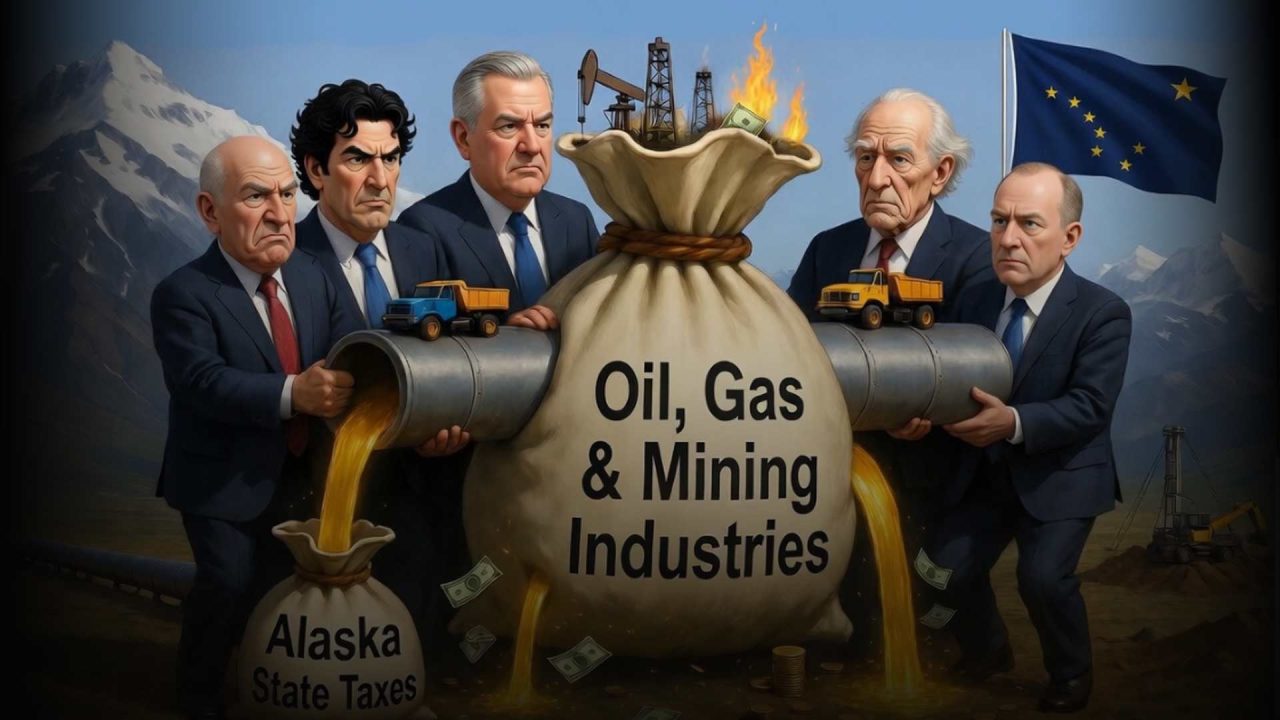

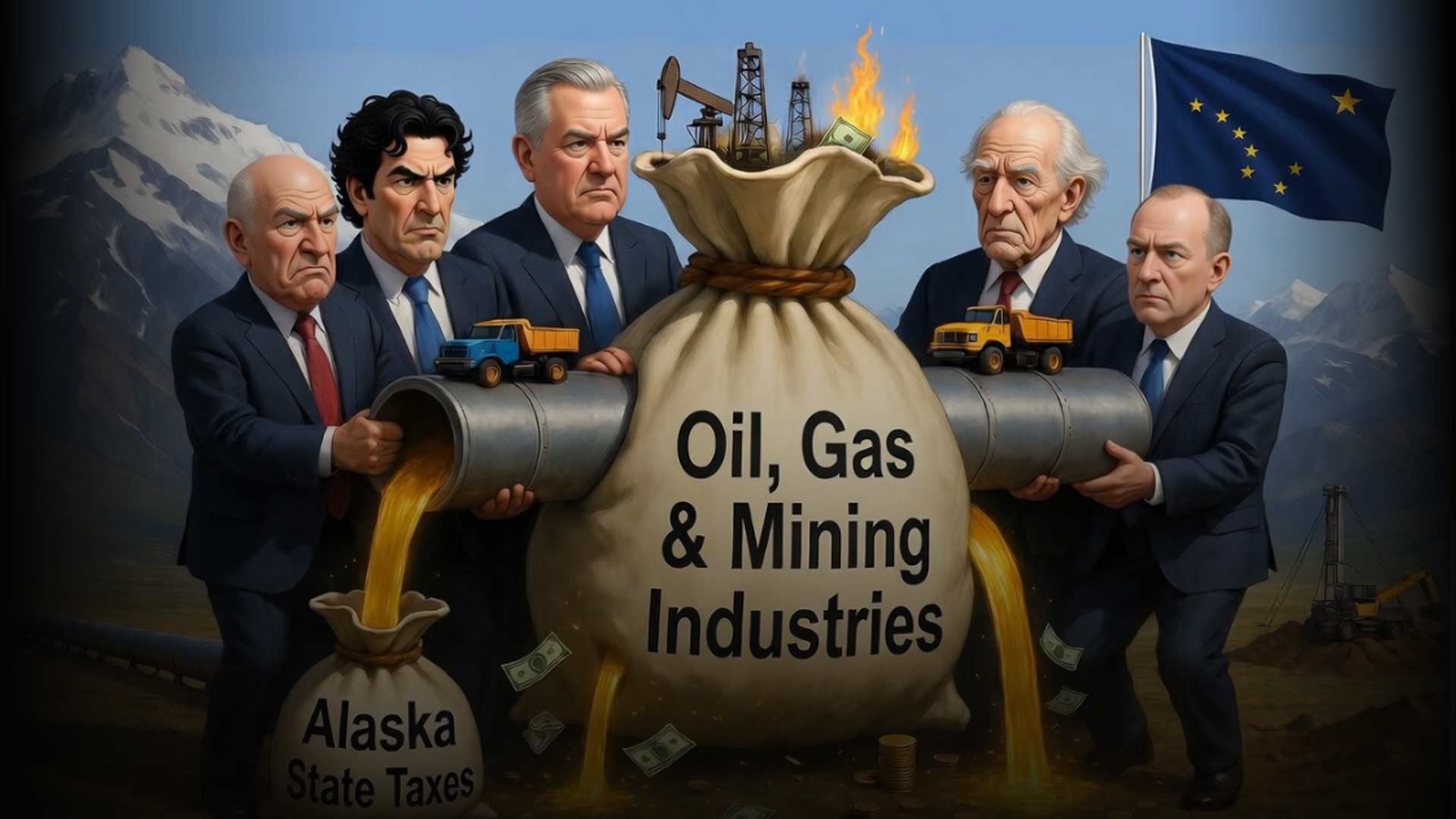
Alaska’s economy needs to operate on a simple but powerful equation: private capital development of our state’s natural resources, and in return Alaskans receive jobs, infrastructure, and the revenue that funds essential public services. Yet the current political conversation increasingly treats resource developers not as partners in building the state’s future, but as targets from which the maximum possible tax burden should be extracted. That mindset may feel satisfying in the moment, but it ignores a fundamental economic reality: investment is optional, mobile, and highly sensitive to policy signals. When lawmakers push for the highest conceivable tax take, they risk undermining the very activity that generates revenue in the first place.
Resource development (whether oil, gas, or mining) requires enormous upfront capital, long timelines, and a willingness to operate in challenging environments. Investors weigh risk carefully, and Alaska already presents plenty of it: remote geography, harsh climate, high logistical costs, and aging infrastructure. What keeps capital flowing north is the expectation of a stable, predictable fiscal environment. When policymakers begin suggesting that long‑standing tax structures are “loopholes” or that the state should rewrite the rules after billions have already been committed, the message to the global investment community is unmistakable: Alaska may change the deal at any time.
Alaska’s fiscal stability will not come from squeezing the last drops out of a shrinking sector; it will come from expanding the sector itself.
That uncertainty carries a price. When companies hesitate to invest, production declines. When production declines, the state’s revenue base shrinks. Alaska has lived this cycle before. The Trans‑Alaska Pipeline System, once a symbol of abundance, now operates at a fraction of its original throughput. Every barrel matters, not just for state coffers but for the pipeline’s long‑term viability. The surest way to reverse that decline is to attract sustained, patient capital willing to drill new wells, deploy new technologies, and extend the life of mature fields. That does not happen when the state signals that success will be punished with ever‑higher taxes.
The consequences ripple far beyond the North Slope. Local governments depend on property taxes from resource projects. Schools, public safety, and transportation infrastructure rely on state revenue tied to production. Thousands of Alaskans depend on the industry’s activity: engineers, welders, truck drivers, contractors, small business owners. When investment slows, those jobs and services are the first to feel the impact.
ALASKA WATCHMAN DIRECT TO YOUR INBOX
Some argue that raising taxes is necessary to close budget gaps. But focusing solely on extracting more from existing operators is a short‑sighted strategy. A healthier long‑term approach is to grow the overall size of the industry. More investment means more production, and more production means more royalties, more taxes, and more economic activity across the state. Alaska’s fiscal stability will not come from squeezing the last drops out of a shrinking sector; it will come from expanding the sector itself.
Our state’s resource potential remains enormous. What Alaska needs now is not a punitive posture toward the companies willing to invest here, but a recognition that private capital is a partner in the state’s prosperity. Stability, predictability, and respect for long‑standing business structures are not giveaways. They are the price of admission for attracting the billions of dollars required to keep Alaska’s economy functioning.
If lawmakers want a stronger revenue stream, the path is clear: encourage investment, don’t deter it. Alaska’s future depends on it.
The views expressed here are those of the author.





5 Comments
Very well said. If you keep raising the prices on your menue to make up for the lack of patrons in the resturant you willsoon have no patrons.
Drill baby drill. All these legislators want, is to line their pockets.
well said, our so called reps are not representing us but themselves and who owns them.
waiting for a check?
The two bills in the legislative process should be “killed.” SB180 and SB280 both with Crime Boss Dunleavy’s consent are in need of being shelved permanently. The most and last significant amendment is the fact that the committees and the governor want the “comment period waived” so the public does not have the opportunity to comment on any place or time frame. Crime Boss Dunleavy is boosting that particular emphasis as he wants this done under the table for his legacy and the rewards of money in his pockets will not hang out there like “bad breath” in an airless room.
To the public, I say to call your district reps and put a stop to that agenda. These people are elected by votes and they can be recalled. Crime Boss Dunleavy needs to have sit time in a jail for no bidding process on any company under the law. He made his mind up and no legal or following the law has been available for the public to view. No notices, no comment period or engagement to public in planned hearings in communities. Time to put a stop to that nonsense. Kill the Bills!
The oil industry plays this card every time the state of Alaska tries to secure its fair share of the sale of the product we own. The industry is not going to leave. Marcum said it herself, “ Our state’s resource potential remains enormous”.