



The Alaska Department of Law will not move forward with the pending voter misconduct cases arising from the investigation of voting activity in Whittier following the Alaska Court of Appeals’ recent decision in Tupe Smith v. State.
In that decision, relying on legislative history, the Court of Appeals interpreted Alaska’s first-degree voter misconduct statute to require an additional showing beyond what the statute was long understood to require.
Last year, the state announced that charges were filed against 10 people for perjury and voter misconduct, among other charges. All 10 were residents of Whittier and U.S. nationals, but not U.S. citizens.
At that time, Tupe Smith and other Whittier residents were charged with first-degree voter misconduct, which makes it a felony to “intentionally” make a false affidavit, swear falsely, or falsely affirm under an oath required by Alaska’s election laws. Consistent with the statute’s plain meaning, the state has long understood this statute to require proof that a person deliberately made a sworn statement the person knew was false. The charges against Ms. Smith were based on that understanding.
According to a Sept. 11 announcement from the Alaska Department of Law, Ms. Smith, while filling out multiple voter forms, falsely affirmed, under penalty of perjury, that she was a U.S. Citizen.
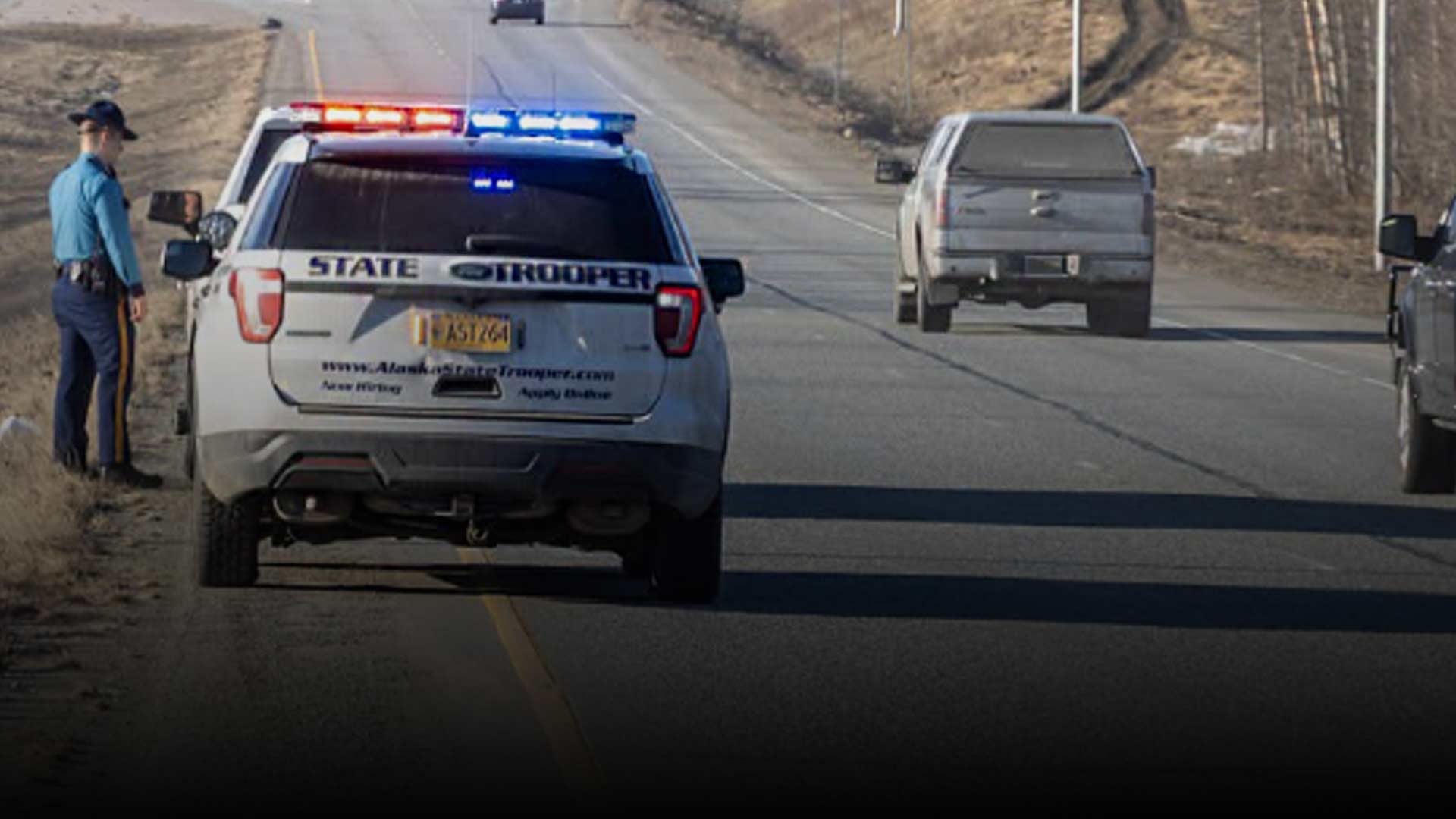
“During an interview, Ms. Smith told Alaska State Troopers that she knew she was a U.S. National and had never filed for U.S. Citizenship,” the department noted. “The State charged Ms. Smith for deliberately making a false statement – that she was a U.S. Citizen – that she knew was false.”
The Court of Appeals, however, rejected the state’s interpretation and held the statute requires something more: proof that the defendant acted with a “consciousness of wrongdoing” when deliberately making the false sworn statement.
“That phrase does not appear in the current statute, but the court relied on legislative history and a prior version of the law to read this additional element into the voter misconduct statute,” the Dept. of Law noted.
“The Department respectfully disagrees with the Court’s characterization of the Alaska State Troopers’ conduct,” the department emphasized.
“Our prosecutors have an obligation to follow the law as it is written and to apply it faithfully to the cases before us,” Acting Alaska Attorney General Cori Mills said in explaining why the state was forced to drop its charges. “It is sometimes the case that courts reach a different conclusion about what the law requires the state to prove, as the Court of Appeals has done here. This requires us to re-evaluate whether the State can prove its case beyond a reasonable doubt under the new standard, and after reviewing the decision and applying the facts, we don’t think we can do that.”
Mills added that the Dept. of Law respects the role of the courts in interpreting Alaska law and that the state will “faithfully execute our duty to apply the law and carefully evaluate our prosecutorial decisions.”
The department added that the state must evaluate pending criminal cases under the law as interpreted by the appellate courts.
Due to the court’s recent ruling in Smith, the Criminal Division determined that it cannot prove the new mental-state requirement beyond a reasonable doubt and will therefore dismiss the pending cases.
The State will also undertake a review of other pending voter misconduct cases and evaluate each case individually to determine whether continued prosecution is appropriate.
ALASKA WATCHMAN DIRECT TO YOUR INBOX
The Dept. of Law took issue with the fact that the Court of Appeals concluded that the testimony presented to the grand jury concerning Ms. Smith’s statements to investigators was misleading.
“The Department respectfully disagrees with the Court’s characterization of the Alaska State Troopers’ conduct,” the department emphasized.
“We stand behind the work of the Department of Public Safety and the dedicated troopers who investigated these cases,” Deputy Attorney General Angie Kemp said. “Although we respect the Court’s decision and will apply it going forward, we disagree with the Court’s characterization of the trooper’s testimony before the grand jury. Context is critical to a fair evaluation of both the evidence and the testimony of those tasked with investigating and presenting complex cases. Our law enforcement officers routinely perform difficult investigations and are called upon to explain complex facts and interviews to grand juries.”
The Dept. of Law plans to review the implications of the court’s decision for its broader impact on enforcement of Alaska’s election laws and to determine whether statutory clarification should be recommended to the Legislature.



13 Comments
Very interesting, if not troubling, that the court of appeals comes up with non-statutory language to justify its ruling of election law “proof that the defendant acted with a “CONSCIOUSNESS OF WRONGDOING” when deliberately making the false sworn statement. ” “That phrase does not appear in the current statute.” Too bad the State did not take its appeal to a higher court beyond the Court of Appeals.
Plus… Their presence in the United States is a violation of federal law… They are foreign criminals violating multiple federal laws. The judge should be “Kicked” from the bench.
Let’s be fair. They are NOT foreign nationals, they are US nationals. At one time, so were Alaskans. There is nothing wrong with them being in Alaska, so long as they don’t try to vote.
Tamara, I will admit that I read the article too quickly, and did not evaluate all of the content correctly… I don’t normally do that… But, I will contend that they knowingly violated federal laws, and I would contend that any documentary association with their presence in the United States should be revoked. Thereby, facilitating their deportations.
Looks like another job for ICE!
What can be done so that it will not happen again.
Law means nothing!
Agree wuth you on this, Dave. Matt 24:12 says “lawlessness will abound” prior to the return of Jesus Christ.. I see it more and more every time I venture forth onto the streets and highways of Alaska. Once upon a time (now a fairy tale) I considered Alaskans to be law abiding citizens. Gone are the days!
Finally Dave maxwell something we agree on. Our entire legal system is in a state of collapse. Criminals run free. There is virtually no law enforcement and the law enforcement we get is half assed.
So much agreement, finally!!! Just to let you know I have been the same for a long while! Yes even when I was a whistleblower in soa employment! The law has been compromised and now is being eradicated! I as a citizen did what I could do to force the law enforcement to do the job of holding the guilty accountable! I’m challenging you now to do the same!!! DAMN STRAIGHT!!
Would the outcome been the same if all these people were white? I doubt it.
Once again, we find the executive branch genuflecting to the judiciary: “Although we respect the Court’s decision and will apply it going forward, we disagree with the Court’s characterization of the trooper’s testimony before the grand jury.” This shows the continued, and by now is a perhaps faked ignorance, of how a PROPER constitutional response would have been. “The court has issued their opinion. It is NOT binding. We will continue to enforce the law. The executive department will remind the judiciary that they are subordinate to the executive and legislative branches, and their opinions are merely advisory.” Most of the high-falutin’ lawyers have been schooled in a completely false constitutional paradigm. And who says so? The truly clear-headed lawyers, who unequivocally state that law schools deliberately teach that “case law” supersedes “statutory law.” Thus, our serfdom to unelected political hacks, dressed in long black robes with properly long faces, continues because our elected officials are too timid to challenge the zeitgeist.
Is this the same court that allowed Murcowsee to be an acceptable vote for Lisa in her write-in betrayal? Our Judicial system is too close to Russia and I don’t mean geographically!