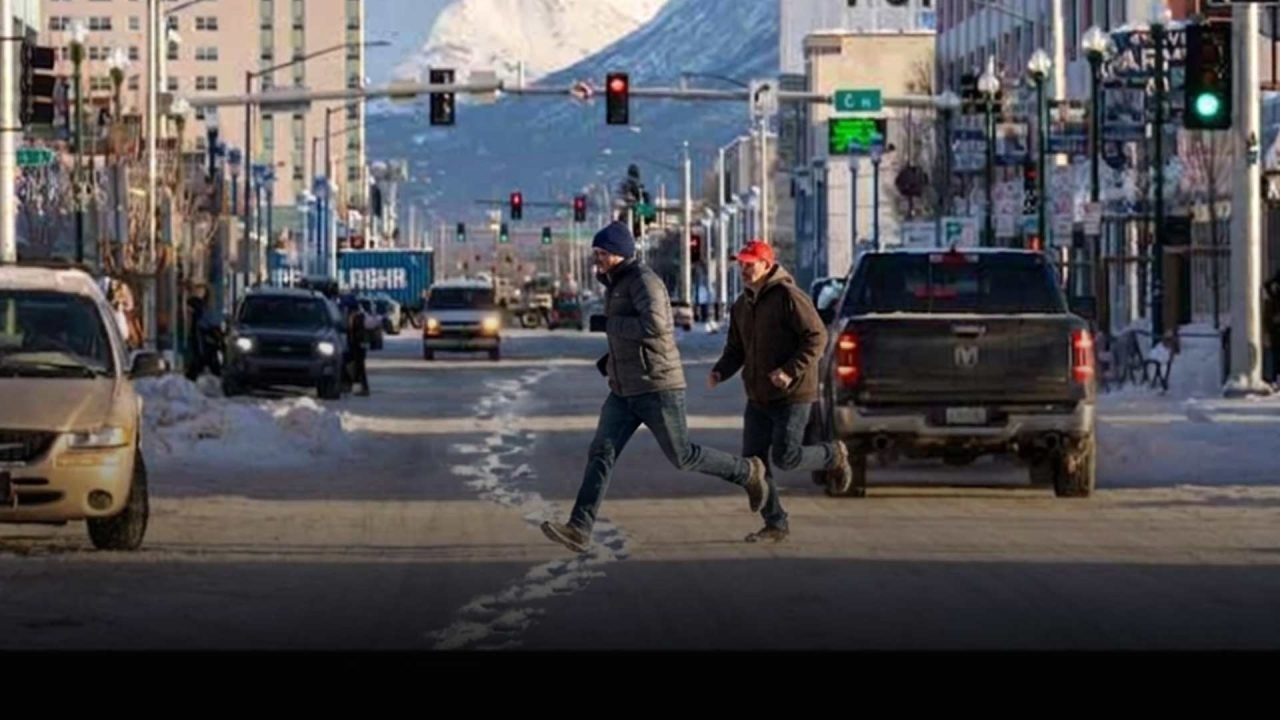

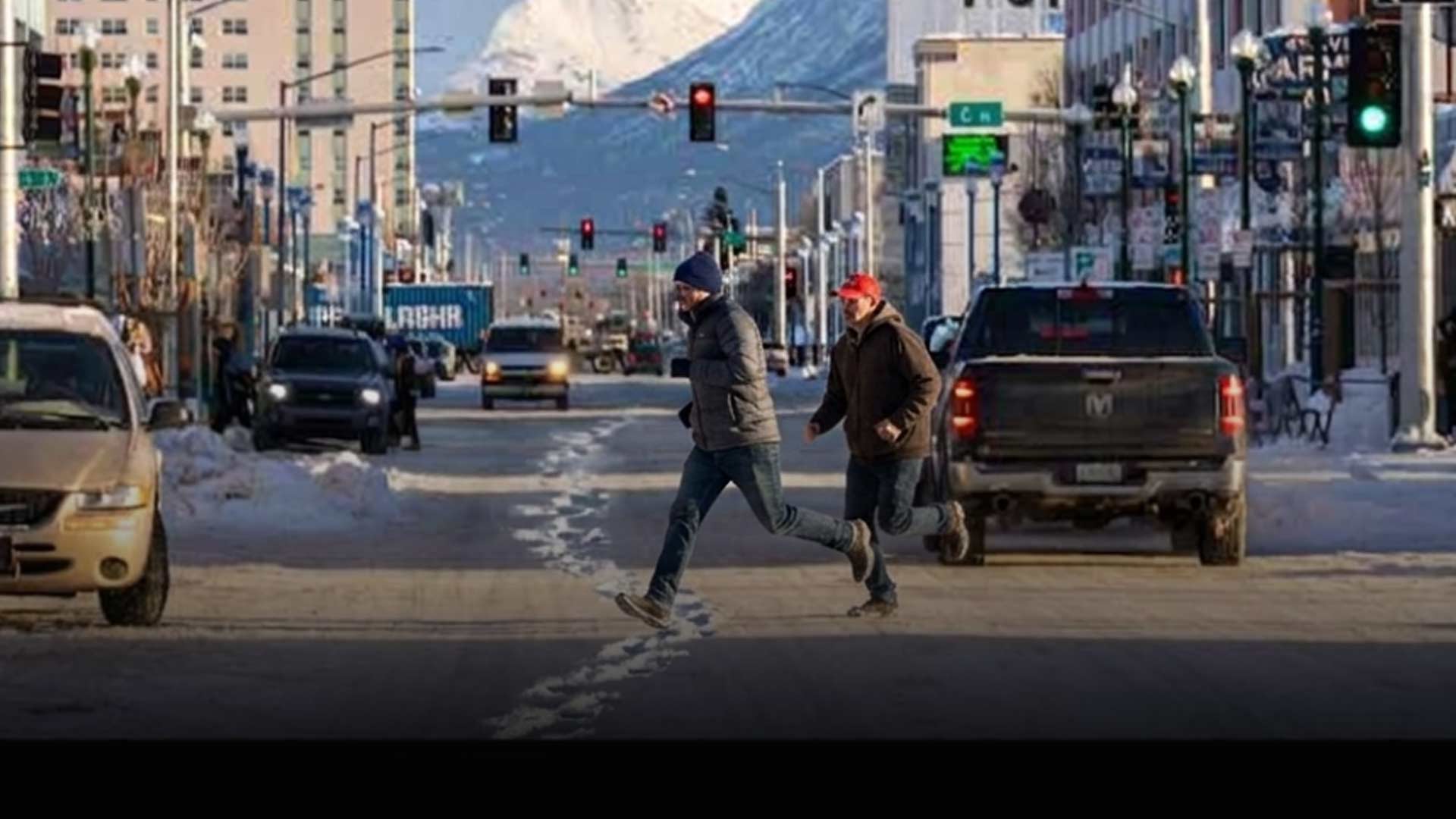
DEI-inspired efforts by Anchorage’s left-leaning Assembly to address pedestrian deaths have failed to make city streets safer.
A new report from the Alaska Department of Health highlights the deadly rise in pedestrian fatalities in Anchorage, with 15 deaths recorded in 2025 alone – the highest annual total in the past decade.
The findings may put pressure on the Anchorage Assembly to consider reversing a 2023 policy that decriminalized jaywalking in the name of promoting so-called “equity” in local law enforcement.
The 2023 ordinance effectively removed all fines for jaywalking, and was strongly criticized by then-Mayor Dave Bronson, who warned that legalizing jaywalking could have devastating consequences.
According to the new study, which was released on April 22, a total of 92 pedestrians died in vehicle-related incidents in Alaska’s largest city between 2016 and 2025. The 2025 fatality rate reached 5.18 deaths per 100,000 residents, marking a peak in the period analyzed.
Drawing from death certificate data and Anchorage Municipal traffic records, the report underscores that pedestrian deaths remain a significant public health concern and a leading cause of unintentional transportation-related fatalities. In Anchorage, where vehicle and pedestrian traffic volumes are highest in the state, these incidents cluster in specific areas, times, and conditions.
ALASKA WATCHMAN DIRECT TO YOUR INBOX
Males accounted for 61% of the deaths (56 out of 92). Fatalities peaked in September, with 15 deaths representing 16% of the total. The months of August through October saw the greatest concentration of incidents, often occurring between 11 p.m. and 2 a.m. The report states that factors like reduced daylight in late summer and early fall, coinciding with twilight hours, are contributing factors, along with behavioral risks by both drivers and pedestrians.
Geographically, incidents were heavily concentrated in a few urban hotspots. Midtown Anchorage recorded the highest number with 23 fatalities (25%), defined by the area bordered by West Fireweed Lane and 25th Avenue to the north, the Seward Highway to the east, West 36th Avenue/Spenard Road to the south, and Minnesota Drive to the west. East Downtown followed with 8 deaths (9%), and two intersections along C Street – at 32nd Avenue and West 48th Avenue – accounted for another 6 (7%). Most other areas of the city saw fewer than six fatalities each.
Driver behavior played a notable role. In 30% of cases (28 out of 92), the driver fled the scene. Speeding was documented in 4% of incidents. Substance use was common: among pedestrians with available data (2016–2024), 18% had alcohol only in their system and 36% had any substance. Among drivers, 9% had alcohol only and 25% had any substance.

The report recommends continued monitoring to identify risk patterns, roadway safety improvements, and stronger law enforcement efforts against impaired and illegal driving. For pedestrians, it advises increasing visibility in low-light conditions with reflective clothing and using designated crosswalks. Drivers are urged to avoid alcohol or drugs, refrain from distractions like texting, and always use headlights, especially during evening and nighttime hours.
When the Assembly first legalized jaywalking in 2023, co-sponsor Daniel Volland claimed. the change would make Anchorage’s laws more “equitable” for specific demographics like people of color and those with low incomes.
Then-Mayor Bronson, however, warned the assembly of an old axiom – “Do not remove a fence until you know why it was put up in the first place.”
Correction: An earlier version of this article incorrectly stated that Suzanne LaFrance voted for the 2023 ordinance that removed fines for jaywalking. LaFrance was no longer on the assembly at that time. We regret the error.
TAKING ACTION
— Click here to contact members of the Anchorage Assembly.





9 Comments
I’m just glad to know that I won’t get caught.
Just put a fence around Anchorage. And lets them rote in their own left wing ideology.
It’s a cesspool of a city now. I’ve said this before, back in the day when I lived in Anchorage. It was an awesome place to be. Now it’s a woke disgusting evil unsafe city to visit.
Indeed!
This just proves there are plenty of people – mayor and city assembly – dumb enough to think that eliminating a law will change people who don’t observe laws anyway. The same thing applies to guns. There are plenty of people dumb enough to think that making guns against the law will make us safer from people who don’t give a damn about laws anyway.
it’s almost like public safety laws were written to promote public safety?! consider my mind blown
Great reporting, however you have a few details a bit confused.
The woke jaywalking law AO2023-65(S-1) was passed by the assembly in August 2023, 4 months after LaFrance got off the body. Further, 8 months after being elected mayor and seeing the increase in pedestrian deaths caused by this law, she partnered with Assemblymember Randy Sulte to repeal it by cosponsoring AO2024-130. That motion was voted down by the leftist majority, but don’t lump LaFrance into that group. All of this information is available on the muni webpage with a quick search. When you tell lies to try to make a point, you are no better than Chris Constant and Meg Zaletel. Be better.
The citizens just re-affirmed their commitment to these policies! They LOVE THIS!! They want more! They re-elected Anna Brawley, who vehemently supports this! They continue to beg for more of this. The Assembly is giving the citizens exactly what they ask for. More deterioration! More decline!!
No one can blame the assembly. They are doing exactly what the voters want.
I remember first hearing of DEI, I though to myself, my gawd what a completely idiotic thing! Who comes up with this garbage? Unreal.
Not surprising considering the common thinking of today’s society. To clean up ypur State, city, etc to make ir appear law abiding? Simole! Get tid of laws and you will noingee have any law breakers. The Buble says that in the “end if days” lawlessness will abound. Guess we are well on our way there