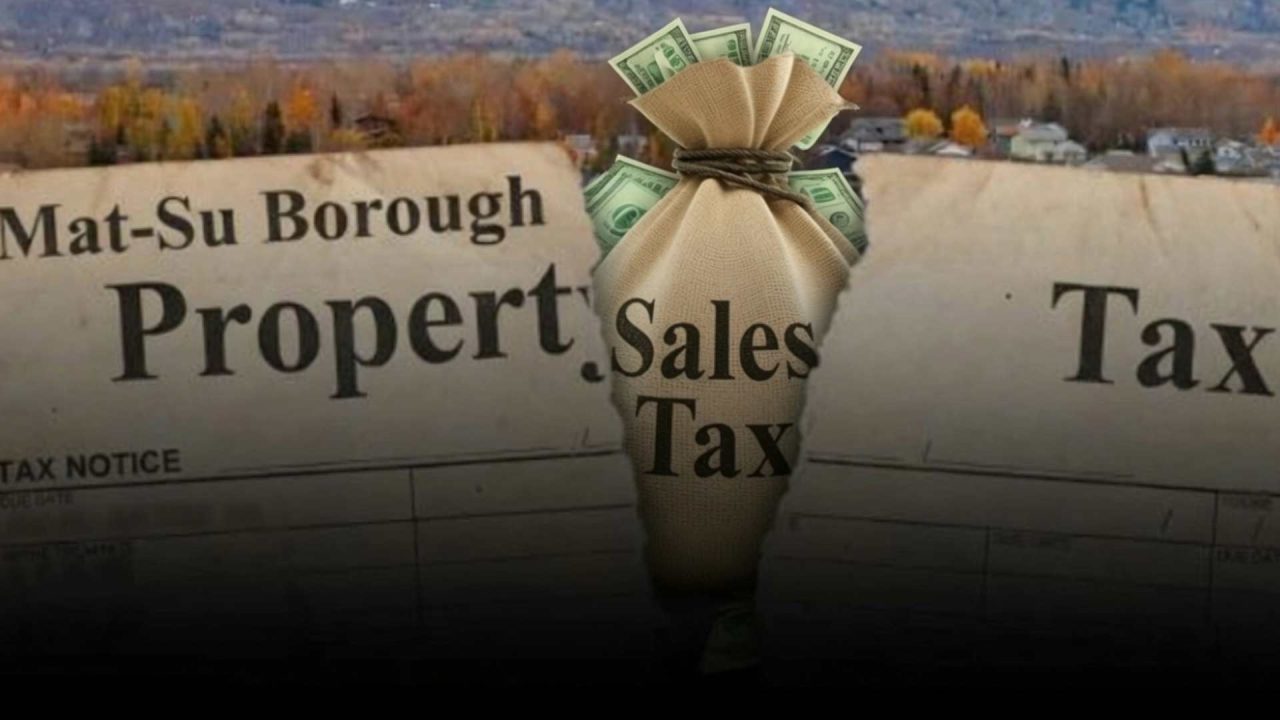


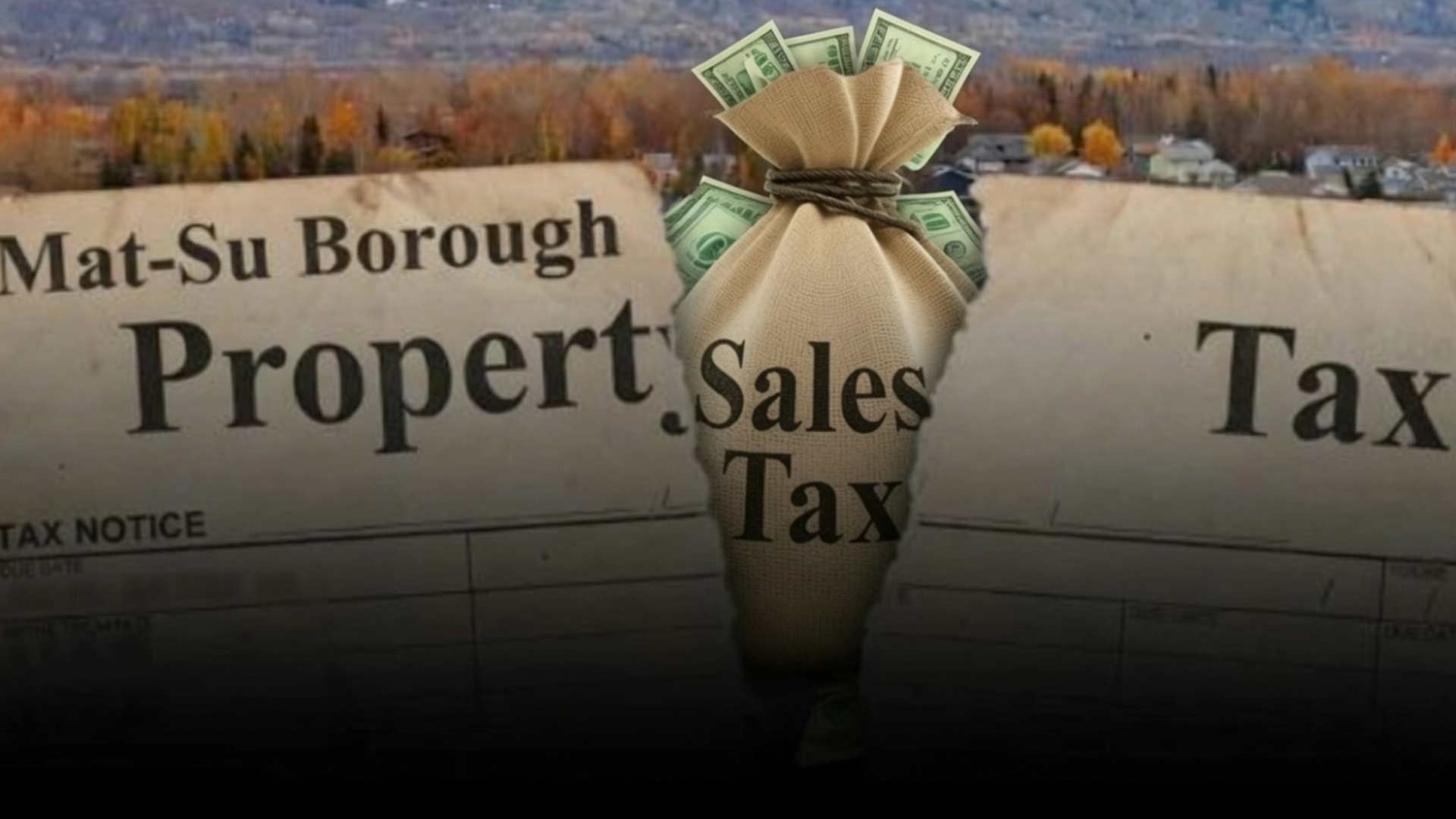
The City of Wasilla may formally push back against a significant tax overhaul proposed by the Mat-Su Borough. On June 8, the Wasilla City Council is scheduled to consider a resolution opposing Borough Ordinance Serial No. 26-032. This borough measure, which has not yet been approved, seeks to enact a 6.5% areawide sales tax while repealing the existing areawide property tax.
If the borough assembly approves the ordinance by August, the issue would go before voters on Nov. 3.
The borough proposal aims to replace the areawide property tax – currently at 8.485 mills, or about $849 per $100,000 of assessed value – with a sales tax on most sales, services, and rentals within the borough, capped at the first $1,000 per transaction. If approved, it would take effect April 1, 2027, generating an estimated $125 million annually while spreading the tax burden more broadly to include visitors, tourists, and online shoppers.
Wasilla’s primary concerns center on the combined tax burden and economic impacts. The city already levies a 2.5% sales tax on non-exempt transactions, capped at the first $500 (a maximum of $12.50 per sale). Adding the borough’s 6.5% tax would create a combined 9% rate in Wasilla. For a $1,000 transaction, this results in a $77.50 combined tax cap: 9% on the first $500 and 6.5% on the next $500. City officials warn this could discourage retail activity, disadvantage local businesses, and drive consumers to shop outside the borough – particularly in Anchorage, which lacks a general sales tax.
The resolution expresses concern for other borough communities as well. Palmer’s sales tax would rise to 10.5% temporarily (then 9.5%), Houston’s to 8.5%, and Talkeetna’s to 9.5%. The City of Palmer has already passed its own opposing resolution.
Wasilla’s resolution requests that the borough amend its ordinance to impose the sales tax only in areas without existing city sales taxes. It also seeks explicit protections preserving cities’ authority to tax and administer their own levies.
ALASKA WATCHMAN DIRECT TO YOUR INBOX
Sponsor of the borough sales tax proposal, Assembly Member Michael Bowles, has emphasized fairness and property tax relief. Bowles, who represents District 1, introduced the measure on March 3, 2026, arguing that skyrocketing property assessments have created an “overwhelming burden” on homeowners.
“I hate property tax,” he stated. “Your home should never be infringed upon.”
Bowles sees the sales tax as a way to capture revenue from non-residents and recreation visitors from Anchorage who use borough services.
The borough website notes that the proposed sales tax plan would not completely eliminate all property taxes, because non-areawide, city, fire, road and special service mill rates would still be in place.
A public hearing on the proposed tax shift is set for June 16. Click here for more details.




14 Comments
Wasilla City Council needs to be fired. Fraud, waste and abuse. Anchorage has the same sick mentality and the waste iks in millions of dollars that is never accounted for and any complaint is treated with a negative by the mayor. Wasilla and Palmer have the same problem. Property taxes have doubled in the last few years and added gas tax to their ledgers for city uses for more fraud, waste and abuse. The mayors of the cities manage huge salaries as if the income stream is endless. The city councils in all these boroughs need audits per program and department to be disclosed and adjusted or abolished.
What salary would you agree to knowing that people who disagree with you are going to hate you and say whatever they want to say on social media?
Diana. You start your comment with your conclusions and end it by saying we need evidence. Kinda backwards.
I am intrigued and for sure Assemblyman Bowles has moxie for taking this on. I think it is horrible that someone can own their home free and clear, work hard to pay off a mortgage, but then could loose that home in tax foreclosure. I also see the perspective of the cities already relying on sales tax to operate. It is a dilemma for sure.
It’s great to see community discussion around tax proposals. In my experience, local governments often struggle with balancing budgets and prioritizing services. I wonder how Wasilla’s decision might impact small businesses; perhaps they could explore innovative solutions like the sales tax model at Tunnel Rush for engaging more citizens in commerce while considering fairness in taxation?
The Cities should oppose this, especially Wasilla and Wasilla residents. Wasilla lives on their sales tax, and with the CITY property tax levy set at Zero since Sarah Palin was mayor, they essentially have no City property tax. This will hurt the Cities and their residents. Another big issue people need to be aware of is if a Borough Sales Tax replaces the Borough Property Tax, the substantial senior and disabled property tax exemption goes away, so seniors and the disabled will end up paying MORE because they won’t be exempted from the new Borough Sales Tax.
You need to show proof to back up your claim that senior citizens would pay more under this proposal. I am not a senior citizen, still working and receive no property tax exemptions. I would have to spend about $77,000 for the sales tax to extract the same amount that my property tax does. That’s more than my take-home pay. If your property taxes are $3,000, that would require spending $46,153 on taxable items for it to be a wash. A 9% sales tax sounds scary, but one needs to do the math to see if it would be better then the property taxes.
Then lower the mil rate rather adding ANOTHER tax. Sales tax is truly a horrible idea. It is yet another tax. Conceptually its great. You own your home free and clear with no strings. But wait, that’s not the case. There is still the need for property tax. So we are just removing the area wide and replacing it with a sales tax. Both will increase with time and another set of politicians in 15-years.
The issue with sales tax is that it is considerablely unstable. The accounting and tracking is far more expensive as compared to property tax and it transfers the tax burden to the lower income brackets. For example, what happens with the properties that are purchased by outside corporations that really have no sales tax impact. Like a data center? Now that data center just sits there with a nice low tax bill while the Alaskan residents are footing the bill.
What is not being talked about enough is the fax that the proposed sales tax is going to yield a deficit. ???? How are we going to solve the deficit? Debt? Higher sales tax?
Property tax is stable and paid by everybody. Home owners, businesses, and tenants. We can lower the mil rate and increase the senior exemption limit then call for an internal audit borough wide.
Are land lords going to lower their monthly rental rates when the taxes are also reduced? Who is going to regulate that? Oh wait, that calls for more legislation. More more more. So we are going to add transactional cost to the lower income levels which are often those who are just starting out and we are going to shift it away from those who are established…
I’m a business owner here in the Mat-Su and I can tell you that this truly a horrible idea. It will shift even more sales online and away from the small businesses across the valley. I was once an advocate, but as I looked at the impact this will have on my company and many others, combined with the impact on the consumers, I have changed my stance. We are going to shift another 6.5% (which is not high enough to match the current borough requirement) to the everyday purchases on the shelf. A $1000 cap? that’s too high…
Then lower the mil rate rather than adding ANOTHER tax. Sales tax is truly a horrible idea. It is yet another tax. Conceptually its great. You own your home free and clear with no strings. But wait, that’s not the case. There is still the need for property tax. So we are just removing the area wide and replacing it with a sales tax. Both will increase with time and another set of politicians in 15-years.
The issue with sales tax is that it is considerablely unstable. The accounting and tracking is far more expensive as compared to property tax and it transfers the tax burden to the lower income brackets. For example, what happens with the properties that are purchased by outside corporations that really have no sales tax impact. Like a data center? Now that data center just sits there with a nice low tax bill while the Alaskan residents are footing the bill.
What is not being talked about enough is the fact that the proposed sales tax is going to yield a deficit. ???? How are we going to solve the deficit? Debt? Higher sales tax?
Property tax is stable and paid by everybody. Home owners, businesses, and tenants. We can lower the mil rate and increase the senior exemption limit then call for an internal audit borough wide.
Are land lords going to lower their monthly rental rates when the taxes are also reduced? Who is going to regulate that? Oh wait, that calls for more legislation. More more more. So we are going to add transactional cost to the lower income levels which are often those who are just starting out and we are going to shift it away from those who are established…
I’m a business owner here in the Mat-Su and I can tell you that this is truly a horrible idea. It will shift even more sales online and away from the small businesses across the valley. I was once an advocate, but as I looked at the impact this will have on my company and many others, combined with the impact on the consumers, I have changed my stance. We are going to shift another 6.5% (which is not high enough to match the current borough requirement) to the everyday purchases on the shelf. A $1000 cap? that’s too high…
A better solution would be to make primary residences tax exempt. The home you live in can be owned free and clear, but any extra properties or commercial properties will still be taxed.
Big island Hawaii has a lower property tax for residents vs. non-residents and rental property. They also have a stiff vacation rental tax so it does not affect locals and a sales tax which hits everybody equally.
I’m not saying their government spends it
proportionately or efficiently, As is often the case, Kona side pays seventy percent while Hilo side (county seat) enjoys at least as much if not more than Kona side of total revenue.
About two-thirde of matsu budget is consumed by the school system. It receives ninety-percent state funding of home school students vs. brick and mortar students with 120 some home kids/teacher vs 20 some brick kids/teacher. …and the additional bus transportation cost???
Mat Su is loosing lots of tourist $$ by not having a sales tax. In 1990 they figured that we were losing $34 million in tourist $ due to 0 tax per year. Sales tax is easy to collect and easy to account for. Real property is not easy to assess the value of nor is it easy to collect. The only fare tax is a sales tax.
The Borough and state and even nationwide have had this discussion for years. That there are now two ordinances being discussed on this subject is good. What we really should do is like a repeat of what was it 2009, where multiple public meetings were help, the process lasted like a year. In 2019 a study was performed to see what it would take sales tax wise to do this. Most places have a hybrid approach where the primary residence pays a reduced or little property tax, while Commercial and industrial properties still contribute to borough revenue, while at the same time having a small sales tax to say catch the tourists and those passing through. We would not want to stack that tax on the cities already doing a sales tax though. Another thing we should do is work with the state legislative branch to change state law allowing boroughs to have different mill rate classifications on different types of property. This would give the borough much greater flexibility in their revenue collections while lessening the burden on primary residences .
Only a hardened cynic would wonder whether Mat-Su Borough’s proposal to swap property taxes for sales tax might be a first step toward removing official property tax rolls so they can’t be compared to official government voter rolls, so thousands of “voters” receiving mail-in ballots – who “live” in abandoned buildings and big-box stores – can keep on voting.
.
Can’t happen here?
.
Why not?