

I grew up attending St Anthony Catholic Church in East Anchorage. My Dad, quiet and grounded, was a telephone lineman and master carpenter. With my Mom, he started Jamico’s Pizzaria in Mountain View, which remains one of the oldest establishments in Anchorage.
One of my earliest memories was Dad pressing the horn of our purple station wagon whenever we drove by an abortion clinic. He never mentioned it, but I came to know that was his way of supporting people out front who were standing for the rights of the pre-born.
It was long into the future, after I made a career of navigating the intersection of faith and politics, that I became familiar with the role of Catholic Conferences.
Catholic bishops throughout America share the same faith, the same Catechism and the same fundamental teachings about human dignity, marriage, family and the sanctity of human life.
But why do these Catholic public-policy ministries in different states often look and act so remarkably different?
The answer becomes apparent when we look beyond Alaska.
ALASKA WATCHMAN DIRECT TO YOUR INBOX
The good is what happens when a Catholic conference understands its role as more than simply monitoring legislation. It means bringing the Church’s moral teaching into the public square with clarity, consistency and charity – even when those teachings are politically inconvenient.
Consider Kansas. The Kansas Catholic Conference identifies protecting human life, marriage and the family, and religious liberty among its foundational public-policy priorities. It calls protecting unborn life its “preeminent priority.” The conference doesn’t stop at statements of principle. It testifies before legislators, advocates on legislation and communicates Catholic teaching to Catholics and the broader public.
South Dakota provides another compelling example. Under Executive Director Michael Pauley (and I’m a bit biased here as Michael is a dear friend and the former Policy Director for Alaska Family Council), the South Dakota Catholic Conference has been highly visible on life and family issues. During the 2024 campaign over Amendment G, which would have created a constitutional right to abortion, the conference provided parish resources and encouraged Catholics to understand the measure through the lens of Catholic moral teaching. The bishops subsequently addressed the amendment’s defeat and called for continued work to build a culture of life.
That is the good: Catholic teaching translated into public engagement.
But South Dakota and Kansas aren’t anomalies.

Texas provides perhaps the clearest example of a Catholic conference functioning as an active public-policy organization. The Texas Catholic Conference of Bishops describes itself as the public-policy voice of the Texas bishops. Its current legislative priorities explicitly state that human life should be protected by law from conception to natural death. Its agenda addresses abortion, euthanasia, IVF, surrogacy, marriage, family formation, parental rights and gender ideology.
And the Texas conference doesn’t simply publish those principles. It takes positions on individual bills and provides testimony before the Legislature. Its legislative records include opposition to efforts to weaken abortion protections, opposition to legislation changing the legal understanding of marriage, and opposition to policies advancing gender ideology among children.
Florida is just as assertive. The Florida Conference of Catholic Bishops publishes annual public-policy priorities that begin with the protection of unborn life. In 2024, when Florida voters faced a constitutional amendment concerning abortion, the bishops and their conference publicly urged Floridians to reject the amendment. The conference produced parish resources explaining its position and explicitly connected the issue to Catholic teaching on the dignity of unborn human life.
And then there is Hawaii, an especially interesting comparison for Alaska because of its geography, population and political culture. It’s headed up by another good friend, Eva Andrade, who also happens to lead the Hawaii Family Forum, the equivalent of Alaska Family Council in the Aloha State.
The Hawaii Catholic Conference explicitly says its positions “transcend political platforms or ideologies.” It describes itself as neither Democrat nor Republican and says its public-policy positions are based upon Catholic social teaching and the dignity of every human person. It also states that its advocacy extends from conception to natural death.
That is an important distinction.
A Catholic conference does not have to become a Republican organization—or a Democratic organization—to speak clearly about Catholic moral principles.
Indeed, that is precisely the point.
The bad is when Catholics cannot easily determine what their public-policy representatives believe the Church’s teachings require on the major moral questions of the day.
When legislation concerns the protection of unborn children, the meaning of marriage, parental authority or religious liberty, where is the public voice of the Alaska Catholic Conference?
And that brings us to Alaska.
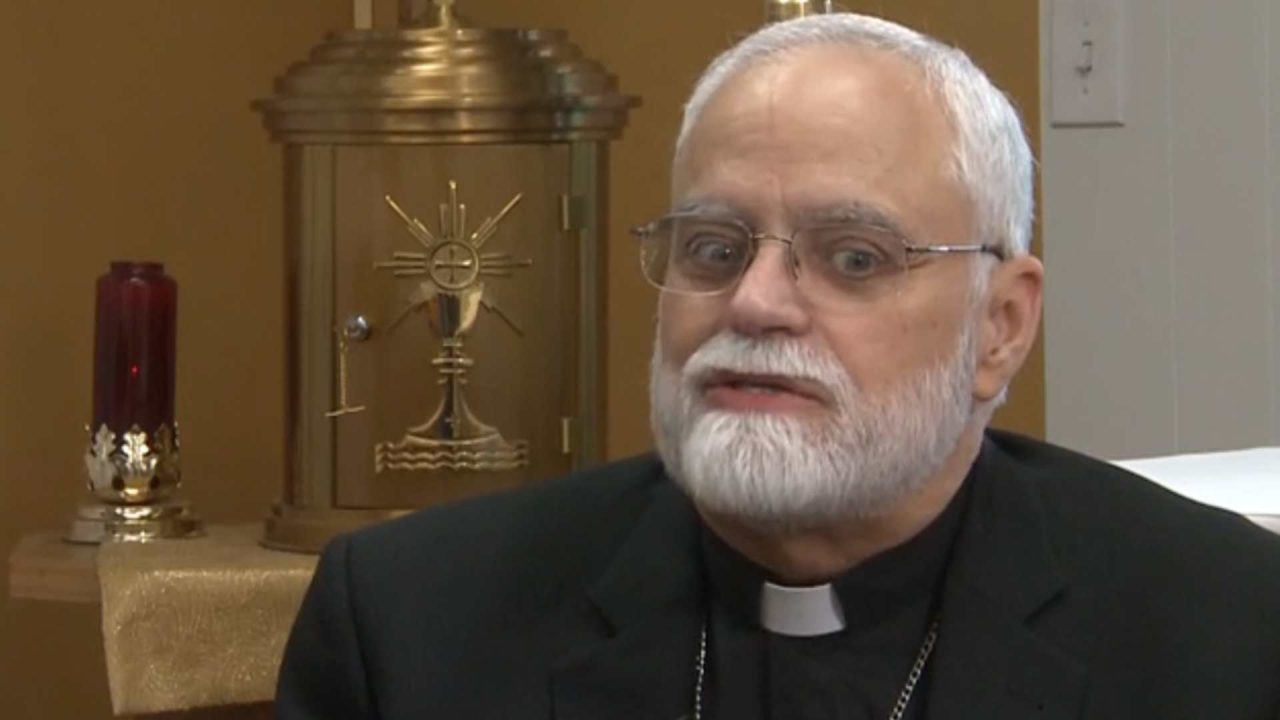
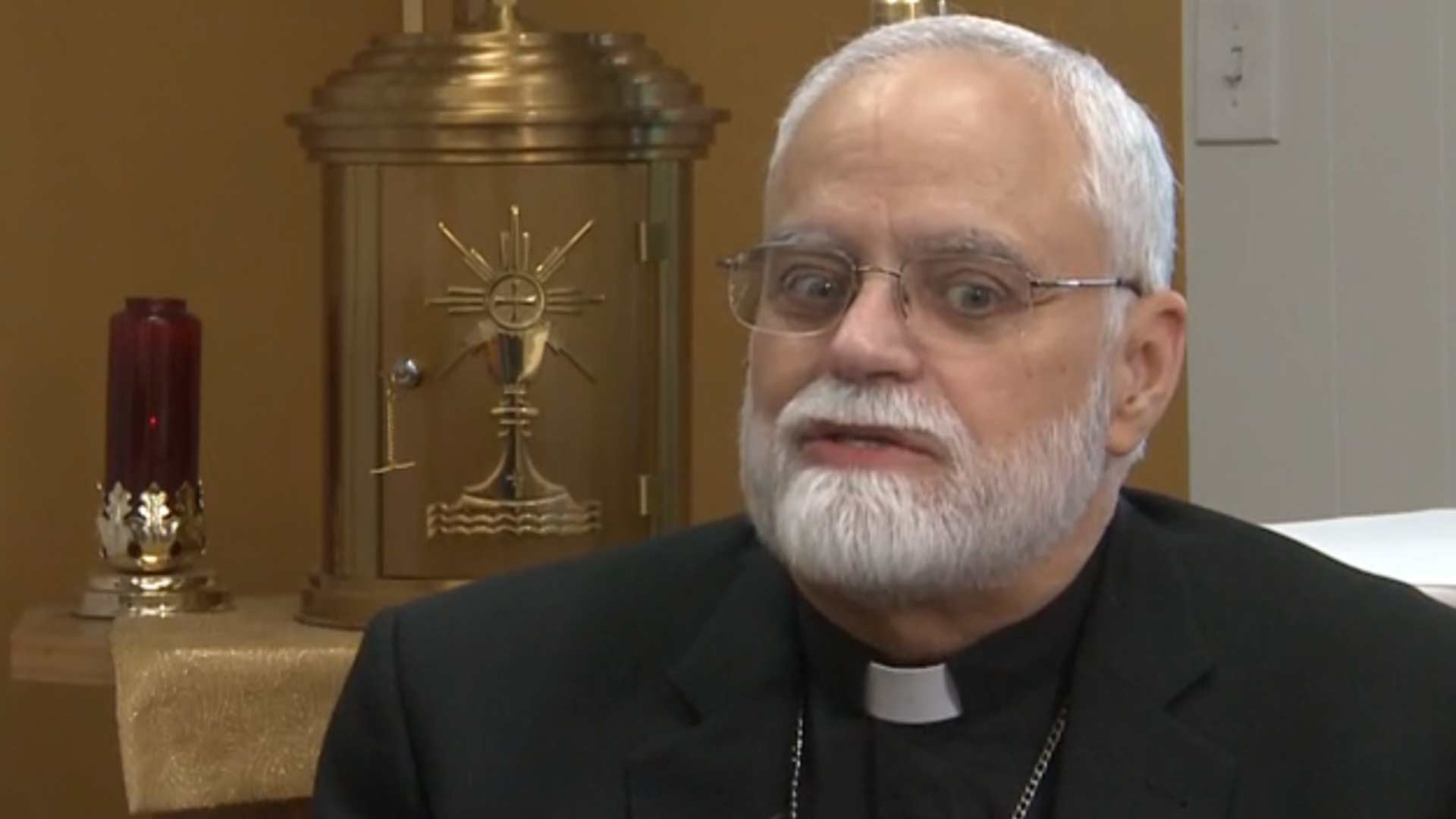
The Alaska Catholic Conference represents Alaska’s Catholic bishops in matters of public policy. Its executive director is Mary Gore. Yet compared with the public records of Kansas, South Dakota, Texas, Florida and even Hawaii, Alaska’s conference has been considerably less visible on issues such as abortion, marriage, parental rights and contemporary questions surrounding human sexuality.
Although I couldn’t find a website for the Alaska Catholic Conference, I did see a tab on the Archdiocese of Anchorage-Juneau website titled “ProLife Activities,” but it simply linked to a national site (the United States Conference of Catholic Bishops – USCCB). As far as I can tell, there are literally no state efforts being undertaken by the Alaska Catholic Conference on moral issues.
That difference should concern the estimated 65,000 Alaska Catholics who are being asked to cast their vote November 3rd.
This is not an argument that the Alaska Catholic Conference should endorse candidates or become an arm of any political party. Obviously, it shouldn’t.
It is an argument for moral clarity.
Alaska Catholics should reasonably be asking: When legislation concerns the protection of unborn children, the meaning of marriage, parental authority or religious liberty, where is the public voice of the Alaska Catholic Conference? What are the bishops teaching? What positions does the conference take? What guidance is being given to Catholic voters?
Are Alaska Catholics receiving the same moral certitude, clarity and direction from their Catholic public-policy leadership that Catholics are receiving in other states?
THE MURKOWSKI CONNECTION

There is also a relationship that deserves transparency.
Mary Gore has been publicly identified as the first cousin and close friend of U.S. Sen. Lisa Murkowski. Murkowski has taken prominent positions supporting abortion rights and LGBTQ-related policies. That family relationship does not prove that Gore’s relationship with the senator influences the Alaska Catholic Conference, and it would be irresponsible to suggest otherwise without evidence.
But it does make the conference’s public record—and its independence from partisan politics—a legitimate subject for public scrutiny.
There is an important historical reminder in Alaska itself.
In 2020, then-Fairbanks Bishop Chad Zielinski issued a letter addressing Catholics’ moral responsibilities when voting. His letter spoke directly about abortion and the moral limits on supporting candidates or policies that would expand access to abortion.
That was a Catholic bishop applying Catholic moral teaching to public life in our state.
The question for Alaska Catholics today is not whether the Church should become partisan. It should not.
The question is whether Alaska Catholics are receiving the same moral certitude, clarity and direction from their Catholic public-policy leadership that Catholics are receiving in Kansas, South Dakota, Texas, Florida, Hawaii and other states.
That is not partisan politics. It is a question of Catholic leadership, and as we enter the final lap of this election cycle, Alaska Catholics deserve an answer.
The Catholic Church’s teachings do not change when a state crosses a border.
Catholic moral teaching is not red-state teaching or blue-state teaching. It is not Republican teaching or Democratic teaching.
If Catholic conferences in other states can speak clearly about human life, marriage, family, parental rights and religious liberty while explicitly distancing themselves from partisan politics, Alaska Catholics should reasonably expect the same.
The issue isn’t whether the Alaska Catholic Conference should tell Catholics which political party to support. It is whether the conference is giving Alaska Catholics enough information to understand what their own Church teaches – and how those teachings apply when the most consequential moral questions reach the ballot box.
That is not partisan politics. It is a question of Catholic leadership, and as we enter the final lap of this election cycle, Alaska Catholics deserve an answer.
P.S. For a great read on this issue, check out Father Robert Spitzer’s book, The Moral Wisdom of the Catholic Church – A Defense of Her Controversial Moral Teachings.
The views expressed here are those of the author.




24 Comments
Well first off, the Catholic church is not the paragon of virtue in this world. Would be rather hypocritical for them to speak out about morality.
The same could be said any religion that consolidates power and authority of the masses under the guise of granting salvation to the powerless sinners.
Predators who prey on the faith of the people who offer only illusion in exchange for the almighty tithe and the innocence of the children.
Seek God within and stay far far away from those who claim they are the only ones with power to save you.
Thanks for your insight, but I will stick with Jesus and the Church He founded.
To as thou wilt.
You should know, however, that Jesus never founded any church and the name of the person you idolize is not his true name to boot, nor is his last name Christ.
But sheep will sheep. Be sure to get your septum piercing.
To The kingdom is within. but not in a stone box, Please explain your statement, Also please tell us what the real name of Jesus Christ is that you elude to but fail to mention. I for one and I’m sure others would like to know. I was also taught that Christianty was founded around Jesus Christ by his followers and his teachings, not once was I ever taught that He founded the church.
Little known information: justice Clarence Thomas had a fallout with the Catholic Church in his younger life as they wouldn’t speak to the blatant racism of his day! It actually made justice Thomas so angry that for a time he became a liberal!!!
The church today is in fact doing more harm than good, and isn’t considering the fallout of what it refuses to say. Salt and light. Failed on both!
Human beings fail; Christ does not.
My shepherds here in Anchorage have failed me and my family more than once, but their human frailty has not -and by the grace of God will not- cause me to abandon Christ the Good Shepherd and His one, holy, Catholic and apostolic Church.
Jim, you have an indelible mark on your soul -you’re welcome back anytime!
February 2019, Pope Francis gave his report to the world. He gave reports to the world on a regular basis. He stated that, “from the beginning of his papacy to that date, there was a total of over 6300 persons, priests, lay person, nuns fired from their jobs and criminal charges with some being excommunicated from the Catholic Church. And, that Vatican II had been amended which gave no responsibility to the church for the criminal behavior of any person working for the church in any capacity. The church like the community is now free to pursue criminal charges against any person working for the Catholic Church if they present issues or actions that should be charged in a court of law, any place in the world. Those who are charged have the responsibility of their defense and penalty, not the church.
Well, as we all know, if you want to understand the character of an individual, start by examining the character of their closest friends.,!!!
Only a non-or-former Catholic could have written what Minnery did here. The others — both lay and clerical — would be sought out or punished if they did. Thanks, Jim. But what about Mr. Hess, the rabid homosexual/drag queen story hour guy, who is also a Eucharistic Minister, and inside Belisario’s appointed synodal advisor?
I should have added that Pope Francis stated in his Feb. 2019 report to the world, “in the principles of the Catholic Church, which has not changed in two thousand years, marriage is between a man and a woman for the procreation of children, and the church does not marry men to men nor does it marry women to women.”
While the Church is not a political organization, I think you will find that many Bishops are quite politically oriented. Some are aiming to get ahead in the Church rather than serve their flock. These are the Bishops with a thin faith, that sustains them when they perceive they have power, but not so much that they are willing to risk losing some of that power. You will find also that some prefer secular power and prestige to the Grace of God. See for instance Cardinal Cupich, or Archbishop Wilton Gregory. They are mortal men, not safe from the predations of demons just as the rest of us are, but they are burdened more by the need for courage and conviction than perhaps the rest of us are. Any Catholic Conference reflects the position of the local ordinary, and clearly some are better led than others. It is much easier to kiss up to politicians than it is to boldly stand against those politicians’ repugnant claims of being Catholic while being nothing of the sort. We all sin but not all try to resist.
Tamra. Here’s an undeniable truth: because I do not believe in your Christian god , I do not sin. There is no such thing as sin. Mistakes, yes, but they are only revealed after a decision is made and the resulting mistake is exposed as being based on faulty or incomplete information. It’s up to you or me or our community or state to decide its ethical severity. Has nothing to do with a supernatural thing. It’s all quite empirical.
Please do prove to all of us that there is no God. I’ll wait. And what, pray tell, does that have to do with the topic of this thread? Please try to keep up.
While you are on the topic, please do explain to us the definition of “good.”
Tamra. The burden of proof that a god exists is on you, not me, an atheist. Convince me Tamra.
Of course, Evan, of course. Because you cannot prove there is no God. But you will find out for certain eventually. Have fun with that.
No comment on what constitutes “good.” Apparently you can’t come up with that, either. It must be miserable to be your own God, but then, I wouldn’t know about that.
Well said Tamra.
San Francisco Archbishop Salvatore Cordileone barred former House Speaker Nancy Pelosi from receiving Holy Communion in May 2022 because of her public support for abortion rights. Lisa Murkowski is just as open about her support for abortion “rights” and LGBTQ activism, and is a practicing Catholic? Where is our Archbishop Cordileone?
A wolf in sheep’s clothing.
Someone just pulled back the rug and exposed the floor. Pull it back some more!
To Jim Minnery: I wondered why you didn’t mention the Sturgulewski connection since they are all related and entrenched through religion positions within the church business.
t
Tamra: if a decision is before you and you don’t have all the facts, what to do? You consider the evidence, apply reason and the scientific method and make a conclusion. You do it a thousand times a day. Take driving for example. If your assessment of reality and the future (the sobriety and skills of the opposing driver) is solid and maybe lucky, you make it to your destination. For atheists, the weight of ten thousand suns argues against the existence of a supernatural being, BUT, YES I can’t prove there is no god just like I can’t prove your husband is a unicorn. It’s an assessment of empirical, testable and defensible evidence that leads most of us to proper decisions.
As for the definition of good, Jeez, what do you want from me? This question is as old as the emergence of hominids and the topic of a million essays by scholars, scientists, clergy and merchants. “In Zen and the Art of Motorcycle Maintenance, Robert Pirsig explores the famous question: “And what is good, Phaedrus, and what is not good—need we ask anyone to tell us these things?”
Our Archbishop inherited a whole passel of scandals upon his appointment. Mary Gore could solve this one immediately by recusing herself from her position.