
Alaska House Bill 78 is sitting on the governor’s desk. At the same time, pipeline legislation is being held by many of the same lawmakers pushing the pension bill. That overlap matters because it ties together two decisions that affect every household in Alaska.
One drives costs up. The other has the potential to bring them down.
Here’s the pipedream reality: If a pipeline bill doesn’t move forward, natural gas is going to cost more – whether a pipeline gets built, or not. If a pipeline bill does move forward, there is a path for the cost of natural gas to be less expensive.
There’s only one way Alaskans get lower-cost natural gas – with a project-friendly pipeline bill.
Is Gov. Dunleavy being asked to accept a long-term cost escalator in exchange for movement on a policy that promises to lower energy costs?
Here’s the pension reality: HB 78 creates a defined benefit pension system that guarantees payouts and adjusts when assumptions fall short. When investment returns miss, when inflation runs higher than expected, or when costs grow faster than projected, the system responds the same way every time. Employer contribution rates go up.
That’s not a one-time fix. It’s a perennial problem.
At the state level, lawmakers can delay dealing with those increases, but they can’t avoid them. At the local level, there’s no delay at all. Local governments must absorb those higher costs immediately. That means tighter budgets, fewer services, or higher local taxes.
So, step back and look at what’s happening.
On one hand, you have a policy that lowers a major cost for families and businesses. On the other hand, you have a system that increases payroll-related costs across government, year after year, as assumptions inevitably miss.
Higher employer contributions mean higher costs for school districts. That means higher local property taxes. It means tradeoffs in classrooms. It means less flexibility with already tight budgets.
And right now, those two policies are moving together.
The concern isn’t just that both are being debated at the same time. It’s that one appears to be held in place while the other waits for a decision. That creates leverage, whether anyone calls it that or not.
It raises a basic question. Is Governor Dunleavy being asked to accept a long-term cost escalator in exchange for movement on a policy that promises to lower energy costs?
Because that’s what this looks like from the outside.
The pension system doesn’t just affect government balance sheets. It flows outward. Higher employer contributions mean higher costs for school districts. That means higher local property taxes. It means tradeoffs in classrooms. It means less flexibility with already tight budgets.
At the state level, the pressure falls on the Permanent Fund earnings. Pension obligations don’t go away. When costs rise, they compete with everything else funded from that same pool, including the Permanent Fund Dividend (PFD).
So, average Alaskan families see higher costs locally. And smaller PFD’s.
ALASKA WATCHMAN DIRECT TO YOUR INBOX
Put it all together and the direction becomes clear. Higher payroll costs in government. Higher local taxes or reduced services. Less room in the budget for dividends. And all of it is happening while a policy that could lower one of the biggest household expenses, energy, is tied up in the same moment.
That’s not good governance.
These decisions should stand on their own. If a pipeline lowers costs, it should move forward because it makes sense. If a pension system increases long-term obligations, it should be judged on whether those costs are sustainable.
Mixing the two creates a situation where Alaskans are effectively asked to trade one for the other.
Lower-cost energy on one hand. Higher-cost government on the other.
That looks like the trade being made for you, courtesy of a handful of faux Republican legislators at odds with Alaskans who are not government employees.
The views expressed here are those of the author.






9 Comments
The LGP is good for Alaskans, the Pensions are good for Legislators…
“……… If a pipeline bill doesn’t move forward, natural gas is going to cost more – whether a pipeline gets built, or not. If a pipeline bill does move forward, there is a path for the cost of natural gas to be less expensive.
There’s only one way Alaskans get lower-cost natural gas – with a project-friendly pipeline bill……….”
All true, but what isn’t clear with that statement is this:
1) Higher taxes/royalties to the state from producers increases gas costs to the Alaskan consumer, and
2) If a North Slope pipeline project remains uncommitted, the uncertainty will continue to suppress increased Cook Inlet gas production, increasing current gas costs and the threat of pressure loss during the coldest months of the year.
There’s only one way Alaskans get lower-cost natural gas – with a project-friendly pipeline bill. Nope, Legislators can also tie Alaska’s natural gas price to the Henry Hub price of natural gas (dollars per million Btu.
Why Natural Gas Prices Use Henry Hub?
Central Trading Hub: The Henry Hub connects to four intrastate and nine interstate pipelines, making it a critical nexus for natural gas movement.
NYMEX Benchmark: The New York Mercantile Exchange (NYMEX) designated Henry Hub as the official delivery location for futures contracts in 1990, establishing it as the STANDARD REFERENCE price. As of April 30, 2026, Henry Hub natural gas futures were trading around $2.775 per MMBtu. The market experienced a slight uptick earlier in the week, with some spot prices on Monday around $2.775, while previous day futures settled near $2.667.
Global LNG Benchmark: As US liquefied natural gas (LNG) exports increase, Henry Hub has become a crucial benchmark for global gas prices, used to PRICE LONG-TERM CONTRACTS.
VETO THIS!!!!!!. We do not need to be in bondage for the rest of our lives because of some crooks in the legislature who think they deserve it all. Pray to block these bad actors.
Faux Republicans stall low-cost Alaska energy bill, you say? Taxpayers who want answers, can’t get them, who don’t want to be stuck with the tab for yet another boondoggle, they’re faux too?
.
Factual, verifiable answers would’ve been helpful the first four times we asked. But we’ll keep asking, this much money up for grabs, maybe a non-faux expert like yourself, has the answers.
.
1. How much will Alaskans’ heating and electric bills increase following pipeline construction?
2. Will product be sold directly or indirectly to Communist China?
3. If supply problems arise, are Asian buyers prioritized over Alaskan customers?
4. Are Communist Chinese entities involved in project financing, insurance, or construction?
5. Is a contingency plan in place if a Democrat-controlled administration revokes construction permits or local government demand more taxes?
6. Recall Palin’s $500M giveaway to TransCanada, what prevents a similar giveaway from happening?
7. What assures pipeline-control gear will be CISA vetted? (https://www.cisa.gov/)
8. When LNG development is actually over, will AGDC go away?
9. What assures Alaskans and the Permanent Fund won’t be on the hook for up-front costs, contractor fraud, and losses if Glenfarne can’t get binding financial commitments from Asian companies and governments?
(https://ptop.substack.com/p/guide-to-uncovering-contractor-fraud?)
10. What makes Polar LNG -not- better positioned to move natural gas by leveraging existing Prudhoe Bay infrastructure, minimizing new onshore development, and delivering a more efficient and lower-impact path to market …at a quarter of the cost?
(https://polarlng.com/project/)
.
On June 25, 2025, AGDC released an updated $38.7 billion cost estimate for the Alaska LNG Project.
(https://agdc.us/updated-38-7-billion-project-construction-cost/)
.
Now Glenfarne wants $44 billion-plus.
.
Then there’s this: “The latest evidence that no one knows what the gas will cost comes from an independent report by Rapidan Energy Group, which says the likely cost of the pipeline project is far higher than the $44 billion estimate still in circulation …Add in the cost of the so-called first phase—building a pipeline from the North Slope to Anchorage without compression and export facilities and the total project cost would exceed $70 billion.”
(https://www.dermotcole.com/reportingfromalaska/2025/6/24/glenfarnes-latest-deceptive-press-release-about-alaska-lng-project)
.
Who’s on the hook when project cost runs up to, say, $90 billion, or reaches a point at which the thing doesn’t seem worth building because financial, geopolitical, legal, and physical risks outweigh benefits, making it unlikely to turn a profit during the lifetime of anyone alive today?
.
Is Senator Giessel responding out of concern for what the Rapidan analysis shows, which the Dunleavy administration, AGDC, and Glenfarne analyses apparently don’t show?
(https://www.rapidanenergy.com/about)
.
Some Alaskans want answers because they justifiably don’t trust government officials anymore. They justifiably fear that diving, eyes closed, into the deep end of what could turn out to be an empty pool won’t end well for them, they want to see the water for themselves, not just take someone’s word it’s there.
.
You seem like more friend than faux, Ben, but yet another dreary lecture, still without answers to Frequently Asked Questions (FAQ), we’re still a hard NO. As if it makes a difference, right?
.
As for high-priced pensions, forget about it, you/we can’t do anything about it.
.
…until you/we figure out how to restore integrity to our grand-jury and election systems.
.
Those two things were the public’s last check and balance, but were deliberately FUBAR’d, in our opinion, to ease the passage of roughage like high-priced pensions through the intestines of government.. Get both unFUBAR’d, good things’ll happen.
.
Until then …does the term “incoming!” mean anything?
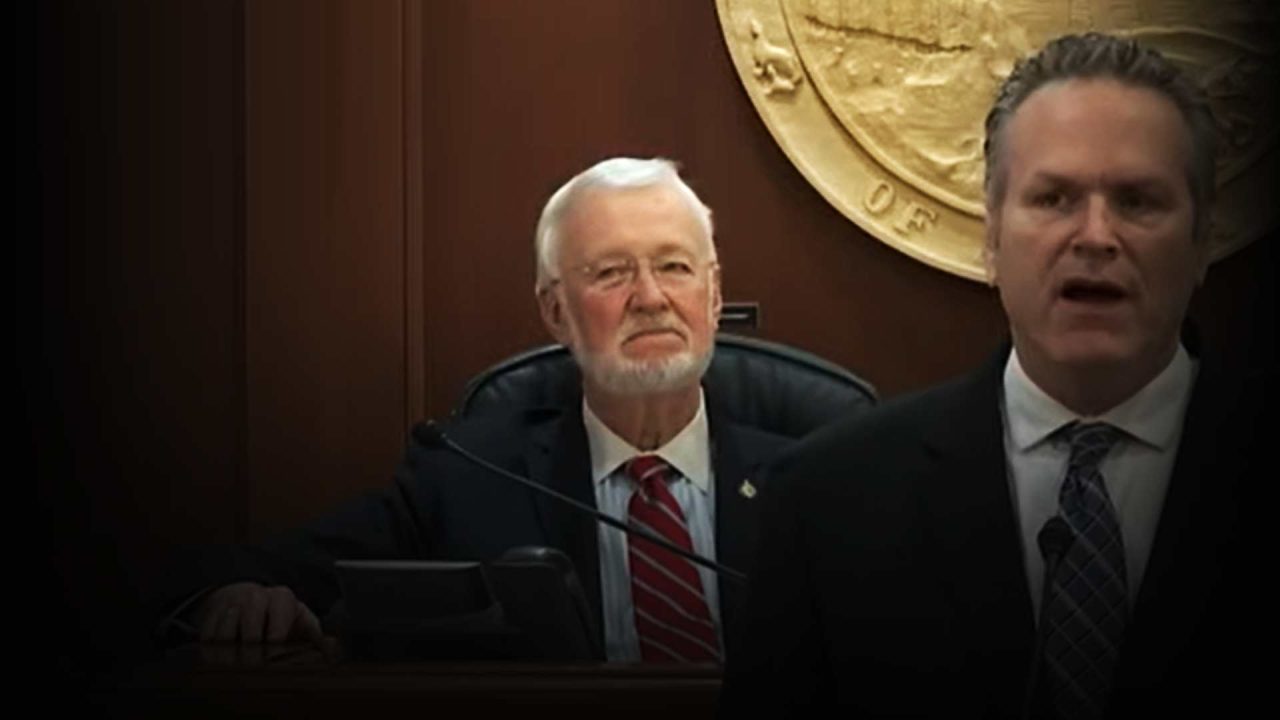
Look at the smug look on Stephens face. What a corrupt, worthless politician. A pox on his house.
the plan take our permanent fund, billions stolen to pay their donors
next spend the the corpus it’s the only way the debt for their retirement fund can be paid.
numbers don’t lie without a larger population tax-payers can’t support the current budget.
add that we haven’t paid for the last round and pay we must.
This raises a fair concern about how major policy decisions are being handled slope game. The key point here seems to be transparency and separation of decisions.
The Challenge
On October 15, 2025, Representative Kevin McCabe published a piece on his Substack titled “The Pitfalls of Perpetual No.” In it, he coined a term for those who questioned Alaska’s carbon storage legislation and the federal tax credit architecture it enables. He called them CAVE people: Citizens Against Virtually Everything. Driven by distrust more than facts, he wrote, not by evidence or analysis. People who mistake reflexive opposition for courage.
He concluded with a challenge: “If you’re going to oppose something, bring a better plan. If you don’t have one, you’re not leading or engaged, you’re just complaining. That’s not conservatism. That’s complacency.”
What follows is the better plan. Not from the CAVE. From the Amsterdam District Court, the United States Department of Justice, the Commodity Futures Trading Commission, the Proceedings of the National Academy of Sciences, Carnegie Mellon University, Northwestern University, Columbia University, the Stockholm Environment Institute, the Colorado School of Mines, and the federal lobbying disclosure database maintained by the United States Senate.
The legislation under scrutiny is not obscure. House Bill 50, the Carbon Capture, Utilization, and Storage Act, codified in Alaska Statutes Title 41, Chapter 06, created the state framework for carbon dioxide storage and enabled Alaska operators to claim federal 45Q tax credits for CO2 injected underground. That framework is now before the legislature again. House Bill 381, which extends 45Q credit access to the Alaska LNG Gas Treatment Plant, is currently in House Finance Committee. Senate Bill 280, addressing the broader Alaska LNG project fiscal architecture, is currently in Senate Resources Committee. The votes on HB 381 and SB 280 have not been cast. A third project, Terra Energy Center, a proposed 400 megawatt coal and biomass plant in West Susitna, is designed to feed the same Cook Inlet storage complex the legislation enables.
Together these three projects form the architecture of Alaska’s carbon credit future. Together they share the same documented problems. And together they have been advanced by legislators who, by their own public statements, understood those problems and voted yes anyway. This piece is addressed to the committees that still have a choice.
(https://raff6482.substack.com/p/the-pitfalls-of-perpetual-yes)